U.S.
Cook County Commissioner Richard Boykin, Chicago Democrat, Reportedly Appealed to the UN to Come to Chicago
Published
8 years agoon
(Via Project Republic Today)
Instead of asking the U.S. President Donald Trump for assistance with Chicago’s never-ending gun violence, Cook County commissioner Richard Boykin, a Democrat, has reportedly expressed interest in teaming up with the United Nations.
“I’m hoping to appeal to the U.N. to actually come to Chicago and meet with victims of violence, and maybe even possibly help out in terms of peacekeeping efforts, because I think it’s so critical for us to make sure that these neighborhoods are safe,” he said Thursday, according to local station WBBM.
He reportedly made the comments from Chicago’s O’Hare International Airport en route to New York to meet with Oscar Fernandez-Taranco of Argentina, the U.N. Assistant Secretary-General for Peacekeeping Support.
Boykin continued by lamenting the “quiet genocide taking place in too many of our communities” and rightly noting that most victims of Chicago’s gun violence are blacks who have been “killed at the hands of another African American.”
“So we must protect these population groups, and that’s what the United Nations does,” he added. “They’re a peacekeeping force. They know all about keeping the peace, and so we’re hopeful that they’ll hear our appeal.”
I appreciate his desire to help the black community in Chicago, but why seek help from the U.N. when Trump has already reportedly sent “an additional 20 agents from the Bureau of Alcohol, Tobacco, Firearms and Explosives … to Chicago to help in the effort at cracking down on gun crime and the repeat criminals who routinely commit such crimes”?
The president has also proposed sending in the National Guard, though the city’s left-wing mayor, Rahm Emmanuel, rudely rejected this offer in January.
“We’re going through a process of reinvigorating community policing, building trust between relationships in the community and law enforcement,” he said, as reported by the Chicago Tribune. “(The National Guard) is antithetical to the spirit of what community policing is.”
But the power-hungry U.N. is not?
Let’s be clear here: The U.N. is an anti-democratic organization that is “hostile to the private ownership of firearms,” as noted five years ago by Ted R. Bromund, Ph.D., a Margaret Thatcher senior research fellow at The Heritage Foundation, in a column for The Daily Signal.
Moreover, the U.N. poses enough of a threat to the U.S. that the National Rifle Association sought to be recognized by it as a Non-Governmental Organization in 1996 just to monitor its activities and stop it from affecting our gun rights.
“NRA has been engaged at the United Nations and elsewhere internationally in response to overreaching small arms initiatives for two decades,” the NRA’s Institute for Legislative Action notes. “During this time, we have been actively opposing transnational efforts that would limit Americans’ Second Amendment freedoms.”
Again, why would Boykin or any other political leader in Chicago be interested in teaming up with this anti-democratic organization when they already have a president ready and willing to help?
I don’t know, but I don’t like it. Nor do I like or appreciate the city’s leaders constantly disparaging our president, a man who clearly wants to help.
Speaking on CBS’ “The Late Show” this week, Emanuel proudly declared Chicago a “Trump-free zone” and joked that it’s new motto is “A city he’ll never sleep in.”
Gee, guy, how about making Chicago a violence-free zone with a motto of “A city where little black children can sleep peacefully,” you jerk?
My sincere guess is Emanuel doesn’t really care about Chicago’s gun violence. As for Boykin, I believe he cares but it simply misguided. I just hope somebody warns him about the U.N. before it’s too late.
Crime
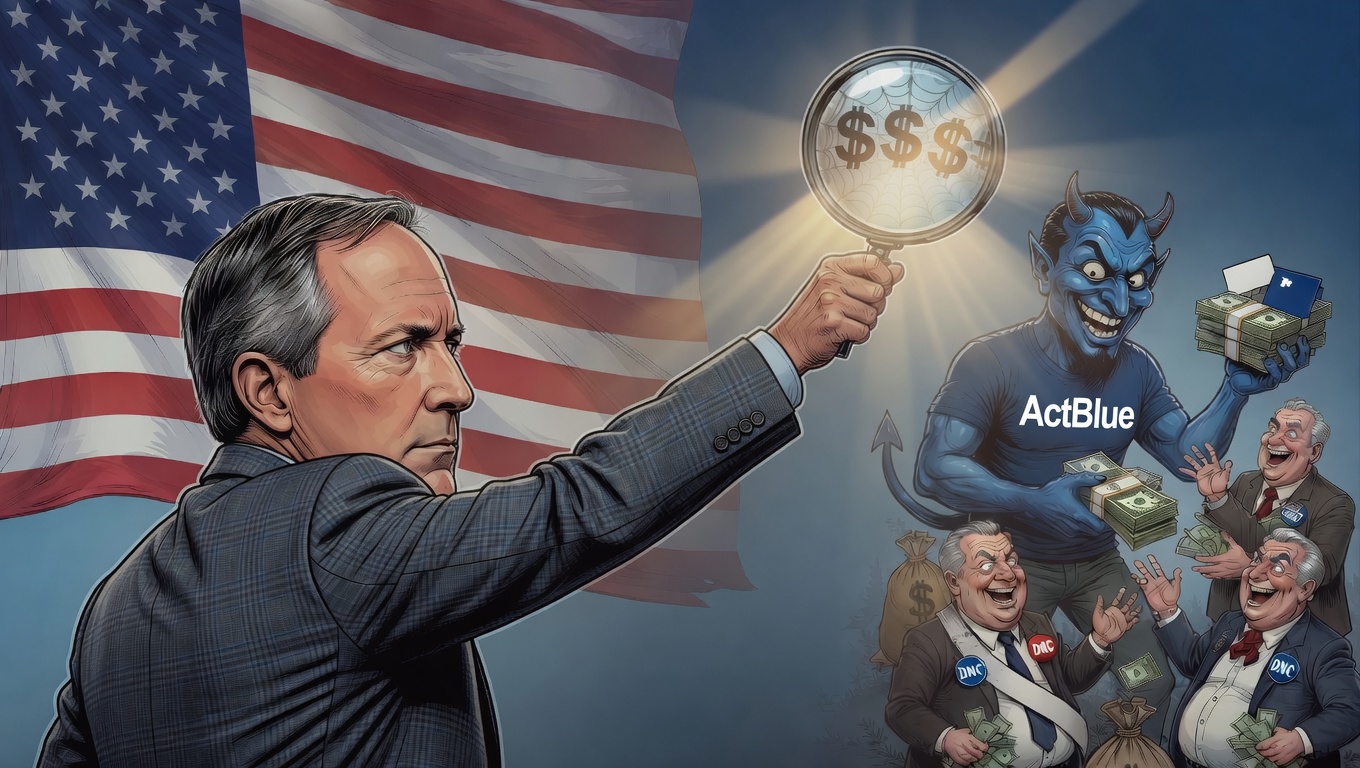
Texas AG Ken Paxton Sues ActBlue (Democrat Funding Machine)
Published
2 weeks agoon
April 20, 2026
Texas Attorney General Ken Paxton just dropped a landmark lawsuit against ActBlue, the Democratic Party’s favorite fundraising machine, for systematically deceiving Americans about its donation processes that enable rampant fraud, including illegal foreign contributions and untraceable gift card schemes. On Monday, April 20, 2026, Paxton filed suit in Texas state court, accusing the platform of violating consumer protection laws by lying to donors and the public about the strength of its verification safeguards. This isn’t some minor paperwork dispute — it’s a direct assault on the integrity of our elections, where ActBlue has funneled over $16 billion into Democratic campaigns and causes while turning a blind eye to straw donations, identity fraud, and cash from overseas that has no business influencing American politics.
For years, everyday patriots have watched as Big Tech-enabled platforms like ActBlue operated with impunity, raking in small-dollar donations that often smelled fishy — thousands of identical contributions from the same IP addresses, elderly donors suddenly maxing out limits they never touched before, and untraceable gift cards flowing through after the platform claimed to Congress it had shut that door in 2024. Paxton’s investigators proved otherwise, successfully pushing small gift card donations through to the DNC and Democratic candidates as recently as February 2026 without a hitch. The radical left has relied on this dark money pipeline to subvert election laws, compromise sovereignty, and flood campaigns with cash that real Americans never authorized. Paxton nailed it: “The radical left has relied on ActBlue as a way to funnel foreign donations and dark money into their political campaigns to subvert our laws and compromise the integrity of our nation’s elections.”
This lawsuit exposes the deeper betrayal of the ruling class against working families and honest voters who play by the rules. While border communities in Texas and across America suffer under waves of illegal immigration and crime, Democrat elites in Washington and blue strongholds use tools like ActBlue to bankroll their open-borders agenda, woke indoctrination in schools, and endless attacks on traditional values — all funded by processes riddled with fraud that they publicly deny. Paxton’s action builds on his multi-year investigation that uncovered suspicious donation patterns and prompted calls for FEC reforms to ban straw donations. The consequences are clear: eroded trust in elections, stolen voice for American citizens, and a tilted playing field that favors globalist interests over national sovereignty.
What needs to happen now is full accountability and sweeping reforms to protect election integrity. Paxton’s suit should force ActBlue to clean house or face real penalties, while Congress and the FEC must step up with ironclad rules banning foreign nationals, unverified gift cards, and obscured identities from touching U.S. campaigns. States should follow Texas’s lead and launch their own probes. True election security starts with secure borders, verified voters, and transparent fundraising that puts American citizens first — not shadowy platforms serving the America Last crowd. Patriots everywhere should celebrate fighters like Ken Paxton for refusing to let the radical left rig the game. The fight for fair elections and a sovereign nation isn’t over; it’s just getting started. Demand your representatives back real reforms, or watch the fraud machine keep humming along at the expense of every hardworking family in this country.
In a fiery Truth Social post this week, President Donald Trump unloaded on four prominent conservative voices—Tucker Carlson, Candace Owens, Alex Jones, and Megyn Kelly—calling them “low IQ,” “stupid people,” “nut jobs,” “troublemakers,” and “losers” who aren’t real MAGA. The trigger? Their vocal opposition to U.S. military escalation against Iran, which critics frame as part of a broader joint U.S.-Israeli campaign in the region. Trump spent hundreds of words attacking them while insisting his actions align with keeping nuclear weapons out of Iran’s hands, the number one state sponsor of terror.
The attacks were personal. Trump mocked Jones over his Sandy Hook-related bankruptcy, jabbed at Owens’ past comments on Brigitte Macron, questioned Carlson’s education, and dismissed them all as irrelevant podcast hosts chasing publicity. In response, Owens quipped it might be time to “put Grandpa up in a home.” Jones suggested Trump had changed and prayed for him to be freed from “demonic influences,” while Carlson has repeatedly called Trump a “slave” to Israel, arguing the war serves Israeli interests over America First.
On the surface, this looks like a messy MAGA civil war: Trump, once boosted by these influencers, now turning on them over foreign policy. But zoom out, and a sharper pattern emerges. Trump’s willingness to take the punch—alienating loud voices in his own coalition—functions like reverse psychology. By drawing a hard line and inviting the inevitable backlash, he spotlights the very issues his critics obsess over: Israel’s influence on U.S. policy, AIPAC-style lobbying, donor pressures (think Miriam Adelson’s past contributions), and accusations of “Zionist control” over decisions from embassy moves to strikes on Iranian targets.
The Feud in Context
These critics didn’t start the fight in a vacuum. Carlson has questioned whether Israel is “blackmailing” Trump or holding leaders “enslaved,” framing U.S. involvement in the Iran conflict as contrary to America First promises. Owens has accused Trump of betraying troops for Israel, warned of false flags, and tied various events to Zionist lobbying. Jones has echoed themes of external “influences” pulling strings. Their pushback intensified as Trump defended actions against Iran, with some alleging the timing and scope served Netanyahu’s agenda more than strict U.S. interests.
Trump’s response? Instead of ignoring or quietly sidelining them, he amplified the rift with over-the-top rhetoric. The result: millions of eyes now glued to the debate. Every reply from Jones, Owens, or Carlson recirculates claims about undue foreign influence, Epstein files speculation (often laced with conspiracy), Adelson donations, and the broader “Israel lobby.” What was once fringe muttering in echo chambers becomes mainstream conservative infighting—broadcast on X, podcasts, and news cycles.
This isn’t subtle. Trump has a long history of transactional deal-making, including strong pro-Israel moves in his first term (Jerusalem embassy, Abraham Accords, Golan recognition) that pleased evangelical bases and certain donors while advancing what he saw as U.S. leverage. He’s also repeatedly warned against endless wars and nation-building. By punching right on this fault line, he forces the “anti-Zionist” wing of MAGA to overplay their hand, turning abstract gripes into concrete examples of division.
Mastercraft or Self-Sabotage?
Call it masterful political jiu-jitsu or chaotic disruption—Trump absorbs the hits to expose fractures. Critics on one side see him “caving” to neocons, donors, or Israeli security needs against a nuclear Iran. On the other, his base loyalists view the influencers as grifters who abandoned him the moment policy got tough, prioritizing isolationism over confronting terror sponsors. Either way, the spectacle drags Zionist influence, lobbying power, dual-loyalty whispers, and Middle East entanglements into the open for public dissection.
- Pro-Trump read: He’s prioritizing American security (no Iranian nukes) and calling out disloyal voices who bash him while riding his coattails. The feud proves he’s not controlled—he’s fighting on multiple fronts.
- Critics’ read: The attacks confirm external pressures overriding campaign rhetoric, with Trump “mad that he got set up by Israel.”
- Neutral observer: Regardless of who’s “right” on Iran policy, the infighting spotlights real questions about foreign aid, lobbying transparency, and whether U.S. decisions should ever prioritize another nation’s survival over domestic priorities like borders and debt.
Trump’s brand has always been willingness to brawl in public, even with allies. He takes the punch knowing it generates attention, frames the narrative, and lets opponents reveal their priorities. Here, by escalating against popular podcasters, he ensures debates over “Zionism” vs. strategic alliances, influence ops, and America First consistency dominate the discourse. The louder the backlash, the more those topics—usually confined to niche corners—flood timelines and force ordinary voters to confront them.
Whether this is deliberate 4D chess or raw instinct, the effect is the same: exposure. The feud isn’t hiding Israeli or Zionist sway; it’s thrusting it under the spotlight for millions to judge. Trump’s history suggests he bets on his base seeing strength in the fight, not weakness in the fray. In a polarized media age, taking the punch while the critics swing wildly may be the ultimate way to make the underlying tensions impossible to ignore.
The right is splintering in real time. How it resolves will say as much about U.S. foreign policy priorities as it does about Trump’s unique style of disruption. One thing is clear: no one’s looking away.
Introduction
Water infrastructure rarely becomes headline news until something goes wrong. But across Iowa, a series of developments over the past year has raised growing questions about aging infrastructure, regulatory compliance, and public transparency.
Populist Wire began examining these issues through several reports focused on Cedar Rapids and Linn County. Those articles explored a series of events involving water quality awards, lead pipe inventories, and disputes tied to public records and housing enforcement.
This article provides a 2026 investigation update, connecting previous reporting with new statewide coverage of water issues affecting Iowa communities.
1. The Award and the Lead Risk
The first article in the series examined a striking contradiction.
Cedar Rapids received national recognition for water quality after its municipal water system won the “Best Tasting Water” competition from the American Water Works Association (AWWA).
At the same time, federal regulatory changes required cities to identify potential lead service lines. In Cedar Rapids’ case, municipal inventory data indicated that thousands of water service lines were classified as either lead or “unknown.”
Under updated federal guidance tied to the EPA Lead and Copper Rule Improvements, many “unknown” service lines must be treated as potential lead until verified.
The issue was explored in Populist Wire’s earlier report:
Cedar Rapids Wins AWWA Best Tasting Water Prize as 17% Face Lead Risks; AWWA Sues EPA Over Lead Regulations
The result created a paradox that triggered the initial investigation:
- A national water quality award
- Simultaneous identification of potential lead risk affecting thousands of service lines
The situation raised questions about how cities communicate water quality and infrastructure risk to residents.
2. The Lead Service Line Map
The second Populist Wire article examined Cedar Rapids’ publicly released service line inventory map.
Municipal water systems across the United States have been required to catalog every service line connection under federal drinking water regulations.
In Cedar Rapids, the map categorized pipes into several classifications:
- confirmed non-lead
- confirmed lead
- galvanized lines
- unknown material
Federal guidance states that unknown materials must be treated as potential lead until confirmed otherwise, because historical installation records are often incomplete.
The investigation focused on whether the classification and public presentation of these lines matched federal regulatory expectations.
The issue matters because infrastructure inventories directly influence:
- public health risk assessments
- pipe replacement priorities
- federal infrastructure funding eligibility
Cities nationwide are now racing to complete these inventories before federal replacement deadlines take effect.
This issue was detailed in Populist Wire’s report:
RICO in Iowa: Cedar Rapids Lead Map Breaks EPA Rules
3. Housing Disputes and Institutional Response
The third Populist Wire report expanded the story beyond water infrastructure.
That article documented a housing dispute connected to residents who had raised questions about local governance and infrastructure transparency.
The situation involved:
- housing enforcement actions
- eviction proceedings
- allegations that administrative pressure followed public scrutiny
While the housing issue is legally separate from water infrastructure, it raised broader questions about how institutions respond when infrastructure concerns are raised publicly.
The situation was explored further in:
RICO in Iowa: Housing Emergency
These concerns remain part of ongoing reporting.
4. Statewide Lead Pipe Replacement Efforts
Since the original articles were published, water infrastructure has continued to receive attention across Iowa.
Local reporting throughout 2026 has focused on several statewide challenges.
Cities across Iowa are now working to comply with federal regulations requiring the identification and replacement of lead service lines.
Communities including Cedar Rapids and others must develop replacement plans that may take years and hundreds of millions of dollars statewide.
Federal infrastructure funding through recent legislation is expected to help cover some of these costs, but municipalities still face significant financial and logistical hurdles.
Local reporting examining these challenges includes:
Up to 17% of Cedar Rapids water service lines could contain lead
Additional reporting on Cedar Rapids’ lead service line inventory includes:
Cedar Rapids identifies 8,500 potential lead lines, aiming for near-full inventory by 2037
The report highlighted that many cities are still working to determine how many service lines contain lead or unknown materials and how replacement costs will be distributed between municipalities and homeowners.
Infrastructure replacement could take years or even decades depending on funding availability.
5. Agricultural Runoff and Nitrate Concerns
Another major water issue affecting Iowa involves nitrate contamination caused by agricultural runoff.
Cities such as Des Moines have reported elevated nitrate levels in river water used for municipal supply, which can increase water treatment costs and trigger federal monitoring thresholds.
Environmental groups have long argued that fertilizer runoff contributes significantly to these contamination issues, while agricultural organizations emphasize the importance of voluntary conservation practices.
Coverage of this issue has appeared in statewide reporting such as:
Central Iowa rivers face high nitrate levels amid drinking water concerns
Additional reporting on growing public awareness of nitrate contamination includes:
Iowans requested a record number of nitrate test kits in 2025
Water treatment plants can remove nitrates, but the process increases operational costs and infrastructure demands for municipalities.
6. Political Debate Over Water Policy
Water infrastructure and environmental policy have also become part of broader political discussions across the state.
Both Republican and Democratic leaders have addressed water quality concerns, though their approaches often differ.
Statehouse discussions around funding, regulation, and agricultural practices have received coverage such as:
New state report lists more than 700 impaired waters in Iowa
Democratic lawmakers have generally emphasized stronger environmental protections and federal infrastructure investments.
Republican leaders have often raised concerns about regulatory burdens on farmers and municipalities while supporting targeted infrastructure funding.
These policy debates reflect the growing importance of water issues across Iowa.
7. Why Infrastructure Transparency Matters
Water systems are among the most critical pieces of infrastructure in any community.
Yet they are also among the least visible.
Most residents never see the pipes beneath their streets, the treatment processes at municipal plants, or the regulatory frameworks that govern drinking water safety.
When issues do emerge—whether related to lead pipes, nitrate pollution, or infrastructure inventories—they often reveal how complex these systems are.
Coverage across Iowa media has increasingly emphasized transparency and public access to infrastructure data, including reporting such as:
Cities Release Water Infrastructure Data as Lead Pipe Regulations Expand Nationwide
The purpose of the Watch the Water series is not to make conclusions prematurely, but to document developments as they occur and examine how public infrastructure is managed.
Texas AG Ken Paxton Sues ActBlue (Democrat Funding Machine)
Populist Warning: Hungary’s Nationalist Fortress Falls
Trump’s Reverse Psychology to Expose Zionism
Strait of America

7 Comments