Connect with us

Iowa

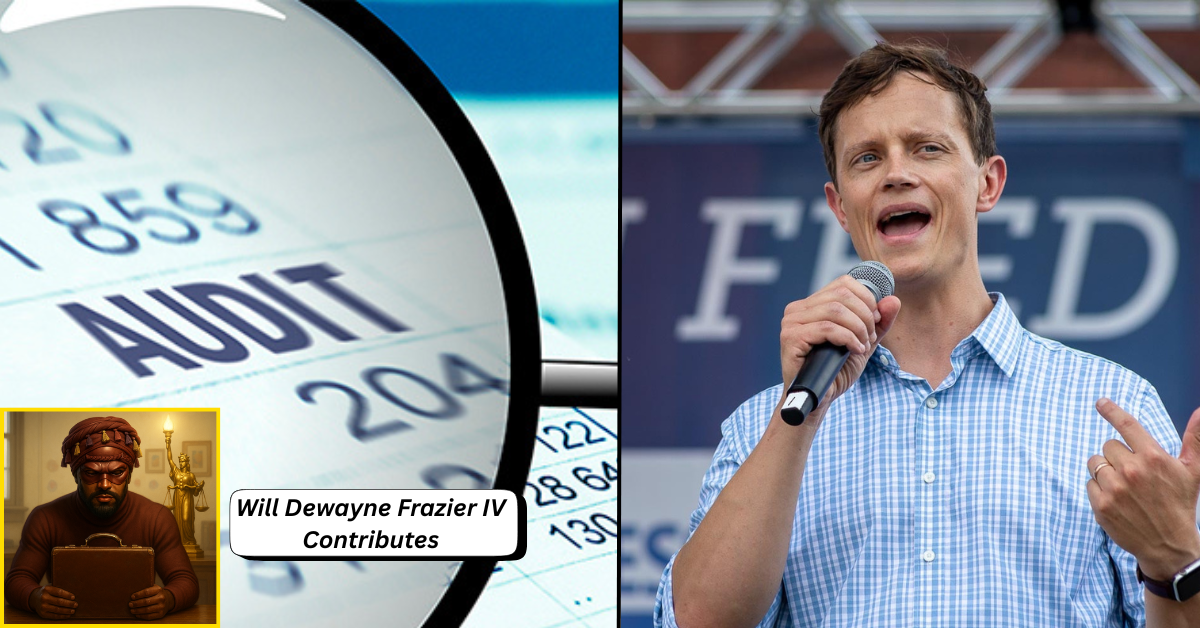
Rob Sand BUSTS Iowa Police Chief – “Got Um”

Published

on

In the rolling farmlands of central Iowa, where community trust is the glue holding small towns together, a routine financial review has exposed a web of overpayments and oversight lapses that cost taxpayers nearly $90,000. On Thursday, November 6, Iowa State Auditor Rob Sand released a scathing special investigation into the City of Baxter, revealing improper disbursements tied to three former officials—including William Daggett, who resigned that same morning as Mitchellville’s police chief. What began as whispers of padded timesheets in a town of just 1,000 residents has rippled outward, forcing a leadership vacuum in neighboring Mitchellville and igniting debates on accountability in rural governance.

Daggett’s swift exit—submitted hours after the report dropped—underscores the fragility of public service in Iowa’s heartland. Hired by Mitchellville in March 2024 after leaving Baxter amid internal scrutiny, the 20-year law enforcement veteran now faces not just reputational ruin but potential criminal probes. As Jasper County authorities and the Iowa Attorney General’s Office review the findings, this scandal serves as a cautionary tale: In places where officials wear multiple hats, the line between diligence and deceit can blur with devastating consequences.

The Unraveling in Baxter: A New Council’s Wake-Up Call

It was a crisp January morning in 2024 when Baxter’s freshly elected city council, buoyed by a wave of local change, cracked open the ledgers of their modest municipal operation. The town, nestled in Jasper County with its single stoplight and volunteer fire department, had long operated on faith in its core team: Police Chief William Daggett, who juggled patrols with a side gig in Van Meter; City Clerk Katie Wilson, the gatekeeper of the books; and EMS Coordinator Randi Gliem, coordinating life-saving responses. But as the new officials pored over payroll stubs and credit card statements, the numbers didn’t add up—timesheets bloated with hours unverified by dispatch logs, vacation payouts exceeding earned balances, and Visa charges for items that vanished from city inventories.

By early February, an internal probe had escalated into a full-blown crisis. Gliem resigned on the 5th, citing personal reasons but skipping a pivotal review meeting. Ten days later, Wilson and Daggett followed, their departures leaving Baxter’s public safety apparatus in disarray. The council, acting on mounting suspicions, fired off a “qualifying request” to Sand’s office—a taxpayer-funded mechanism designed to unearth fiscal foul play. What they uncovered wasn’t just sloppy bookkeeping; it was a pattern of excess that drained public coffers, from overlapping shifts that let Daggett collect dual paychecks to undocumented swipes at big-box stores. As one anonymous council member told local reporters, “We trusted them to protect us, not pick our pockets.”

Daggett’s Quick Pivot: Hope in Mitchellville Turns Sour

Undeterred by the Baxter fallout, Daggett polished his resume and landed the chief’s role in Mitchellville by March 4—a town of 2,300 with ambitions to bolster its force amid growing suburban sprawl from Des Moines. Elected officials there saw a seasoned operator: Daggett’s bio touted decades on the beat, from traffic stops to crisis negotiations. Yet red flags lingered. Mitchellville’s human resources team, spotting echoes of Baxter’s payroll puzzles in Daggett’s timesheets, quietly requested their own state audit in the spring. “We hire for integrity,” Mayor Scott Meeker said in a statement Friday, “and when questions arise, we act decisively.”

The move proved prescient. As Sand’s team dug into Baxter’s records—cross-referencing timesheets against Jasper County Sheriff’s call-in logs and employment overlaps—the discrepancies piled up. Daggett’s claimed full shifts often coincided with zero check-ins, suggesting ghost hours billed while he worked elsewhere. By summer, whispers in Mitchellville’s city hall grew louder, with staffers trading notes on unapproved comp time accruals. The audit’s release on Thursday morning hit like a siren: Daggett’s resignation letter arrived before noon, accepted provisionally by Meeker pending a council vote next week. In its wake, the department’s 12 officers are left leaderless, with a veteran sergeant stepping in as interim chief.

Audit Deep Dive: The Numbers That Don’t Lie

Sand’s 40-page report, spanning July 2021 to February 2024, paints a damning portrait of lax controls in Baxter’s $1.2 million annual budget. At the epicenter: $51,275.62 in overpayments to Daggett alone, broken down into excess wages ($41,944.77 from 36 unverified pay periods), comp time payouts ($6,667.33 for 161 ineligible hours), and duplicate billing ($2,663.52 for 65 hours claimed across two full-time jobs). Wilson netted $3,509.55 in improper comp time, inflated by mathematical errors and leave-period earnings, while Gliem pocketed $1,461.09 via overtime misclassifications and phantom EMS shifts. Add $1,776.99 in volunteer payroll irregularities, and payroll alone siphoned $58,023 from the till.

Beyond wages, the probe flagged $11,294.57 in unsupported expenditures—credit card splurges at Amazon and Target without receipts, totaling $5,932.32, plus vendor checks for groceries and gear that never reached city shelves. Another $15,035.90 went to questionable vendors, including $4,050 overpaid to a uncertified water operator. Late fees tacked on $129.81, and utility bungles left $3,814.88 uncollected in penalties and deposits. “These weren’t isolated slips,” Sand said at a Des Moines presser. “They point to systemic failures—no reviews, no segregation of duties, just trust without verification.” The auditor referred the file to prosecutors, hinting at theft or forgery charges under Iowa Code.

Legal Implications for the Individuals Involved

By Billy D. Frazier IV – Senior Judicial Legal Analyst (Iowa / National)

Auditor’s Findings and Context (Opinion): The Baxter audit exposes a breach of fiduciary duty—officials mishandled public funds by failing to verify hours and purchases. Under Iowa Code § 721.2(5), that could amount to “Misconduct in Office.” It shows how trust alone cannot replace documented accountability in small-town government. Layman’s terms: They were supposed to take care of taxpayers’ money, but they didn’t double-check what was being spent. That’s not just sloppy—it could be a crime when public cash is handled carelessly.

The Numbers That Don’t Lie (Opinion): With $51,275.62 in overpayments to one officer, the losses exceed felony thresholds under Iowa theft statutes if intent is proven. Citizens are owed restitution and deterrence; repayment alone cannot close the case. Layman’s terms: That’s a lot of money—enough to count as a felony if he meant to do it. Paying it back isn’t the same as facing justice; taxpayers deserve both accountability and prevention.

Fallout and Voices: Resignation, Reckoning, and Repercussions

The shockwaves reached Mitchellville’s council chambers by evening, where members huddled to appoint an interim and launch a national search for Daggett’s replacement. “This is a blow, but we’re committed to transparency,” Meeker told KCCI, emphasizing the city’s parallel audit request as proactive governance. Daggett, reached briefly outside his home, declined comment, but sources close to him say he’s cooperating fully and disputes the audit’s characterizations as “overreach on incomplete logs.”

Sand, a Democrat wrapping up his term amid re-election buzz, used the podium to rally local watchdogs. “Audits like this happen because someone speaks up,” he urged, noting the report’s reliance on the council’s tip. “Public trust is the real currency here—lose it, and reputations follow.” Indeed, the scandal has locals buzzing: Baxter’s Facebook groups brim with calls for repayment plans, while Mitchellville residents petition for ethics training. No charges have landed yet, but the shadow looms large over the ex-officials’ futures.

Lessons for Iowa’s Heartland: Beyond Baxter’s Borders

This isn’t Baxter’s anomaly; it’s a symptom of strains in Iowa’s 900-plus municipalities, where budgets scrape by on property taxes and part-time clerks double as bookkeepers. The report lambasts absent safeguards—no monthly bank reviews, no council sign-offs on payroll—echoing audits in Eldora and Correctionville that flushed out similar grift. Statewide, Sand’s office fields 50 such requests yearly, up 20% since 2020, as post-pandemic hiring booms expose weak spots.

Yet hope flickers in reform pushes: Bills in the Iowa Legislature aim to mandate annual internal audits for towns under 5,000 residents, with whistleblower bounties for tips leading to recoveries. “It’s about empowering the everyday Iowan,” says Sen. Rob Hogg, a Cedar Rapids Democrat sponsoring one measure. For now, Baxter’s council is overhauling policies—segregating duties, digitizing receipts—while Mitchellville eyes body cams for fiscal accountability, a cheeky nod to policing its own books.

Broader Judicial and National Perspectives

By Billy D. Frazier IV – Senior Judicial Legal Analyst (Iowa / National)

Daggett’s Resignation and Broader Impact (Opinion): Resigning the same day the audit dropped looks like consciousness of guilt—a signal he knew trouble was coming. Mitchellville may face exposure for negligent hiring if it ignored Baxter’s red flags, since public employers must vet applicants who handle taxpayer funds. Layman’s terms: Quitting right after the report makes it look like he knew he’d been caught. The next town that hired him might get in trouble too for not checking his background first.

Audit Corroboration and Resignation (Opinion): Cross-checking Baxter payrolls with Sheriff dispatch logs proved dual-employment conflicts and potential conversion of public funds. Daggett’s resignation before termination could be viewed as an attempt to preserve benefits or limit accountability. Layman’s terms: The audit showed he was clocked in two places at once—getting double-paid. Stepping down early might help him keep his pension, but it doesn’t erase what happened.

Outlook: Rebuilding Trust, One Ledger at a Time

As November’s chill settles over Iowa’s prairies, Baxter and Mitchellville stand at a crossroads. The cities could recoup some losses—Daggett already repaid $123.44 for minor items—but full restitution hinges on prosecutors’ grit. For Daggett, a return to private security seems likely; for Wilson and Gliem, quieter paths await. Sand’s report ends with a clarion call: “Fiduciary duty isn’t optional—it’s the oath of office.”

In the end, this saga reminds us that in America’s small towns, the badge of public service weighs heaviest when balanced against the ledger. As Baxter’s new clerk logs her first unblemished payroll, and Mitchellville’s interim chief radios in for duty, one truth endures: Accountability isn’t just good policy—it’s the patrol car keeping watch over us all.


*Disclaimer: The views expressed by Billy D. Frazier IV, Senior Judicial Legal Analyst (Pro Se), are for educational and public advocacy purposes only and do not constitute legal advice or attorney services. Mr. Frazier is not a licensed attorney and acts solely as a pro se litigant and public legal educator.*

Continue Reading

Iowa

RICO in Iowa: Cedar Rapids Lead Map Breaks EPA Rules?

Published

on

The latest filing in Frazier v. Jones does not arise from speculation or hindsight. It arises from a federally mandated change that took effect at the end of 2024.

Under updated EPA Lead and Copper Rule requirements, municipalities were required to complete and publicly maintain more accurate service line inventories, including how “unknown” lines are classified for replacement planning. Once those standards were applied, Cedar Rapids’ long-standing public representations about its water system began to shift — quickly and materially.

“This isn’t speculation. Almost all of the evidence I’m using comes straight from their own documents — the City, housing authorities, state agencies, and federal law. I’m not creating it. I’m producing it.”
— Will Frazier


How the RICO Claim Reached the Water Issue

Civil RICO is not meant to capture isolated errors. It addresses patterns of conduct, particularly where institutions respond defensively once compliance obligations tighten.

In recent federal filings, Frazier notified the court that newly discovered evidence related to water infrastructure and public safety — evidence required to exist under updated federal rules — had been transmitted prior to judgment but not considered. He further alleges that retaliatory actions escalated after he began requesting records tied to that required data.

RICO does not require proof of intent at the outset. It requires showing repeated conduct, notice, contradiction, and harm tied to coordinated behavior. That is why water infrastructure data became relevant to the case — not as a separate environmental lawsuit, but as context for how systems respond when compliance becomes unavoidable.

“This isn’t about one mistake. It’s about how institutions respond once compliance becomes unavoidable.”
— Will Frazier


Why the “17 Percent” Figure Changed

Cedar Rapids Water Service Line Map (Current)

For years, Cedar Rapids publicly referenced an estimate of roughly 17 percent lead-related service lines. That figure existed in a regulatory environment where “unknown” classifications were common and not always treated as presumptive lead for planning purposes.

That changed.

Under EPA Lead and Copper Rule revisions finalized and enforced by late 2024, municipalities are now required to treat unknown service lines far more conservatively — effectively as presumptive lead until proven otherwise. This affects planning, disclosure, and replacement prioritization.

Once those standards are applied:

  • Large “unknown” areas no longer remain neutral
  • Many lines shift into galvanized requiring replacement or presumptive lead
  • Exposure appears more concentrated in older housing stock

“Seventeen percent was never the ceiling. Once the EPA required cities to apply the law correctly, the numbers changed.”
— Will Frazier

This is not a retroactive accusation. It is the consequence of updated federal compliance requirements.

Cedar Rapids Map (Applying EPA Guidelines for Unknown Pipes)


What Happened After the Records Request

After formally requesting records explaining how Cedar Rapids was classifying service lines under the updated federal standards, Frazier did not receive documents.

Instead, the City placed a yellow door tag — not on his door, but on his neighbor’s.

The notice stated that the Water Department needed to repair or inspect the water meter. According to Frazier, the City later acknowledged the visit was connected to his records request.

“I asked for paperwork. I didn’t ask them to show up at someone’s house. And I didn’t ask them to inspect a water meter — because a water meter isn’t a service line.”
— Will Frazier

A water meter is municipal equipment used for billing and readings. It is not a lead pipe and not a galvanized service line. Frazier argues that labeling the visit as a meter repair contradicts the stated purpose of verifying line classifications.

More significantly, the notice was left only on the door of a non-litigant neighbor, not the litigant who made the request. In active litigation — particularly where retaliation has already been alleged — selective contact with a vulnerable third party raises serious concerns.

“You don’t contact the weaker party next door and pretend it’s routine. That’s intimidation — and the paper trail proves it.”
— Will Frazier

At this stage, Frazier is not required to prove motive. He is required to show notice, contradiction, and pattern — which he argues the documentation now reflects.


Why the Water Issue Fits the RICO Pattern

The door-tag incident does not stand alone. Frazier points to a consistent pattern that emerges once federal compliance tightened:

  • Risk classifications change only after scrutiny
  • Requests for records trigger physical actions instead of disclosures
  • Administrative framing is used to minimize urgency
  • Corrections occur under pressure, not proactively

In civil RICO analysis, pattern matters more than any single act. The same institutional behavior alleged in housing enforcement and court proceedings appears again in the City’s response to newly required water data.


What Is at Stake Now

Because the updated inventory requirements only took effect recently, the stakes are forward-looking.

Until service lines are accurately classified and replaced under current federal standards, entire categories of projects remain exposed:

• Downtown and riverfront redevelopment
• Public-private construction initiatives
• Casino-adjacent and infrastructure-heavy developments
• Federal and state funding tied to environmental compliance

EPA funding, environmental justice reviews, and financing disclosures all rely on accurate, current inventories — not outdated classifications.


What Comes Next

Frazier has now formally notified federal courts and agencies that his RICO case has expanded to include newly required water infrastructure data, supported by municipal records and updated federal law.

The question is no longer whether Cedar Rapids has lead or galvanized service lines — that is a known issue nationwide. The question is how institutions responded once federal rules required greater accuracy, and whether actions taken after that point crossed into retaliation or obstruction.

That question is now part of the federal record.

Continue Reading

Iowa

Public Statement from Kristin Mitchell

Published

on

On My Disassociation from the Family Justice and Accountability Act (FJAA) and the Launch of Stone Soup for Justice

After an extensive period of prayer, reflection, and careful consideration, I must make a difficult and deeply serious announcement.

With a heavy heart, I am formally and fully ending my association—of any capacity—with the Family Justice and Accountability Act (FJAA) and its founder, Francesca Amato.

I do not make this decision lightly. I have worked too hard, for too long, to elevate the voices of my family, Iowa families, and families across this country; to build constructive relationships with lawmakers; and to earn trust through careful, honest advocacy. I cannot allow my name, reputation, or work to be tied to conduct and representations that I believe are dishonest, exploitative, and fundamentally misaligned with the kind of reform our children deserve.


Ethical and Policy Concerns

My decision is rooted in both policy and ethics.

I have personally witnessed parents paying thousands of dollars for “services” that delivered little meaningful support or tangible outcomes. I have also observed what I consider to be cult-like dynamics within the organization—expectations of unquestioning loyalty to leadership, pressure to accept narratives that conflicted with facts, and hostility toward legitimate professional accountability.

In my view, this environment harms vulnerable families who are seeking help, not control.


Misrepresentation to Lawmakers

I am especially troubled by a pattern of mistruths and overstatements directed at legislators and the public.

I was informed that Senator Chuck Grassley’s office and other U.S. Senate offices “100% stand behind” the FJAA bill. I know firsthand that this is not accurate. I have worked directly with Senator Grassley’s staff and other congressional offices and have earned their respect by being precise, honest, and careful in what I represent.

While Senator Grassley stands firmly for accountability and transparency—and remains fully supportive of his constituents—his office does not support the FJAA bill. He has expressed concern that it blurs state and federal authority and creates confusion rather than clarity.

I cannot and will not attach my name to claims of congressional support that I know are untrue, nor to a 94-page bill that, in my judgment, overreaches, confuses jurisdictional boundaries, and risks undermining broader reform efforts.


Retaliation and Unprofessional Conduct

I have observed a troubling pattern of unprofessional and retaliatory behavior from Francesca Amato that I find incompatible with serious policy work.

This has included:

  • Speaking negatively about advocates behind their backs while presenting warmth to their faces
  • Creating unnecessary conflict between advocacy groups
  • Encouraging supporters to attack other advocates in her defense
  • Demanding public gratitude or deference
  • Responding to substantive policy concerns with personal attacks

When I raised legitimate concerns about state–federal boundaries and Title IV-E compliance, the response was not honest policy discussion but attacks on my character.

Most concerning, my private medical information and lawful medical treatment were weaponized in an attempt to discredit me. Given that Francesca Amato presents herself as an ADA advocate, I view this as a serious violation of medical privacy and disability rights.

I have also observed a broader lack of personal responsibility in routine matters, which further eroded my trust. These are not the hallmarks of accountable leadership.


Implausible Claims and False Hope

I was repeatedly presented with grandiose and implausible claims, including assertions of imminent executive orders, high-level meetings, promises to personally take me to meet President Trump because he was “about to sign” the FJAA, and statements that Robert F. Kennedy Jr. was reviewing the bill.

When such claims are made without evidence—and used to build loyalty, financial commitment, or hope from traumatized families—that crosses a line.

Survivors of system harm deserve transparency, realism, and integrity. Not fantasies.


Formal Disassociation

For all of these reasons, I am formally and completely disassociating myself from:

  • The Family Justice and Accountability Act (FJAA)
  • Its current bill
  • Any claim that I support or endorse Francesca Amato’s strategies, representations, or leadership

Moving Forward: Stone Soup for Justice

I remain deeply committed to child welfare reform, sibling preservation, and enforcement of federal law—particularly Title IV-E—in a way that is honest, targeted, and workable.

Going forward, I will be focusing my efforts on Stone Soup for Justice, a new collaborative team and legislative vehicle grounded in truth, accountability, and cooperation. Stone Soup for Justice reflects our belief that real reform is built collectively—through transparency, shared responsibility, and rigorous policy work—not through control or misinformation.

I am honored to move forward with the advisement and support of Kathleen Arthur, a long-respected and credible voice in Congress on child welfare and federal funding. Together with Stone Soup for Justice, we are developing legislation tightly focused on Title IV-E requirements and enforcement.

Our work will center on:

  • Misuse of Title IV-E funds
  • Federal compliance standards states must meet to receive and retain funding
  • Wrongful removals and wrongful terminations of parental rights
  • Removals and terminations that resulted in injury or death
  • Family-court-forced separations
  • Failures to prioritize kinship placement and sibling preservation
  • Violations of reasonable-efforts requirements
  • Systemic practices that bypass federally mandated protections for parents and children

At the end of the day, my goal is to deliver the results and meaningful change families deserve—especially those who placed their trust elsewhere—through honest advocacy, precise lawmaking, and steadfast accountability.

My loyalty is, and always will be, to the children and families of Iowa and to families across this country seeking real, sustainable change.

I will not compromise that mission to remain aligned with conduct I cannot defend.

Kristin Mitchell


Supporting Statements

Kathleen Arthur (Left)

“Children must come first. I have been working on fixing the Families First Act since it was passed. It simply did not have enough protections or oversight. It did not solve the funding problems. Change is slow; however, we are on the edge of making major change in child welfare. This team has clicked with members of Congress better than any I have ever seen. Congress is ready. The ground is fertile. The time to plant the seeds is now.”

Tasha Ulshafer (Left)

“I’m excited to start this new journey with the amazing new group I’m with. Moving forward with people who stand for truth and real action feels empowering. I was misled before by Francesca Amato, but that chapter is closed.”

Melissa Owens (Left)

“I am withdrawing my support and any association with the Family Justice and Accountability Act 2025 and its organizer after discovering serious constitutional issues with the bill and witnessing harmful, cult-like organizational behavior. My commitment to families navigating the family court and CPS systems remains unchanged. I will now be working with a new group, including Kristin Mitchell, Kathleen Arthur, and others at Stone Soup for Justice, to develop federal legislation that truly protects children and keeps them in loving homes. While this change may come as a surprise to many people I deeply care about, this new path reflects my dedication to finding real, ethical, and effective solutions for those who are suffering and seeking true resolution.”

Continue Reading

Iowa

Cedar Rapids Wins AWWA ‘Best-Tasting Water’ Prize, 17% Face Lead Risks — AWWA Sues EPA Over Lead Regulations

Published

on

Lead Lines, Local Coverage, and the AWWA Paradox

In 2025, even as Cedar Rapids was being celebrated by the American Water Works Association (AWWA) for having the “Best-Tasting Drinking Water in Iowa,” the city’s own data was telling a very different story — and so was AWWA.
Because at the same time AWWA was handing out awards, it was also suing the U.S. Environmental Protection Agency to block or delay the EPA’s new lead-pipe regulations.

When Cedar Rapids published its updated water-service-line map in fall 2024, it quietly confirmed something huge:
Roughly 9,000 service lines in the city were flagged as lead, galvanized downstream of lead, or “unknown / possibly lead” — about 17% of all service lines in Cedar Rapids.

That inventory wasn’t optional. It existed because of the EPA’s new Lead and Copper Rule Improvements (LCRI) — the very rule AWWA is fighting in court — which requires every community water system in the country to identify and replace lead service lines over roughly the next decade. Nationally, the EPA estimates around 9 million homes are still served by legacy lead pipes (US EPA).

Cedar Rapids is just one dot on that national map. But the way the story has been told here — in city press releases, local TV, and regional newspapers — raises real questions about who gets warned, how clearly, and why an organization actively trying to limit federal lead-pipe regulations is also handing out awards for “best drinking water.”

City of Cedar Rapids Official Announcements (Fall 2025)

October 6, 2025 – City News Release:
The City of Cedar Rapids publicly announced that “this year’s panel and conference attendees selected Cedar Rapids’ drinking water as Iowa’s Best-Tasting Drinking Water 2025!” at the Iowa Section AWWA annual conference. In the same release, Utilities Director Roy Hesemann emphasized the water’s safety and reliability, stating that “City staff work hard to provide clean, safe, and great-tasting water to our residents and customers every minute of every day.” City Manager Jeff Pomeranz reinforced the message, adding that “our high-quality water drives investment in our community, creating opportunities for thousands of Cedar Rapids residents.”
These statements framed the award not just as a taste victory, but as validation of cleanliness, safety, quality, and economic value.

Mid-October 2025 – City Social Media Promotion:
Across Facebook, LinkedIn, and Instagram, the City prominently celebrated the award. One official post read:
“The Water Division at the City of Cedar Rapids works hard around the clock to deliver clean, great-tasting drinking water… It is our pleasure to be awarded the 2025 Best Tasting Water in Iowa at this year’s AWWA Iowa Section conference by not only a panel of judges but by attendees as well. This is the fifth time Cedar Rapids has held the title, and it’s an honor we do not take lightly. Fill your glass straight from the tap and enjoy Iowa’s Best Tasting Water today!”
The messaging again stressed cleanliness, reliability, and pride in the city’s water system.

City “Rankings & Recognition” Materials:
Cedar Rapids regularly includes this accolade in official brag sheets. The city’s “Rankings and Honors” list, shared by the tourism bureau, states:
“Cedar Rapids has Iowa’s Best-Tasting Drinking Water according to the Iowa Section of the American Water Works Association.”
Although referencing the 2023 win, the city repeated this framing after receiving the 2025 award—consistently presenting its water as award-winning and high-quality.


1. The Map That Shows Where the Risk Really Is

On October 8, 2024, Cedar Rapids utilities staff presented a new interactive service-line map and inventory to the City Council and posted it on the city website. (Cedar Rapids)

Key numbers from that inventory:

  • Total service lines: ~54,000
  • Lines with confirmed lead or galvanized-after-lead + lines labeled “unknown / possibly lead”: about 9,000
  • City’s own summary: this equals “about 17%” of Cedar Rapids service lines. (The Gazette)

Zoom into the map and a pattern jumps out:

  • The older core of Cedar Rapids — downtown and surrounding neighborhoods — is heavily speckled with red and orange:
    • Verified galvanized iron or lead
    • Unknown / possibly lead
  • Newer suburban areas are mostly green, labeled not lead.

In other words, the highest concentration of risk is exactly where you’d expect: older, denser, often lower-income housing stock in the city core.

Will’s house and his neighbor’s home, both part of an ongoing housing and retaliation lawsuit, show up in that same zone of concern — flagged as lines that may contain or have historically been connected to lead, even after he personally replaced a severely corroded galvanized pipe in his own basement.


2. What Cedar Rapids and The Gazette Told the Public in 2024

To their credit, The Gazette actually did cover this early.

  • On Oct. 8, 2024, the same day as the city presentation, The Gazette reported that “up to 17% of Cedar Rapids water service lines could contain lead”, citing the new inventory and map. (The Gazette)
  • A follow-up Nov. 14, 2024 story explained that Cedar Rapids had mailed notices to about 9,000 homes and businesses whose lines were lead, galvanized-after-lead, or unknown — again, roughly 17% of all service lines. (The Gazette)

That same piece compared Cedar Rapids to nearby communities:

  • Iowa City: ~11% of service lines potentially lead-related
  • Marion: ~8%
  • Vinton: a stunning ~66%
  • Several smaller towns landing between 25% and 50% (The Gazette)

So by mid-November 2024, both the city and The Gazette had publicly:

  1. Acknowledged a large number of lead-related or uncertain service lines
  2. Told people that letters were being sent to addresses tied to those lines
  3. Pointed residents to the online inventory map

On paper, that sounds transparent. But that’s not what many residents experienced.


3. Who Got Warned, and When?

In the KCRG piece aired Nov. 20, 2024, viewers were told that in Cedar Rapids:

“Approximately 7,800 homes received a letter… it costs at least $7,500 to replace one service line.”

(From the on-screen graphic in KCRG’s “Letters about lead pipes and drinking water” segment.) (https://www.kcrg.com)

Meanwhile, Billy “Will” Frazier IV — a Section 8 tenant already litigating housing conditions and retaliation — says he:

  • Never received a lead letter in 2024
  • Only got his first “possible lead / unknown” notice in 2025, after:
    • He dug up and replaced a clogged galvanized line in his house
    • Filed a federal RICO case and a separate housing suit
    • Recorded metal sediment clogging his washer valves after a street main break
    • Filed lis pendens on his property and his neighbor’s, effectively freezing sale or transfer while the case was active

From his perspective, the timing looks less like routine notification and more like damage control after a tenant pushed his case into federal court.

The documented sequence:

  1. Oct. 8, 2024 – City releases inventory + map; Gazette reports “up to 17%” and details numbers. (Cedar Rapids)
  2. Nov. 14, 2024 – Gazette reports CR has mailed ~9,000 notices about lead/unknown/galvanized-after-lead lines. (The Gazette)
  3. Nov. 20, 2024 – KCRG airs story and graphic noting 7,800 Cedar Rapids homes receiving letters. (https://www.kcrg.com)
  4. 2025 – After Will files a notice of lis pendens, the City issues lead-related notices to him and his neighbor — even though their properties were already located within a service-line area the map identified as potentially containing lead.

On one side, you have official statements that “everyone who should have gotten a letter has gotten one.” On the other, you have residents in the most affected neighborhoods saying, no, we didn’t — not until we became a legal problem.


4. The 17% City, Living in a 9-Million-Home Country

Cedar Rapids isn’t unique. Nationwide:

  • EPA and state inventories estimate more than 9 million U.S. households still get their water through lead service lines. (US EPA)
  • The new LCRI rule sets a roughly 10-year deadline to replace all lead service lines and to identify every “unknown” line. (Department of Natural Resources)

Across Iowa, state guidance required every community system to submit a complete inventory by October 16, 2024, which is why Cedar Rapids and other cities rushed their numbers and maps into place last fall. (Department of Natural Resources)

But Cedar Rapids stands out because:

  • It publicly markets itself as a “best-tasting drinking water” city, winning repeated awards from the Iowa Section of the American Water Works Association (AWWA). (Cedar Rapids)
  • It has a documented 17% of service lines that are lead, galvanized-after-lead, or unknown. (The Gazette)

So you end up with two simultaneous realities:

On the marketing side: “Top-tier water, award-winning taste, best in Iowa.”
On the infrastructure side: “Roughly one in six service lines is either lead-related or not fully identified.”

That gap is exactly where trust breaks.


5. Media Reassurance vs. On-the-Ground Reality

While letters and maps were rolling out, Cedar Rapids residents were also hearing a different message:

  • In June 2025, The Gazette reported on nitrate spikes in some Iowa rivers and mentioned Cedar Rapids drinking water specifically. City officials were quoted saying the water remained safe, thanks to treatment and monitoring, even as nitrate levels near the city’s intake had approached or exceeded federal limits. (The Gazette)

Put these together:

  1. Fall 2024: stories about lead inventories and notices, with strong reassurance that water is safe and corrosion control is working. (The Gazette)
  2. June 2025: a nitrate story again emphasizing safety and treatment success. (The Gazette)
  3. October 2025: local TV, radio, and the city itself loudly celebrating “Best-Tasting Drinking Water in Iowa 2025,” given by the Iowa Section of AWWA. (https://www.kcrg.com)

Meanwhile, Will is documenting:

  • Years of low-flow bathtub water
  • A heavily corroded galvanized pipe he had to replace himself
  • Metal debris in his washer valves after a city main break
  • A late-arriving lead notice on a house where he’d already done emergency plumbing
  • A home flagged on the city map as “unknown/possibly lead” tied into ongoing litigation

From his vantage point, the messaging sounds less like “we’re fixing this” and more like “we’re managing the optics.”


6. The National AWWA Lawsuit Hanging Over All of This

Here’s where the paradox gets impossible to ignore.

The Iowa Section of AWWA — the same group handing Cedar Rapids its “Best-Tasting Drinking Water” awards — is part of the national American Water Works Association. (Cedar Rapids)

In December 2024, that national AWWA filed a Petition for Review in the D.C. Circuit Court, challenging EPA’s new Lead and Copper Rule Improvements. (American Water Works Association)

AWWA’s own statements say it supports replacing all lead service lines, but argues the rule’s requirements and timelines are too strict, too fast, and too expensive for utilities. (American Water Works Association)

In practical terms, that lawsuit:

  • Seeks to weaken or delay the very federal rule meant to force full replacement of lead and galvanized-after-lead service lines nationwide
  • Comes at the same moment Cedar Rapids is:
    • Reporting 17% lead-related or unknown lines
    • Mailing letters and posting maps that quietly acknowledge the scope of the problem
    • Winning state AWWA awards for how great its drinking water tastes

So when Will looks at the TV and sees Cedar Rapids celebrated for “Best-Tasting Drinking Water 2025,” his reaction is blunt:

“Whose water are they tasting? Because it sure isn’t the homes with corroded pipes, metal in the washer, and kids bathing in slow, discolored water.”

From his point of view, the award isn’t just tone-deaf — it’s part of a coordinated national strategy:

  • Reassure the public with taste tests and marketing
  • Downplay the urgency of full lead-line replacement
  • Fight EPA in court to slow or soften mandates that would otherwise protect tenants like him, and homeowners across Iowa, much faster.


7. Why This Matters Beyond One City

Cedar Rapids is not Flint. But that’s exactly why this story matters.

  • Flint was the wake-up call.
  • The LCRI and federal funding are supposed to be the response. (US EPA)
  • AWWA’s lawsuit, and the way awards are being handed out while that case is pending, show how industry groups can slow enforcement while still looking like champions of “safe, high-quality water.” (American Water Works Association)

Cedar Rapids just happens to sit at the crossroads:

  • A city with documented lead-related service lines
  • A map that clearly shows older neighborhoods bearing the brunt
  • Local media that did report the numbers, but then quickly shifted back to stories about “safe water” and “best-tasting” awards
  • And a tenant whose housing and retaliation case forced those contradictions into the open.

This article is about Cedar Rapids.
The next article will zoom out:

  • How many cities like this exist?
  • How often are awards and reassurance used to blur the line between “legal compliance” and “actual safety”?
  • And what happens when the people living on the red and orange dots on those maps decide to fight back?

That’s where Watch the Water in Cedar Rapids goes next.

Continue Reading

Trending

Donate to Populist Wire

*Note: Every donation is greatly appreciated, regardless of the amount.