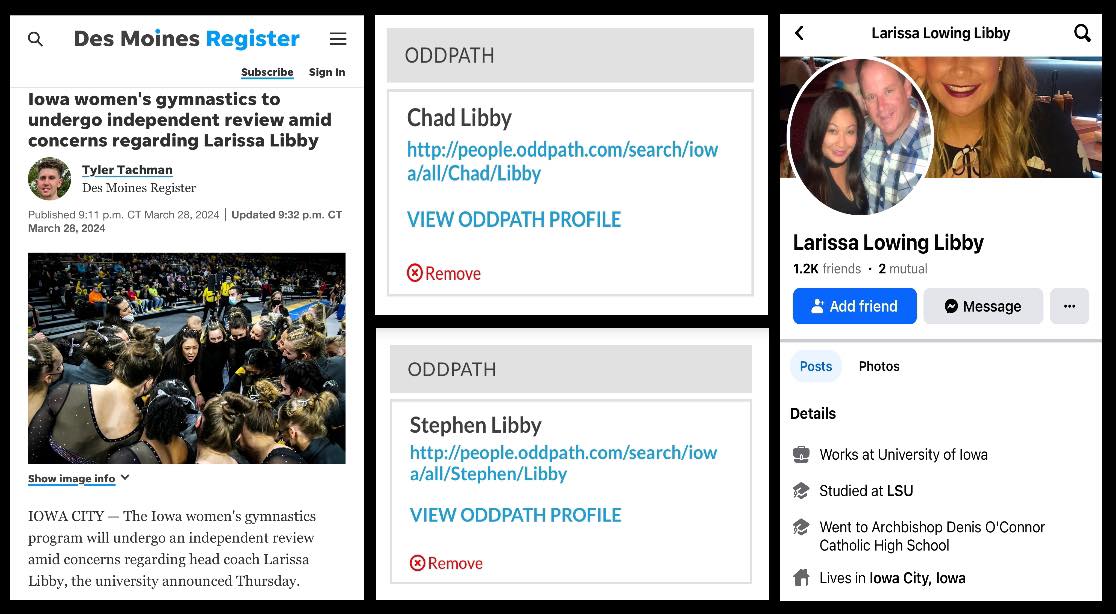
Amidst growing concerns surrounding the Iowa women’s gymnastics program, an independent investigation has been initiated by the University of Iowa’s athletic department. This decision comes in response to alarming reports raised by team members and staff regarding the program’s environment under the leadership of long-standing head coach Larissa Libby. The university’s commitment to addressing these concerns and ensuring the safety and well-being of its student-athletes remains paramount.
Larissa Libby, who has led the program for two decades, has been placed on paid administrative leave as the investigation unfolds. The university clarified that this measure is not punitive but rather a precautionary step to maintain the integrity of the review process. As the investigation progresses, all parties involved are eager for transparency and accountability.
Phil Catanzano, co-founder of the Boston-based Education and Sports Law Group, has been tasked with leading the investigation. With his expertise in sports law, Catanzano brings a wealth of experience to ensure a thorough and impartial examination of the situation. The university’s decision to enlist an independent investigator underscores its commitment to upholding the highest standards of integrity and fairness.
However, recent developments have added another layer of complexity to the situation. Hunter Light, a prominent figure in the Iowa community, has uncovered unsettling information regarding Larissa Libby’s husband and her husband’s father, Stephen, in connection with Oddpath accounts. Oddpath, a controversial platform known for its opaque practices, has become a focal point of concern in Iowa as unusual incidents continue to emerge.
As the investigation progresses, the Oddpath connection raises further questions and intensifies community concerns. Hunter Light’s findings have ignited a wave of scrutiny, with many questioning the nature of the relationship between the Iowa women’s gymnastics program and the enigmatic platform.
In the midst of these developments, the University of Iowa remains steadfast in its commitment to transparency and accountability. The findings of the investigation will be instrumental in addressing any issues within the women’s gymnastics program and ensuring that the safety and well-being of student-athletes are prioritized above all else.
As the Oddpath saga unfolds in Iowa, it serves as a stark reminder of the importance of vigilance and accountability in collegiate athletics. The university community and supporters of the gymnastics program are anxiously awaiting the results of the investigation, hopeful that it will shed light on any underlying issues and pave the way for meaningful change.
In the meantime, the University of Iowa reaffirms its dedication to fostering a safe, respectful, and inclusive environment for all student-athletes. As the investigation progresses, the university will continue to work tirelessly to uphold its values and ensure that the Iowa women’s gymnastics program remains a place where excellence thrives and student-athletes flourish.
In 2025, even as Cedar Rapids was being celebrated by the American Water Works Association (AWWA) for having the “Best-Tasting Drinking Water in Iowa,” the city’s own data was telling a very different story — and so was AWWA. Because at the same time AWWA was handing out awards, it was also suing the U.S. Environmental Protection Agency to block or delay the EPA’s new lead-pipe regulations.
When Cedar Rapids published its updated water-service-line map in fall 2024, it quietly confirmed something huge: Roughly 9,000 service lines in the city were flagged as lead, galvanized downstream of lead, or “unknown / possibly lead” — about 17% of all service lines in Cedar Rapids.
That inventory wasn’t optional. It existed because of the EPA’s new Lead and Copper Rule Improvements (LCRI) — the very rule AWWA is fighting in court — which requires every community water system in the country to identify and replace lead service lines over roughly the next decade. Nationally, the EPA estimates around 9 million homes are still served by legacy lead pipes (US EPA).
Cedar Rapids is just one dot on that national map. But the way the story has been told here — in city press releases, local TV, and regional newspapers — raises real questions about who gets warned, how clearly, and why an organization actively trying to limit federal lead-pipe regulations is also handing out awards for “best drinking water.”
City of Cedar Rapids Official Announcements (Fall 2025)
October 6, 2025 – City News Release: The City of Cedar Rapids publicly announced that “this year’s panel and conference attendees selected Cedar Rapids’ drinking water as Iowa’s Best-Tasting Drinking Water 2025!” at the Iowa Section AWWA annual conference. In the same release, Utilities Director Roy Hesemann emphasized the water’s safety and reliability, stating that “City staff work hard to provide clean, safe, and great-tasting water to our residents and customers every minute of every day.” City Manager Jeff Pomeranz reinforced the message, adding that “our high-quality water drives investment in our community, creating opportunities for thousands of Cedar Rapids residents.” These statements framed the award not just as a taste victory, but as validation of cleanliness, safety, quality, and economic value.
Mid-October 2025 – City Social Media Promotion: Across Facebook, LinkedIn, and Instagram, the City prominently celebrated the award. One official post read: “The Water Division at the City of Cedar Rapids works hard around the clock to deliver clean, great-tasting drinking water… It is our pleasure to be awarded the 2025 Best Tasting Water in Iowa at this year’s AWWA Iowa Section conference by not only a panel of judges but by attendees as well. This is the fifth time Cedar Rapids has held the title, and it’s an honor we do not take lightly. Fill your glass straight from the tap and enjoy Iowa’s Best Tasting Water today!” The messaging again stressed cleanliness, reliability, and pride in the city’s water system.
City “Rankings & Recognition” Materials: Cedar Rapids regularly includes this accolade in official brag sheets. The city’s “Rankings and Honors” list, shared by the tourism bureau, states: “Cedar Rapids has Iowa’s Best-Tasting Drinking Water according to the Iowa Section of the American Water Works Association.” Although referencing the 2023 win, the city repeated this framing after receiving the 2025 award—consistently presenting its water as award-winning and high-quality.
1. The Map That Shows Where the Risk Really Is
On October 8, 2024, Cedar Rapids utilities staff presented a new interactive service-line map and inventory to the City Council and posted it on the city website. (Cedar Rapids)
Key numbers from that inventory:
Total service lines: ~54,000
Lines with confirmed lead or galvanized-after-lead + lines labeled “unknown / possibly lead”: about 9,000
City’s own summary: this equals “about 17%” of Cedar Rapids service lines. (The Gazette)
Zoom into the map and a pattern jumps out:
The older core of Cedar Rapids — downtown and surrounding neighborhoods — is heavily speckled with red and orange:
Verified galvanized iron or lead
Unknown / possibly lead
Newer suburban areas are mostly green, labeled not lead.
In other words, the highest concentration of risk is exactly where you’d expect: older, denser, often lower-income housing stock in the city core.
Will’s house and his neighbor’s home, both part of an ongoing housing and retaliation lawsuit, show up in that same zone of concern — flagged as lines that may contain or have historically been connected to lead, even after he personally replaced a severely corroded galvanized pipe in his own basement.
2. What Cedar Rapids and The Gazette Told the Public in 2024
To their credit, The Gazette actually did cover this early.
On Oct. 8, 2024, the same day as the city presentation, The Gazette reported that “up to 17% of Cedar Rapids water service lines could contain lead”, citing the new inventory and map. (The Gazette)
A follow-up Nov. 14, 2024 story explained that Cedar Rapids had mailed notices to about 9,000 homes and businesses whose lines were lead, galvanized-after-lead, or unknown — again, roughly 17% of all service lines. (The Gazette)
That same piece compared Cedar Rapids to nearby communities:
Iowa City: ~11% of service lines potentially lead-related
Marion: ~8%
Vinton: a stunning ~66%
Several smaller towns landing between 25% and 50% (The Gazette)
So by mid-November 2024, both the city and The Gazette had publicly:
Acknowledged a large number of lead-related or uncertain service lines
Told people that letters were being sent to addresses tied to those lines
Pointed residents to the online inventory map
On paper, that sounds transparent. But that’s not what many residents experienced.
3. Who Got Warned, and When?
In the KCRG piece aired Nov. 20, 2024, viewers were told that in Cedar Rapids:
“Approximately 7,800 homes received a letter… it costs at least $7,500 to replace one service line.”
(From the on-screen graphic in KCRG’s “Letters about lead pipes and drinking water” segment.) (https://www.kcrg.com)
Meanwhile, Billy “Will” Frazier IV — a Section 8 tenant already litigating housing conditions and retaliation — says he:
Never received a lead letter in 2024
Only got his first “possible lead / unknown” notice in 2025, after:
He dug up and replaced a clogged galvanized line in his house
Filed a federal RICO case and a separate housing suit
Recorded metal sediment clogging his washer valves after a street main break
Filed lis pendens on his property and his neighbor’s, effectively freezing sale or transfer while the case was active
From his perspective, the timing looks less like routine notification and more like damage control after a tenant pushed his case into federal court.
The documented sequence:
Oct. 8, 2024 – City releases inventory + map; Gazette reports “up to 17%” and details numbers. (Cedar Rapids)
Nov. 14, 2024 – Gazette reports CR has mailed ~9,000 notices about lead/unknown/galvanized-after-lead lines. (The Gazette)
Nov. 20, 2024 – KCRG airs story and graphic noting 7,800 Cedar Rapids homes receiving letters. (https://www.kcrg.com)
2025 – After Will files a notice of lis pendens, the City issues lead-related notices to him and his neighbor — even though their properties were already located within a service-line area the map identified as potentially containing lead.
On one side, you have official statements that “everyone who should have gotten a letter has gotten one.” On the other, you have residents in the most affected neighborhoods saying, no, we didn’t — not until we became a legal problem.
4. The 17% City, Living in a 9-Million-Home Country
Cedar Rapids isn’t unique. Nationwide:
EPA and state inventories estimate more than 9 million U.S. households still get their water through lead service lines. (US EPA)
The new LCRI rule sets a roughly 10-year deadline to replace all lead service lines and to identify every “unknown” line. (Department of Natural Resources)
Across Iowa, state guidance required every community system to submit a complete inventory by October 16, 2024, which is why Cedar Rapids and other cities rushed their numbers and maps into place last fall. (Department of Natural Resources)
But Cedar Rapids stands out because:
It publicly markets itself as a “best-tasting drinking water” city, winning repeated awards from the Iowa Section of the American Water Works Association (AWWA). (Cedar Rapids)
It has a documented 17% of service lines that are lead, galvanized-after-lead, or unknown. (The Gazette)
So you end up with two simultaneous realities:
On the marketing side: “Top-tier water, award-winning taste, best in Iowa.” On the infrastructure side: “Roughly one in six service lines is either lead-related or not fully identified.”
That gap is exactly where trust breaks.
5. Media Reassurance vs. On-the-Ground Reality
While letters and maps were rolling out, Cedar Rapids residents were also hearing a different message:
In June 2025, The Gazette reported on nitrate spikes in some Iowa rivers and mentioned Cedar Rapids drinking water specifically. City officials were quoted saying the water remained safe, thanks to treatment and monitoring, even as nitrate levels near the city’s intake had approached or exceeded federal limits. (The Gazette)
Put these together:
Fall 2024: stories about lead inventories and notices, with strong reassurance that water is safe and corrosion control is working. (The Gazette)
June 2025: a nitrate story again emphasizing safety and treatment success. (The Gazette)
October 2025: local TV, radio, and the city itself loudly celebrating “Best-Tasting Drinking Water in Iowa 2025,” given by the Iowa Section of AWWA. (https://www.kcrg.com)
Meanwhile, Will is documenting:
Years of low-flow bathtub water
A heavily corroded galvanized pipe he had to replace himself
Metal debris in his washer valves after a city main break
A late-arriving lead notice on a house where he’d already done emergency plumbing
A home flagged on the city map as “unknown/possibly lead” tied into ongoing litigation
From his vantage point, the messaging sounds less like “we’re fixing this” and more like “we’re managing the optics.”
6. The National AWWA Lawsuit Hanging Over All of This
Here’s where the paradox gets impossible to ignore.
The Iowa Section of AWWA — the same group handing Cedar Rapids its “Best-Tasting Drinking Water” awards — is part of the national American Water Works Association. (Cedar Rapids)
In December 2024, that national AWWA filed a Petition for Review in the D.C. Circuit Court, challenging EPA’s new Lead and Copper Rule Improvements. (American Water Works Association)
AWWA’s own statements say it supports replacing all lead service lines, but argues the rule’s requirements and timelines are too strict, too fast, and too expensive for utilities. (American Water Works Association)
In practical terms, that lawsuit:
Seeks to weaken or delay the very federal rule meant to force full replacement of lead and galvanized-after-lead service lines nationwide
Comes at the same moment Cedar Rapids is:
Reporting 17% lead-related or unknown lines
Mailing letters and posting maps that quietly acknowledge the scope of the problem
Winning state AWWA awards for how great its drinking water tastes
So when Will looks at the TV and sees Cedar Rapids celebrated for “Best-Tasting Drinking Water 2025,” his reaction is blunt:
“Whose water are they tasting? Because it sure isn’t the homes with corroded pipes, metal in the washer, and kids bathing in slow, discolored water.”
From his point of view, the award isn’t just tone-deaf — it’s part of a coordinated national strategy:
Reassure the public with taste tests and marketing
Downplay the urgency of full lead-line replacement
Fight EPA in court to slow or soften mandates that would otherwise protect tenants like him, and homeowners across Iowa, much faster.
7. Why This Matters Beyond One City
Cedar Rapids is not Flint. But that’s exactly why this story matters.
Flint was the wake-up call.
The LCRI and federal funding are supposed to be the response. (US EPA)
AWWA’s lawsuit, and the way awards are being handed out while that case is pending, show how industry groups can slow enforcement while still looking like champions of “safe, high-quality water.” (American Water Works Association)
Cedar Rapids just happens to sit at the crossroads:
A city with documented lead-related service lines
A map that clearly shows older neighborhoods bearing the brunt
Local media that did report the numbers, but then quickly shifted back to stories about “safe water” and “best-tasting” awards
And a tenant whose housing and retaliation case forced those contradictions into the open.
This article is about Cedar Rapids. The next article will zoom out:
How many cities like this exist?
How often are awards and reassurance used to blur the line between “legal compliance” and “actual safety”?
And what happens when the people living on the red and orange dots on those maps decide to fight back?
That’s where Watch the Water in Cedar Rapids goes next.
When Billy “Will” Frazier IV filed his first federal RICO lawsuit, it wasn’t about water. It was about retaliation, housing games, and courts more focused on procedure than protection.
But during that fight, something bigger came to the surface — signs of long-term contamination that no one had warned his household about. As Will pushed forward, the city continued insisting the water was “safe,” even as his filings documented problems that couldn’t be ignored.
Then, almost unbelievably, Cedar Rapids was celebrated on TV for having “the best tasting tap water in Iowa,” courtesy of the Iowa Section of the national American Water Works Association (AWWA).
At the same time, Will was filing lead-exposure emergencies, identifying galvanized lead service lines, and uncovering chemical hazards inside the very homes tied to his housing case.
This is how a retaliation lawsuit became the foundation for Watch the Water in Cedar Rapids.
1. “Two hours to fill the tub”
In a phone call recorded for this story, Will starts at the beginning:
“I moved in in 2017, discovered that something’s wrong with the pipes because the water was taking so long to come out of the tub. It’d take two hours to fill enough water to bathe my baby. So I had to pre-plan every night to bathe my baby… for three years.”
From 2017 to 2020, he says he raised the issue repeatedly:
To the landlords
To housing authorities and Section 8
To the city
But “nobody did anything about it.”
Finally, he decided to fix it himself.
2. Cutting open the floor
“Eventually in 2020, I decided, let me figure out how to do plumbing… I cut the floor up and the drywall and replace a four-foot galvanized lead pipe that was so corroded you could tell why the water wouldn’t come through.”
The inside of the pipe, he says, had narrowed from roughly half an inch in diameter down to a fraction of that — choked by corrosion and buildup. Once he replaced it, the water pressure normalized.
No inspection. No follow-up. No curiosity from the people who were supposed to keep low-income families safe.
“Nobody did anything about it, didn’t care. My water was running good. I was happy. I didn’t say anything else.”
For a while, the story could have ended there.
It didn’t.
3. Street work, a broken washer, and metal in the valves
Two or three years later, Will says, the city came back—this time outside.
“The city decides to disguise and install sidewalks in front of my house so they could tear out their portion of galvanized pipe to cover up what was going on… They couldn’t fix it knowingly because I wasn’t supposed to be in the house on Section 8 if they weren’t providing clean drinking water.”
Shortly after that work wrapped up, he says, the main water line in the street burst right in front of the house.
“When that happens, the water inlet valves to my washer clog up. So it breaks my washer… I took out the water valves, where the water lines come into the back of the washer, and there’s all type of metal contaminants and sediment inside the valves from the city disturbing the galvanized lead pipes.”
According to Will, the landlords were never forced to replace their side of the galvanized lines. The disturbance sent whatever was sitting in those pipes straight into his appliances—and his family’s water.
4. From RICO to lis pendens — and then the lead letters
By 2025, the legal war had escalated.
Will had already filed a federal RICO case and a separate housing suit. In the housing case, he recorded retaliation, discrimination, and attempts to evict him while he was raising health and disability concerns for his family.
He then filed lis pendens (notices/liens) on the rental property and a neighboring property owned by the same landlords—putting buyers and banks on notice that the homes were tied up in litigation.
“After I do that, the city sends out mass notices of lead—possibly lead, GRR—to everybody’s residences that have lead in their pipes. Mine and my neighbor’s was one of them.”
Those notices are at the heart of his filings. In a supplemental federal notice, Will and co-plaintiff Jean Goodfellow tell the court their residence contains galvanized lead service lines, confirmed through public documentation, city notices, and media reports. They also state a disabled child with an IEP and an infant have been consuming this water for years.
To Will, the timing was no coincidence.
5. GRR vs “possibly lead”: alleged misclassification
Under federal rules, homes with galvanized lines that were ever downstream of lead can be classified as GRR – “galvanized replacement required.”
“The federal law says they’re supposed to label my house and Jean’s house as GRR, galvanized replacement required. They hid it and disguised it as ‘possibly lead unknown’ to try to throw me and her off, because we’re in a lawsuit we could just amend and change to a water lead-contamination lawsuit too.”
In other words, Will alleges the city:
Knew these homes should be tagged as requiring replacement
Instead used a softer “possibly lead / unknown” classification
All while he and his neighbor were active plaintiffs in housing litigation
In his filings, he frames this as concealment, misclassification, and failure to warn, contributing to what he calls a “life-threatening lead-exposure emergency” for disabled tenants and children.
6. The Media Split-Screen: What the Public Was Told vs. What Was Really Happening — And the Numbers No One Mentioned
While Will was living through years of low pressure, metal debris in appliances, corroded galvanized pipes, and documented lead hazards, the public was being shown a very different story about Cedar Rapids’ drinking water — one built on selective reporting, reassuring headlines, and an award from a national water association that did not account for safety at all.
To understand the disconnect, it helps to look at the numbers.
Across Iowa, a 2025 statewide survey found that only about 4% of known service lines were confirmed as lead. Nationally, the EPA estimates roughly 9.2 million lead service lines remain in use, with many utilities still uncertain about the full extent of their inventories.
But Cedar Rapids was not in the average range. A city analysis showed that up to 17% of Cedar Rapids water service lines could contain lead — more than four times the state average and significantly higher than typical national city-level estimates.
That alone should have resulted in aggressive transparency and immediate public notification. Instead, residents got something else entirely.
In November 2024, KCRG aired a statewide story saying thousands of Iowans were receiving lead notifications. The broadcast even displayed a graphic stating:
“In Cedar Rapids: approx. 7,800 homes received a letter.”
Yet Will never received one. His neighbor never received one. The families now documented in federal filings — with ADA-protected children consuming contaminated water — received nothing in 2024.
Which raises a simple question: If 7,800 homes received letters, why were the ones with the clearest hazards left out?
Months later, in June 2025, The Gazette reassured the public that Cedar Rapids’ water was “safe” during nitrate spikes in the Cedar River. This came at the same time Will was recording metal sediment in his washer valves, documenting corroded galvanized service lines, and filing federal emergency notices describing a “life-threatening lead exposure” hazard inside the home.
None of that made it into the Gazette’s reassurance narrative.
Then in October 2025, KCRG ran a polished feature celebrating Cedar Rapids for winning the “Best Tasting Tap Water in Iowa” award. The honor came from the Iowa Section of the American Water Works Association (AWWA) — which is the Iowa chapter of the national AWWA, the same organization currently suing the EPA to block mandatory nationwide lead-pipe replacement rules.
The public was never told that the “best tasting water” award had nothing to do with safety, nothing to do with lead, and nothing to do with nitrate contamination. AWWA’s taste tests are based on appearance, odor, aftertaste, and mouthfeel — not the presence of neurotoxic metals.
Meanwhile, Cedar Rapids had up to 17% lead-suspect service lines, and Will documented physical evidence of contamination in court.
And then, in November 2025, when KCRG did report on lead-pipe concerns again, it centered the story entirely on Iowa City, despite Cedar Rapids issuing its own belated lead notices only weeks earlier — and despite Cedar Rapids being the city where contamination was part of an active courtroom record.
The message presented to the public was simple and reassuring. The message residents like Will received was silence.
This selective coverage, contradictory messaging, and award-driven optics created the split-screen that defined Cedar Rapids’ water narrative. It’s why Will said during the recorded call:
“It’s just optics. Fraud to trick the public.”
And he wasn’t wrong. Cedar Rapids’ lead burden was significantly higher than the state average. The city celebrated a taste award the same month residents were filing emergency lead-exposure notices. And media coverage consistently directed attention away from where the crisis was actually unfolding.
This gap between lived reality and public narrative is what transformed Will’s housing retaliation case into something much larger — the seed that grew into Watch the Water in Cedar Rapids.
7. Fighting eviction while escalating to federal courts
While all of this was unfolding, Will says, the landlords pushed a forcible entry and detainer (eviction) case, even as his housing suit contained pending restraining orders, injunctions, and protective orders related to disability status and environmental hazards.
On the call, he describes a mix of legal maneuvering and survival:
Filing emergency supplements describing lead-exposure as a federal life-threatening emergency
Documenting alleged retaliation, yellow-tagged meter access, and city entry
Tracking broken appliances and corrosion as physical evidence
Watching landlords change lawyers mid-case and “jump ship”
Catching procedural defects and deadlines in the eviction attempt
In late November 2025, he escalated the evidence to the Eighth Circuit Court of Appeals, tying the water issues into his broader RICO narrative.
“My 8th Circuit Court of Appeals paperwork has been delivered. It’s in the mailroom… Because my filings hit the court today, I’m now protected under 18 U.S. Code 1512 and 1513. Any retaliation, court manipulation from anybody legally becomes federal witness retaliation. I am a federal whistleblower that’s protected now.”
Whether a court will ultimately agree with every legal interpretation remains to be seen. But the paper trail is undeniable: federal filings, emergency notices, ADA enforcement references, and documented exhibits placing Cedar Rapids’ water issues directly into the judicial record.
8. “I’m 18–24 months ahead”
“No pro se litigant in any of the lead litigation history has ever filed this fast, has ever cross-connected this many cases, ADA notices, sworn affidavits, and federal escalations before eviction even reaches a hearing. We’re 18 to 24 months ahead of the typical timeline.”
Whether that timeline comparison proves accurate or not, it captures where Will stands:
Not just a tenant
Not just a housing defendant
But a documented whistleblower who connected housing retaliation, disability protection, and water contamination in the same record—before the public narrative caught up.
9. Why this matters beyond one family
In the notice titled “Notice of Federal Intervention & Supplemental Evidence,” Will and Jean frame their case as more than a local dispute. They identify:
Public-health danger – lead/metal contamination affecting children and tenants
Infrastructure failure – galvanized line breaks, corrosion, city notices
Conflicting public statements – “safe water” and “best tasting tap water” vs. physical evidence
Retaliation and intimidation – eviction attempts and procedural interference while these issues are under review
They explicitly ask the court to take judicial notice of media exhibits (The Gazette and KCRG water stories) and to recognize a pattern of misrepresentation, concealment, and negligence.
Separate filings classify the situation as a “life-threatening lead-exposure emergency” affecting ADA-protected individuals and minors, invoking the EPA Safe Drinking Water Act and HUD lead-safe housing rules.
Whether judges move quickly or slowly, whether special masters are eventually brought in or not, one thing is already true:
Cedar Rapids’ water issues are now permanently embedded in multiple court records.
Linn County, Iowa — In a case that has already raised red flags for judicial conduct, DHS contradictions, and violations of federal sibling-preservation laws, one mother is now taking her fight far beyond the courtroom.
For Kristin Mitchell, the system that once separated her from her siblings as a child is now repeating the same trauma with her son WG, who was adopted through Iowa DHS, later removed from that adoptive home after abuse, and is now facing yet another rushed adoption while Mitchell appeals at multiple levels.
“I experienced harm in foster care as a child — and now my own child is living the same trauma,” she said.
Her intervention hearing in Linn County left her with more questions than answers. DHS issued her a Family Notice legally recognizing her as a qualifying relative. But in court, the agency reversed itself, and the judge denied her motion to intervene.
Not a single safety concern was presented about her home. The State called just one witness — the same DHS worker who separated Mitchell from her siblings decades ago.
“Nobody named a single safety concern. Not one reason why my home would not be good for WG.”
When evidence later surfaced showing the presiding judge and DHS workers viewed Mitchell’s private Facebook stories during deliberation — and the judge’s account disappeared shortly after — her concerns about impartiality only grew.
So Mitchell did something few parents in child welfare cases ever do.
She took the fight to Washington, D.C.
A Journey From Linn County to Capitol Hill
During the trip, Senator Mark Finchem conducted a full sit-down interview with activist and FJAA author Francesca Amato at the B&B where the team stayed. Kristin and her son were present throughout the discussion, had the chance to ask their own questions, and captured photos with the Senator during the extended conversation.
Mitchell traveled with a coalition led by Francesca Amato, author of the Family Justice and Accountability Act (FJAA). Their goal: secure bipartisan support for sweeping national reform.
“We came with purpose,” Mitchell said. “Our team met with 10 senators or congressmembers — some meetings went over two hours.”
She visited offices across Capitol Hill. Her youngest son made popcorn and played with tractors in Senator Joni Ernst’s office. She took photos with Arizona Senator Mark Finchem. Congressional staff, she said, treated her evidence with seriousness and gravity.
“They listened closely. They took notes. They understood that what is happening in Iowa is part of a national pattern.”
Mitchell wasn’t just representing her own experience. She brought with her 27 credible stories from Linn County families, many describing similar systemic violations: retaliation, ADA discrimination, sibling separations, and rushed removals.
“The gap between federal foster-care standards and what’s happening in Linn County is enormous,” she said.
The same week Mitchell walked the halls of Congress advocating for reform, Donald Trump and Melania Trump signed a foster-care–related federal law.
“When I learned they signed that law while I was in D.C., I honestly felt it was no coincidence,” she said.
“It was incredibly validating. It gave me hope.”
She believes the synchronization signals something larger: “Our voices are finally reaching national leaders.”
The Push for Accountability
Mitchell delivered a clear message to federal officials: the Family Justice and Accountability Act is not about creating new rights — it is about enforcing rights the system already violates.
“I told them the FJAA is about accountability,” she said. “About enforcing constitutional rights, civil rights, human rights, and ADA protections.”
She also stressed the urgency of stopping rushed adoptions.
“I have appeals at multiple levels. And yet WG is being pushed toward another adoption before my appeals are decided. That is why this cannot wait.”
Her personal history magnified her purpose.
“I lived through sibling separation as a child. I know what it does to you. No child should live that twice — and that’s what’s happening to WG.”
Washington Responds
Multiple policymakers expressed interest in reviewing her documentation, obtaining evidence, and potentially examining Iowa DHS practices.
“I want to give them the space to conduct their reviews responsibly,” she said. “But yes — interest was real.”
Even the judge in her own case acknowledged she had “strong experience to speak to legislative reform,” a comment Mitchell found telling given the legal barriers she still faces in WG’s case.
The New Federal Law Sends a Message to Iowa
Mitchell believes the new foster-care law sends a direct warning to states like Iowa:
“Pretending to comply with federal mandates is no longer enough.”
She said, “Iowa has repeatedly violated the Fostering Connections Act. My case proves it. DHS recognized me as a relative in writing — then told the court I wasn’t one.”
The new law, she argues, makes one thing clear: “The era of unaccountable child-welfare agencies is ending.”
A Call to Other Iowa Families
As she continues her appeals — including exploring whether to overturn the original termination of rights, which the court stated was “not strictly necessary” — Mitchell is turning outward and calling on other survivors to come forward.
“If you’re in Iowa and you’ve been harmed by DHS, I want you to contact me.”
She emphasized that many families remain isolated or silenced, and she wants them to know there are safe channels and advocates ready to support them.
What Comes Next
Mitchell is now working with local lawmakers to bring Iowa into full compliance with federal law. The FJAA author is also preparing portions of the bill for a potential executive order, which could activate protections more quickly nationwide.
“Our movement is gaining momentum,” Mitchell said.
“And we’re not stopping until every child is protected from the trauma the system has allowed for far too long.”
From the courtrooms of Linn County to the halls of Congress, Mitchell’s fight now sits at the center of a growing national reckoning over child welfare, accountability, and the long-overlooked rights of siblings.