Connect with us

Politics

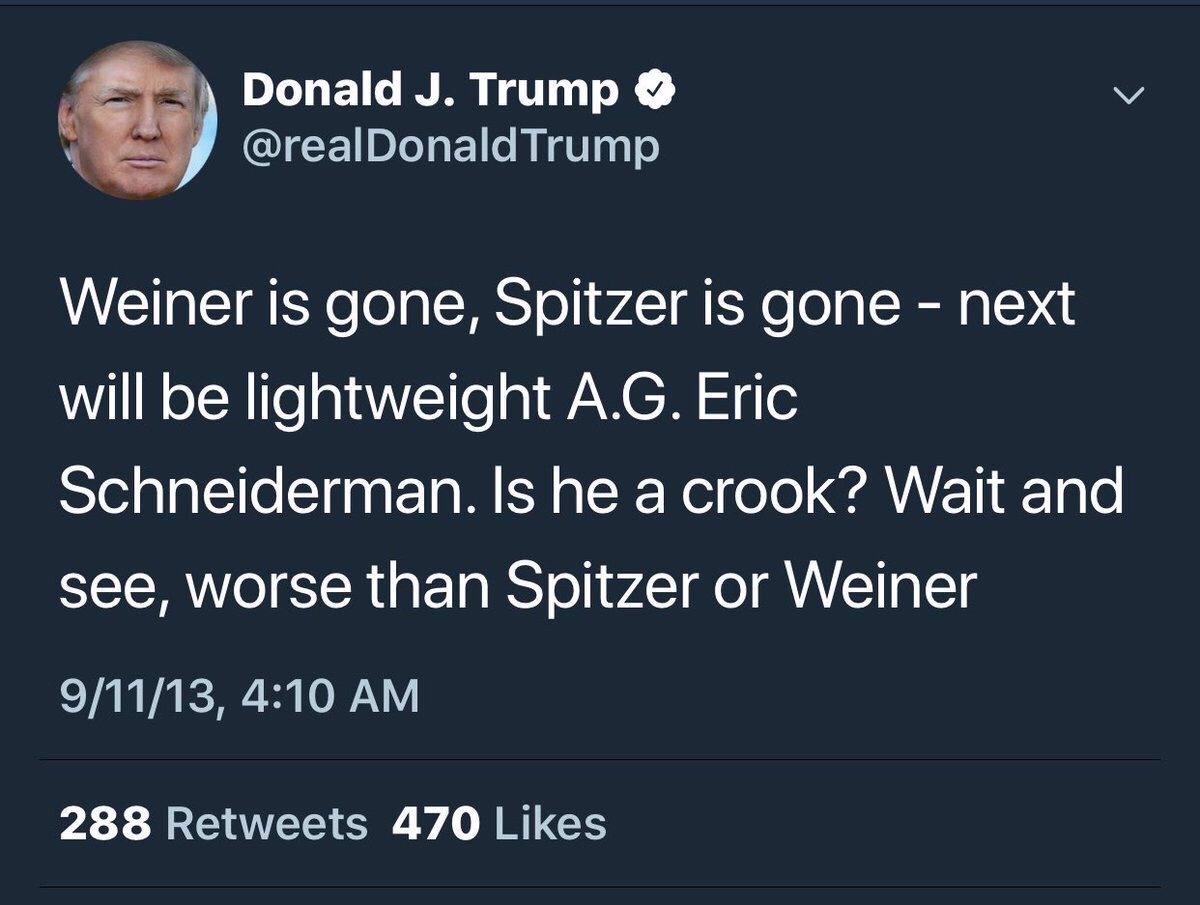
Trump Predicted Eric Schneiderman’s Downfall In 2013

Published

on

Trump does it again. Amid Eric Schneirderman’s downfall – people are pointing to a pretty well descriptive Tweet of Trump in September of 2013, five years, ago. Asking if “he’s a crook.” Come to find out tonight, Eric has resigned from multiple allegations of sexual abuse / harassment. Trump obviously knew far advance something was up with Schneiderman but it looks like it finally took this long to come out, and the timing couldn’t be more perfect for trump amid high poll numbers and a Special Counsel on life support. See Trump’s tweet below

Continue Reading
Click to comment

Leave a Reply

Your email address will not be published. Required fields are marked *

Iowa

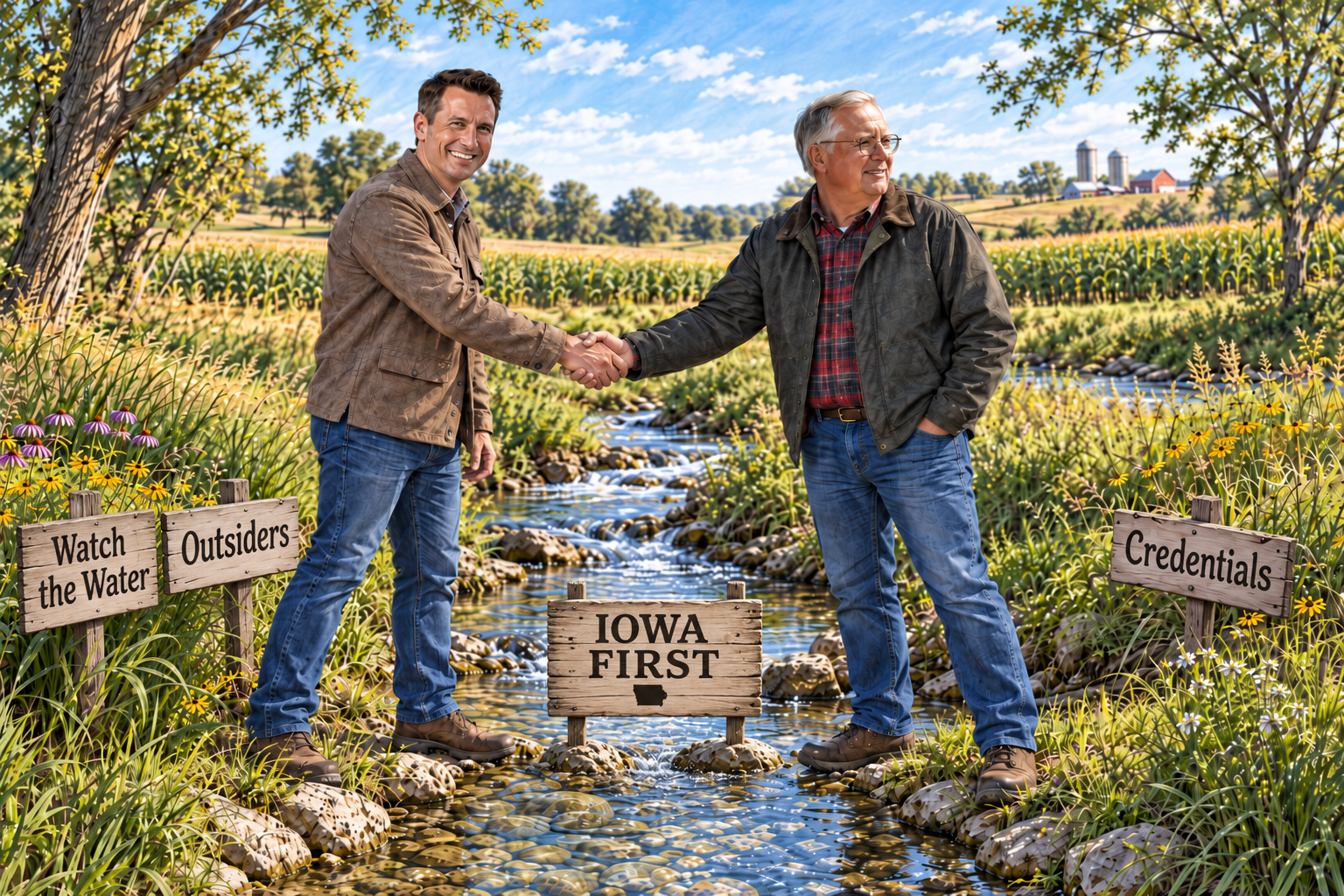
Zach Lahn & Chris Jones: Outsiders With Credentials That Can Finally Fix Iowa’s Water

Published

on

Iowa’s water problem is not a mystery. High nitrate loads from agricultural runoff have pushed drinking water utilities like Des Moines Water Works into record stretches of nitrate removal. The state’s cancer rates rank among the highest in the nation and continue rising. Streams that once supported fishing and recreation now carry the signature of the corn-soy-CAFO system. Politicians have promised action for years. Results have been scarce.

This cycle offers something different: two candidates whose combined credentials match the scale of the problem. Republican gubernatorial nominee Zach Lahn brings a farmer’s understanding of what works on the ground and the political will to fund it. Democrat Chris Jones, running for Secretary of Agriculture, brings decades of hands-on scientific expertise measuring, documenting, and explaining exactly what is happening in Iowa’s water. Together, even if Jones serves only a single term, they have the tools to produce measurable improvement where previous administrations produced only reports.

Zach Lahn’s Practical Path

Lahn is a sixth-generation Iowan who bought back his family’s Belle Plaine farmstead after it left family hands. He has made water quality and cancer rates central to his campaign, explicitly linking elevated nitrates to colorectal cancer and other health outcomes. His approach prioritizes proven practices that reduce nutrient loss without bankrupting family farms.

He has called for finally funding the Iowa Natural Resources and Outdoor Recreation Trust Fund—the IWILL program voters approved by a 63 percent margin in 2010 but that lawmakers left empty. Lahn wants that money directed first at the most impaired watersheds: the Des Moines and Raccoon rivers and their tributaries. He points to saturated buffers, which Iowa State University research has shown can remove essentially all nitrate from tile drainage in tested settings. He favors incentives structured so farmers make money adopting deeper nitrogen application and other conservation measures rather than merely break even. Upstream and downstream monitoring would measure results. The goal is targeted progress that keeps land in Iowa hands instead of accelerating consolidation through heavy regulation.

Lahn’s record is that of a farmer and businessman focused on implementation. He has argued that the status quo—talking about water while avoiding hard choices on funding and incentives—has failed. His plan is not radical. It is the first serious attempt by a Republican nominee to treat the problem as both an environmental and public-health priority that can be addressed while supporting working farms.

Chris Jones’s Unmatched Expertise

Jones arrives with credentials no other statewide candidate possesses. He holds a Ph.D. in analytical chemistry. For eight years he managed the water quality testing laboratory at Des Moines Water Works, overseeing operations at one of the world’s largest nitrate-removal facilities built specifically for agricultural runoff. He then spent four years as an environmental scientist with the Iowa Soybean Association, helping deploy some of the state’s earliest independent monitoring systems. At the University of Iowa he worked as a research engineer and helped create the first real-time public sensor network tracking nitrate and other pollutants across Iowa’s rivers—the system that later faced funding cuts.

His 2023 book, The Swine Republic, was selected by the Library of Congress as Iowa’s representative at the National Book Festival. He co-founded Driftless Water Defenders to protect northeast Iowa’s waters. For decades Jones has measured the loads, traced the sources, and explained in plain language why the current production system produces the outcomes Iowans see in their faucets and in the Gulf dead zone. He knows the data because he generated much of it.

That body of work is the difference between someone who tours a treatment plant and says he is “listening and learning” and someone who has spent a career inside the problem.

The Combination That Can Deliver

Lahn as governor would set the priority, secure the funding through IWILL and other mechanisms, and structure incentives that farmers can actually accept. Jones as agriculture secretary would bring the institutional knowledge to design the interventions, expand and protect monitoring, and ensure resources go where the data show the biggest return. The two roles are complementary. The governor controls the budget and the bully pulpit. The agriculture secretary oversees conservation programs, technical assistance, and much of the interface with producers. One term of Jones in that office, paired with a Lahn administration that treats water as a top-tier issue, could establish the monitoring baselines, the practice adoption targets, and the accountability mechanisms that have been missing for a generation.

Critics will note the party difference. Lahn has emphasized voluntary incentives and avoided broad mandates that risk farm bankruptcies. Jones has been more direct about the need for systemic changes in the corn-soy-ethanol model. On the narrow but decisive question of cleaning Iowa’s water, however, their credentials align more closely than those of any other pairing on the ballot. Expertise plus political will is a rare combination. Iowa has the first and can elect the second.

The Credentials Gap with Rob Sand

Democratic gubernatorial nominee Rob Sand has released a water plan that includes more monitoring funding, a dirty-water notification system, expanded wetlands, and tax credits for conservation practices. Those are reasonable ideas. What Sand does not have is any professional background in water science, laboratory management, sensor networks, or published research on Iowa’s nutrient problem. His education is a political science degree and a law degree. His career is prosecution and state auditing. He has described his own process as still listening and learning by visiting treatment facilities.

That is not a criticism of Sand’s intentions. It is a statement of fact about the difference between a generalist politician and a specialist who has managed the largest nitrate-removal operation in the region, built the state’s real-time monitoring capacity, and written the most detailed public account of how Iowa’s agriculture produces its water outcomes. When the problem is technical, decades in the making, and tightly linked to the dominant industry, credentials matter. Sand has none of the specialized ones Jones has spent a career accumulating.

Iowans have heard promises before. This year they have a chance to elect a governor who has made water a defining issue and an agriculture secretary whose life’s work is the subject. Zach Lahn and Chris Jones, working from their respective offices, offer the most credible path yet to measurable improvement—even if Jones’s tenure is limited to a single term. The alternative is more of the same: plans without the people who actually know how to execute them.

Continue Reading

Iowa

Rob Sand Scrambles as Handlers ‘LGI Chemical Co.’ Are Exposed

Published

on

Iowa’s open gubernatorial race has exposed a stark difference in substance and accountability. Democratic nominee and current State Auditor Rob Sand has spent the campaign leaning on accessible, low-complexity appeals—temporary gas tax relief, ending the privatized Medicaid system, raising the minimum wage to $12, and legalizing recreational marijuana regulated like alcohol. His cannabis plan, released on 4/20, focuses on capturing tax revenue currently flowing to neighboring states and treating the substance like beer. He also positions himself as an anti-partisan reformer calling for term limits, age limits, cognitive tests, and vetoes of “culture war bills.” These messages are easy to sell, but they avoid Iowa’s most entrenched problems.

Republican nominee Zach Lahn has taken a different approach, centering measurable goals on the issues that actually shape daily life in the state: the nation’s fastest-rising cancer rates, water quality tied to agricultural runoff and nitrates, the loss of roughly 10,000 family farms over two decades, and the steady outmigration of young Iowans. His proposals include funding the voter-approved IWILL program, offering refundable tax credits so farmers can adopt saturated buffers and regenerative practices without losing money, expanding water monitoring, pursuing antitrust action against major ag input companies, and creating an income-tax exemption for high-school graduates who stay or return, with the money directed toward a first-home down payment. He has also called for banning hedge funds from single-family homes, ending incentives for out-of-state corporations, restricting benefits for illegal immigrants, and abolishing Flock surveillance cameras. These are specific mechanisms, not slogans.

The contrast has sharpened as Lahn has directly exposed the funding and environmental record behind Sand’s campaign. Sand’s wife, Christine Lauridsen Sand, is CEO of The Lauridsen Group (LGI), a privately held Iowa holding company. Members of the Lauridsen family have contributed a combined $13.1 million to Sand’s campaigns since 2018—the largest amount from any single family source in recent Iowa history. One LGI subsidiary, Boyer Valley, markets high-nitrogen organic fertilizer products derived from poultry byproducts, including feather meal and blood meal. Another, Essentia Protein Solutions, has a documented history of Iowa Department of Natural Resources violations involving wastewater discharges, elevated ammonia, E. coli, lagoon overflows, and impacts on streams such as the West Fork Camp Creek. Lahn’s ads and debate exchanges have highlighted the donations alongside these records and asked what influence the funding carries on water-quality policy. Sand has pushed back, stating that the family business does not sell chemical nitrate fertilizer and that certain pollution claims were cleared, but the public record of contributions, DNR citations, and product marketing has forced him into repeated defensive explanations. The exposure has undercut Sand’s image as an independent reformer focused on clean water and has left him scrambling to reframe the story while Lahn continues pressing the issue on the trail and in debates.

Public polling currently shows Sand ahead, though some recent surveys have tightened (Emerson’s early-October numbers put it at a 4-point margin). That lead should be viewed with heavy skepticism. Iowa has long ranked among the hardest states in the country to poll accurately, a point analysts at FiveThirtyEight and others have made for years due to its rural electorate, high share of independents and non-party voters, low response rates, and the difficulty of reaching certain Republican-leaning demographics. The pattern of error has been consistent across recent cycles: polls systematically underestimated Donald Trump’s support in Iowa in 2016, 2020, and especially 2024, when the highly regarded Des Moines Register/Selzer poll had Kamala Harris ahead by 3 points only for Trump to win the state by roughly 13—a 16-point miss. Similar underestimation of Republican strength has appeared in past Iowa governor and statewide races. Non-response bias among rural and working-class voters who distrust media and polling operations has repeatedly produced results that look more favorable to Democrats until Election Day. If that same dynamic is repeating now, Sand’s current lead is inflated, and Lahn’s focus on water quality, cancer rates, family farms, and keeping young Iowans in the state is connecting with the voters who have been hardest for pollsters to reach.

Continue Reading

Politics

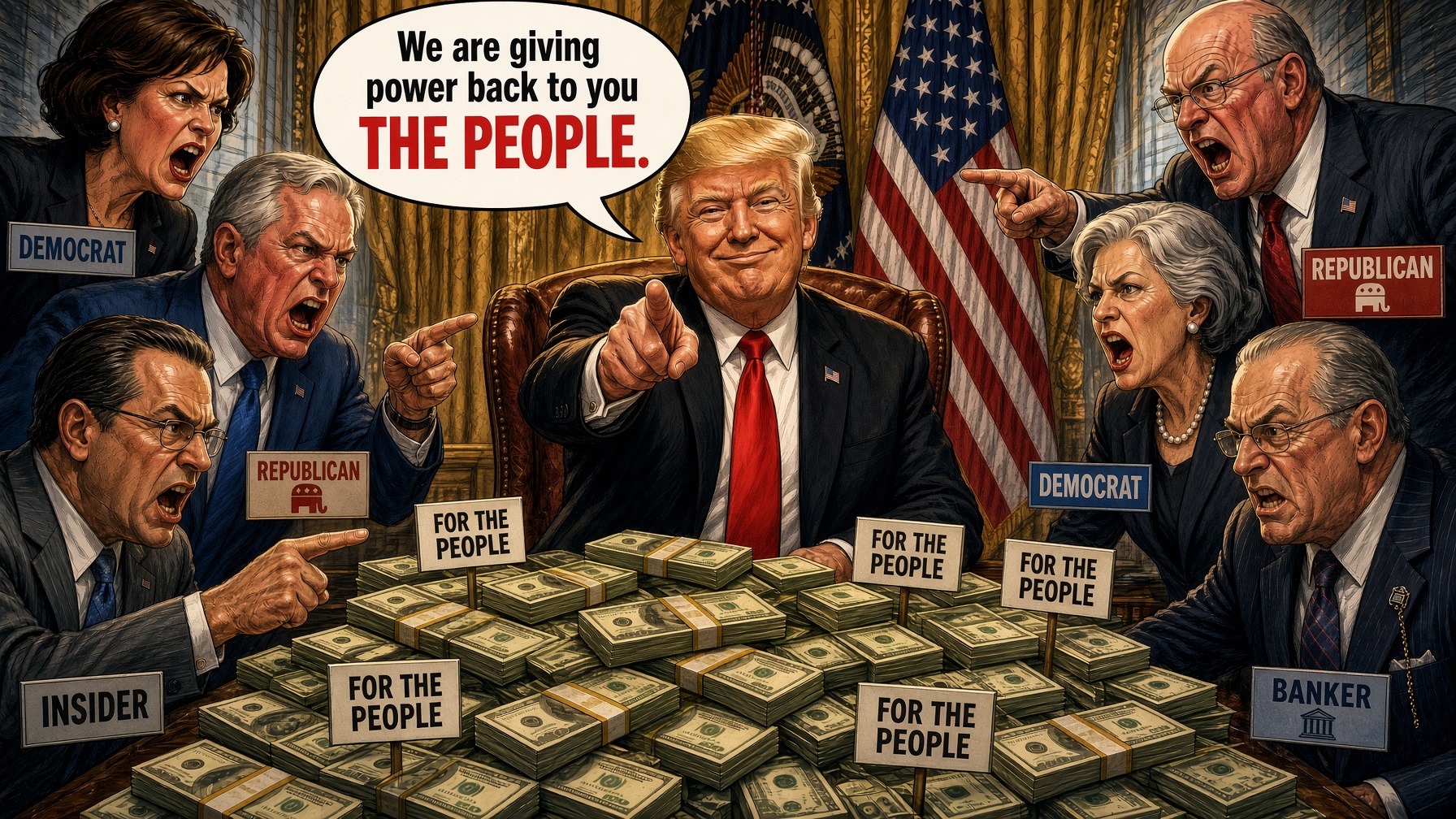
President Trump’s $5,000 Dividend is Populist Genius

Published

on

A successful country pays its owners. America is winning again. The people who live here should cash the dividend.

On September 9 in Dallas, President Donald Trump did what a president for the people is supposed to do. He looked at the American public — not the foundations, not the donor circuit, not the people who treat citizenship like a branding exercise — and he put a number on victory. If Republicans hold the House and the Senate on November 3, every adult U.S. citizen gets a $5,000 Trump Dividend, and that money gets spent in the United States. Not Canada. Not China. Not Germany. Here. He compared it to a winning company returning cash to its shareholders, and to the $1,776 checks his administration already put in the hands of American service members. That is the most American idea in the speech. The country is not a waiting room for the rest of the planet. It is an enterprise. Citizens are the shareholders. When the enterprise wins, the shareholders get paid.

This is exactly the fight populists have been in for a decade. We were told America First meant slogans. Trump is making it mean a check. Tariffs make foreign producers pay to sell into the richest market on earth. Factories come home. Energy comes back on. Borders close. Wages stop getting bid down by a conveyor belt of cheap labor. The surplus of that project does not belong to a think tank in Arlington and it does not belong to a contractor in Northern Virginia. It belongs to the nurse, the welder, the waitress, the retired couple, the kid trying to buy a truck. JD Vance said it after the speech: keep the project going and the public shares in the wealth it creates. That is not a theory. That is ownership.

The growth will eat the check — and then some

The professional class is already running the same tape they run every time money might reach an actual American household. They call it inflation. They call it a bribe. They call it socialism. Then they go back to waving through every foreign aid package, every bank rescue, every campus endowment, and every “allied” procurement that never created a single job in Youngstown. Ignore them. They have been wrong about this economy since the first tariff hit the dock.

America is not a broke charity. It is a country that, under this president, is pulling in investment, production, and tariff revenue on a scale the last crowd said was impossible. Commerce Secretary Howard Lutnick has already said the dividend is not a raid on the paycheck of the American worker and not another Washington deficit stunt. It is a distribution of success. That is the right frame. Five thousand dollars is not an emergency ration. It is a down payment on a boom that is going to run past the check. Growth compounds. Plants that open this year throw off wages, local taxes, and supplier orders for a decade. Energy that is cheap again makes every factory in the Midwest more profitable than the spreadsheet said it would be. A dividend spent inside the United States is not money leaving the system. It is money hitting American registers, American shops, American labor — and then coming back around again.

There is no reason to treat $5,000 as a ceiling. If the country keeps winning the way it is winning, the next distribution should be larger. Shareholders do not apologize for a good year. They take the dividend and they ask what next year’s looks like. That is the attitude this coalition was built for. We did not spend ten years fighting globalist trade, open borders, and a uniparty that shipped the industrial base overseas so we could get shy the minute the winnings showed up. The winnings are supposed to show up. In American pockets. In American towns. In cash you can spend at a store that employs your neighbor.

The leftover libertarians missed the plot

The loudest no on the right is coming from the same quarter that never made peace with the coalition that actually wins elections. The Cato dinner circuit. The Heritage memo. The National Review column that still thinks 2012 was the peak of Western civilization. They have a word for any check with a government logo on it, unless the check is made out to a defense prime, a semiconductor campus, or a fund manager who will offload the jobs the minute the ribbon-cutting photo hits LinkedIn. That view had its run. It gave us hollowed towns and a conservative movement that could recite Hayek while the middle class got carved up.

Working families did not walk out of the old GOP because they wanted another lecture about abstract virtue. They walked out because the party could find discipline for a waitress in Ohio and flexibility for everyone above her. Trump’s instinct is the correction. He talks like the country has owners, and he talks like those owners are allowed to get paid. The leftover libertarians hear “check” and they reach for 19th-century vocabulary. The rest of the country hears “finally.” Alaska has paid its people a resource dividend for decades and it did not turn into a cautionary tale. The military checks last December did not ruin the republic. A $5,000 dividend spent on American goods is the same idea at the scale the moment deserves.

The “must be spent in America” rule is the part they will pretend not to understand because it is the part that makes the policy serious. It is a border for capital. You take the dividend and you buy American groceries, American parts, American labor. That is economic nationalism in a form a normal person can cash. It is also why the growth argument is not a slogan. Money that stays here becomes payroll. Payroll becomes demand. Demand becomes another shift at the plant. That loop is how a country gets richer than the check it just wrote.

If Congress stalls, he does it himself

Republicans in Congress should pass it tomorrow. Adult citizens. Spent at home. No apology tour. That is the clean path, and they should take it. But this country has watched Congress sit on its hands while presidents found a way for wars, for bailouts, for foreign factories, and for every priority that never had to wait on a conference committee. A president for the people does not treat the American household as the one item that requires perfect parliamentary weather. Trump already said he does not think he needs a permission slip to deliver the dividend. Good. That is the correct posture. Serve the people first. Let the process people catch up.

Do it from the Oval Office if that is what it takes. Set the precedent out loud: this office exists to put American citizens first, and a winning country pays its owners. Every administration in living memory has stretched executive power for somebody. They stretched it for alliances. They stretched it for banks. They stretched it for agencies that never stand for election. Stretching it to put $5,000 in the pocket of the people who actually live here is not a scandal. It is the first time in a long time the stretch would run toward the public instead of away from it. If the old rules could move a trillion dollars anywhere but an American kitchen table, then the new precedent is simple. The president finds a way. There is not a version of this where the check dies in a hallway because a handful of senators wanted another hearing.

That is how you break the spell. You do not wait for the donor class to decide the American people are an approved recipient. You send the money. You make it normal. You make it expected. After that, every future president has to answer a new question: if he could deliver for citizens and he refused, whose president was he? That is the point of precedent. Not a loophole. A standard. The White House works for the country that voted, and when that country wins, the winnings show up at home.

Send the money. Keep going.

The midterms are a referendum on whether this government still belongs to the people who live under it. Trump answered with a number and a rule. Congress can write it into statute and take the credit. If they will not, the president should pick up the pen and do the job he was hired to do. Either way, the dividend moves. That is leadership. That is what it looks like when a man remembers the presidency is not a chairmanship of a journal. It is the one office in this country that is supposed to look a working family in the eye and say: you own this place, the place is winning, and nobody in Washington gets to misplace your share.

Five thousand dollars is the right number for the first distribution. The boom behind it is bigger than the number. If the country keeps doing what it is doing — tariffs that make foreigners pay, energy that makes production cheap, borders that protect the wage, factories that actually open — there is no reason the next dividend is not larger. Win. Pay the owners. Win again. Cash the check. Spend it here. And get ready for more.

Continue Reading

Trending

Donate to Populist Wire

*Note: Every donation is greatly appreciated, regardless of the amount.