Connect with us

Politics

Democrats Gave Ground on Their Wackiest Issues to “Win”

Published

on

The midterm results show Democrats winning by dialing back the cultural extremes that defined their last several cycles. In Texas, James Talarico walked back earlier progressive positions on transgender issues to make himself viable in a state that rejected those policies for decades. Elsewhere, candidates who once embraced open borders, defund-the-police rhetoric, and identity-first messaging softened or ignored those planks and focused on costs, the Iran war, and gasoline prices. The public had already rejected the full agenda; the party simply stopped advertising the parts voters hated most.

America First voters never accepted boys in girls’ sports, men in women’s shelters, or sanctuary policies that prioritize non-citizens over citizens. Polling and prior elections already showed those positions as losers outside the coastal core. By muting them in red and purple districts while hammering inflation and foreign wars, Democrats could appeal to working-class Hispanics, independents, and some traditional Democrats who had shifted right. The strategy worked for one night because the economic pain was acute and the alternative was a party tied to high gas prices. It does not mean the underlying cultural preferences of the country changed.

Once in power, the same figures and progressive caucuses will push the old agenda again—Medicare for All, ending enforcement, and cultural mandates. The temporary ground they gave was tactical, not principled. Working Americans still want secure borders, biological reality in policy, and government that puts citizens first. The midterms proved the left cannot win by leading with its most extreme ideas. They also proved those ideas remain the party’s destination once the ballots are counted.

Continue Reading

Military

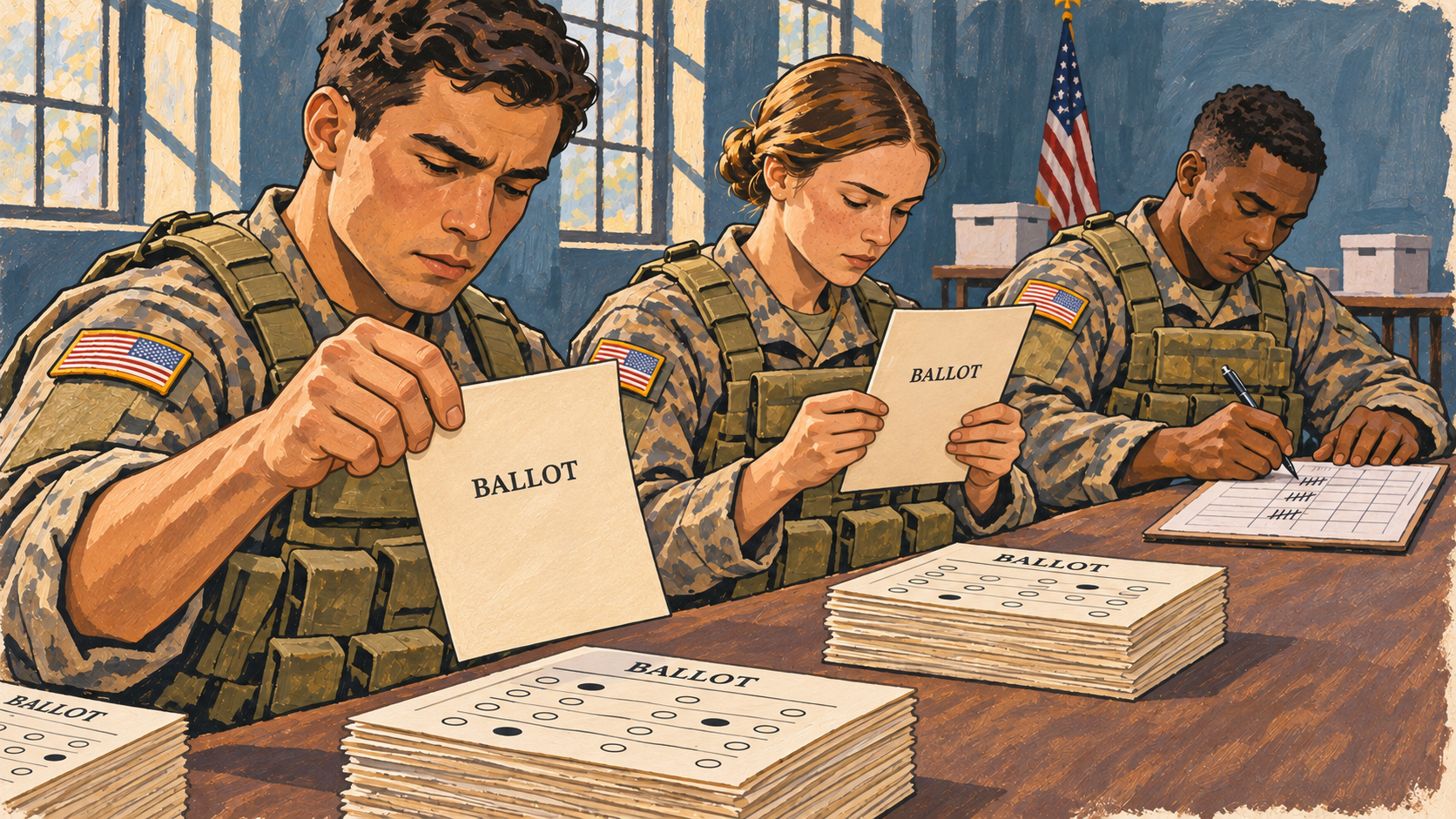
President Trump Must Audit the 2026 Midterms & Force Redo

Published

on

The results landed with unusual force. Democrats took the House and Senate, flipping seats in Texas, Kansas, Ohio, Iowa, and South Carolina. In several states Trump carried by wide margins in 2024, the same electorate is said to have swung sharply the other way. Midterms normally punish the party in power, yet the depth and location of these flips raise basic questions about whether the tallies fully reflect legal votes. When outcomes move this far, this fast, and this consistently in historically one-sided places, the burden of proof should not rest solely on the public’s willingness to accept the certified numbers.

Mail-in ballots, same-day registration, and uneven chain-of-custody rules have left large portions of the process opaque for years. Technical problems appeared in multiple states on Election Day. Voter rolls in high-volume jurisdictions have long contained outdated and duplicate entries. None of these facts alone prove fraud, but together they make blanket claims of a clean result harder to accept at face value. The scale of the shift, the speed of the calls, and the absence of a full forensic review leave the outcome open to legitimate doubt. America First requires that only citizens cast the deciding ballots; anything less undermines the republic.

President Trump should order an immediate audit of the closest and most anomalous races. If that review finds material irregularities capable of changing results, the affected contests should be re-run under military supervision of polling places, ballot transport, and counting. Civilian administrators have lost the confidence of millions of voters. A transparent, secured re-election is the only practical way to settle the question and restore trust. Until then, the validity of these midterms remains open to serious challenge.

Continue Reading

Politics

President Trump’s Rally Blitz Will Maintain Control in D.C.

Published

on

President Trump is proving once again that no one in American politics connects with the people the way he does. With days left before the November 3 midterms, he is on a relentless rally blitz—hitting Texas for Ken Paxton, Kansas for Roger Marshall, Ohio for Jon Husted, Florida for Byron Donalds and the full Republican ticket, Georgia, South Carolina, Iowa, Michigan and beyond—packing arenas and speaking directly to the working men and women who actually build, drive, farm, and keep this country running. The crowds are loud, the energy is real, and the message is simple: pretend Trump is on the ballot, because the stakes are exactly the same. This is not a defensive scramble. It is the most effective turnout machine in modern politics doing what it has always done—cutting through the noise and reminding Americans that their voice still decides who controls Washington.

The legacy media and the Democrat machine keep peddling the same tired blue-wave script, but they are ignoring what is happening on the ground because they have never understood the people Trump speaks to. These rallies are not scripted corporate events. They are town-square moments where a president who has spent years delivering on the border, energy independence, fair trade, and a direct $5,000 Trump Dividend for every adult citizen if Republicans hold both chambers stands in front of the voters the elites wrote off years ago. Trump does not need permission from consultants or focus groups. He knows the cost of living is personal, that secure borders protect communities, and that American workers come before foreign competitors and open-border ideology. That direct connection is why low-propensity voters show up when he asks. It is why Republican candidates in competitive and traditionally safe seats are seeing the boost that only a Trump visit delivers. The permanent class in D.C. and the corporate press cannot replicate it because they do not respect the people enough to try.

When Republicans keep the House and Senate on November 3, it will be because Trump spent the final stretch of the campaign doing what only he can: putting the America First agenda in front of the voters who care about it most and turning that energy into ballots. Control in D.C. means the border stays enforced, the investigations stay dead, the manufacturing and energy gains stay protected, and the Trump Dividend becomes a real check in the hands of American citizens instead of another promise the swamp kills. The alternative—a Democrat-led Congress—would immediately reopen the floodgates, restart the lawfare, and put globalist priorities back in charge of the people’s money and security. Trump’s blitz is the proof that the American people are still in the fight and still respond when a leader treats them like the sovereign owners of the country rather than a demographic to be managed. Early voting is underway. The rallies are filling up. The path is clear: show up the way Trump is showing up, and Republican majorities hold. That is power. That is populism that actually works. That is how control stays in the hands of the citizens who pay for it.

Continue Reading

Iowa

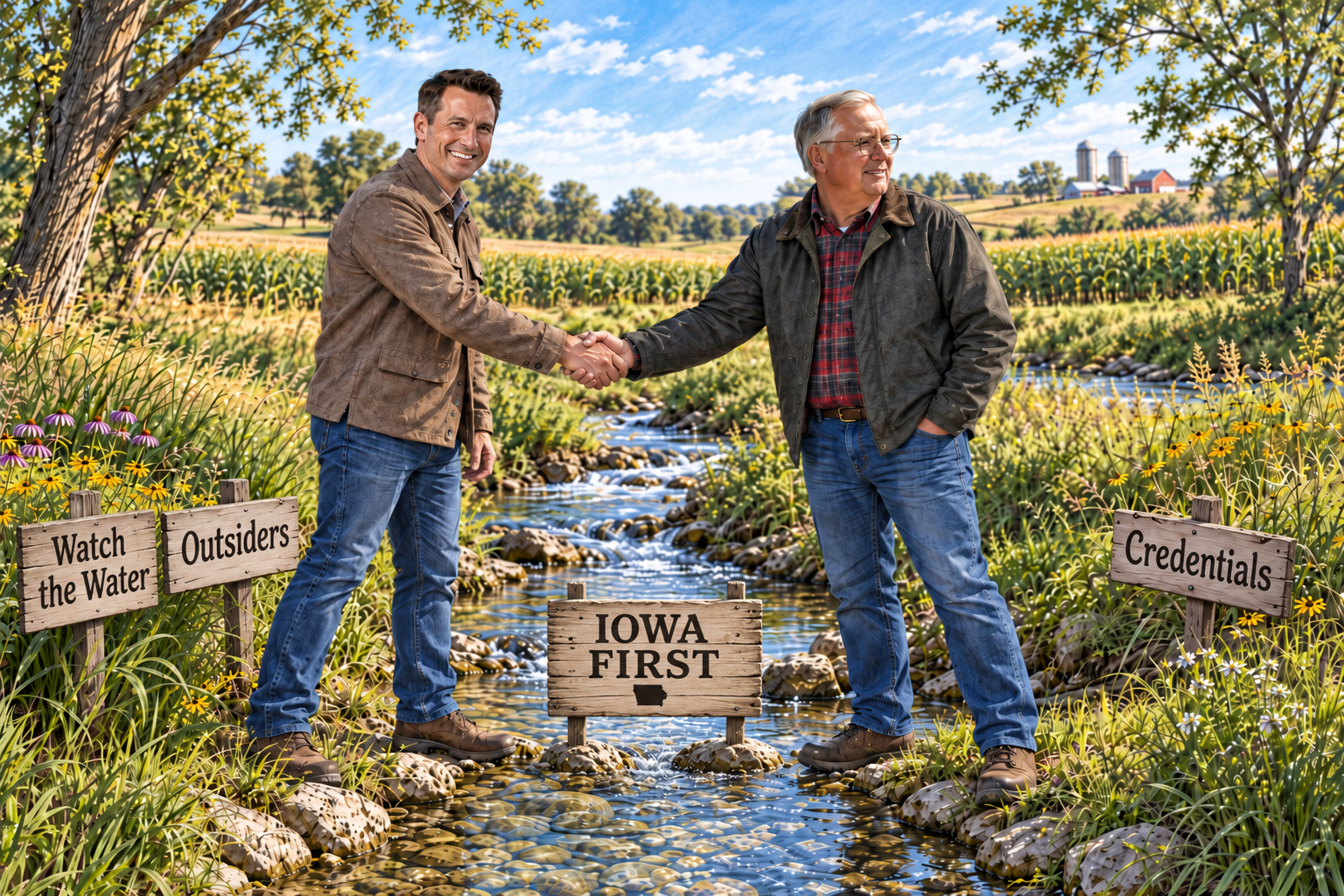
Zach Lahn & Chris Jones: Outsiders With Credentials That Can Finally Fix Iowa’s Water

Published

on

Iowa’s water problem is not a mystery. High nitrate loads from agricultural runoff have pushed drinking water utilities like Des Moines Water Works into record stretches of nitrate removal. The state’s cancer rates rank among the highest in the nation and continue rising. Streams that once supported fishing and recreation now carry the signature of the corn-soy-CAFO system. Politicians have promised action for years. Results have been scarce.

This cycle offers something different: two candidates whose combined credentials match the scale of the problem. Republican gubernatorial nominee Zach Lahn brings a farmer’s understanding of what works on the ground and the political will to fund it. Democrat Chris Jones, running for Secretary of Agriculture, brings decades of hands-on scientific expertise measuring, documenting, and explaining exactly what is happening in Iowa’s water. Together, even if Jones serves only a single term, they have the tools to produce measurable improvement where previous administrations produced only reports.

Zach Lahn’s Practical Path

Lahn is a sixth-generation Iowan who bought back his family’s Belle Plaine farmstead after it left family hands. He has made water quality and cancer rates central to his campaign, explicitly linking elevated nitrates to colorectal cancer and other health outcomes. His approach prioritizes proven practices that reduce nutrient loss without bankrupting family farms.

He has called for finally funding the Iowa Natural Resources and Outdoor Recreation Trust Fund—the IWILL program voters approved by a 63 percent margin in 2010 but that lawmakers left empty. Lahn wants that money directed first at the most impaired watersheds: the Des Moines and Raccoon rivers and their tributaries. He points to saturated buffers, which Iowa State University research has shown can remove essentially all nitrate from tile drainage in tested settings. He favors incentives structured so farmers make money adopting deeper nitrogen application and other conservation measures rather than merely break even. Upstream and downstream monitoring would measure results. The goal is targeted progress that keeps land in Iowa hands instead of accelerating consolidation through heavy regulation.

Lahn’s record is that of a farmer and businessman focused on implementation. He has argued that the status quo—talking about water while avoiding hard choices on funding and incentives—has failed. His plan is not radical. It is the first serious attempt by a Republican nominee to treat the problem as both an environmental and public-health priority that can be addressed while supporting working farms.

Chris Jones’s Unmatched Expertise

Jones arrives with credentials no other statewide candidate possesses. He holds a Ph.D. in analytical chemistry. For eight years he managed the water quality testing laboratory at Des Moines Water Works, overseeing operations at one of the world’s largest nitrate-removal facilities built specifically for agricultural runoff. He then spent four years as an environmental scientist with the Iowa Soybean Association, helping deploy some of the state’s earliest independent monitoring systems. At the University of Iowa he worked as a research engineer and helped create the first real-time public sensor network tracking nitrate and other pollutants across Iowa’s rivers—the system that later faced funding cuts.

His 2023 book, The Swine Republic, was selected by the Library of Congress as Iowa’s representative at the National Book Festival. He co-founded Driftless Water Defenders to protect northeast Iowa’s waters. For decades Jones has measured the loads, traced the sources, and explained in plain language why the current production system produces the outcomes Iowans see in their faucets and in the Gulf dead zone. He knows the data because he generated much of it.

That body of work is the difference between someone who tours a treatment plant and says he is “listening and learning” and someone who has spent a career inside the problem.

The Combination That Can Deliver

Lahn as governor would set the priority, secure the funding through IWILL and other mechanisms, and structure incentives that farmers can actually accept. Jones as agriculture secretary would bring the institutional knowledge to design the interventions, expand and protect monitoring, and ensure resources go where the data show the biggest return. The two roles are complementary. The governor controls the budget and the bully pulpit. The agriculture secretary oversees conservation programs, technical assistance, and much of the interface with producers. One term of Jones in that office, paired with a Lahn administration that treats water as a top-tier issue, could establish the monitoring baselines, the practice adoption targets, and the accountability mechanisms that have been missing for a generation.

Critics will note the party difference. Lahn has emphasized voluntary incentives and avoided broad mandates that risk farm bankruptcies. Jones has been more direct about the need for systemic changes in the corn-soy-ethanol model. On the narrow but decisive question of cleaning Iowa’s water, however, their credentials align more closely than those of any other pairing on the ballot. Expertise plus political will is a rare combination. Iowa has the first and can elect the second.

The Credentials Gap with Rob Sand

Democratic gubernatorial nominee Rob Sand has released a water plan that includes more monitoring funding, a dirty-water notification system, expanded wetlands, and tax credits for conservation practices. Those are reasonable ideas. What Sand does not have is any professional background in water science, laboratory management, sensor networks, or published research on Iowa’s nutrient problem. His education is a political science degree and a law degree. His career is prosecution and state auditing. He has described his own process as still listening and learning by visiting treatment facilities.

That is not a criticism of Sand’s intentions. It is a statement of fact about the difference between a generalist politician and a specialist who has managed the largest nitrate-removal operation in the region, built the state’s real-time monitoring capacity, and written the most detailed public account of how Iowa’s agriculture produces its water outcomes. When the problem is technical, decades in the making, and tightly linked to the dominant industry, credentials matter. Sand has none of the specialized ones Jones has spent a career accumulating.

Iowans have heard promises before. This year they have a chance to elect a governor who has made water a defining issue and an agriculture secretary whose life’s work is the subject. Zach Lahn and Chris Jones, working from their respective offices, offer the most credible path yet to measurable improvement—even if Jones’s tenure is limited to a single term. The alternative is more of the same: plans without the people who actually know how to execute them.

Continue Reading

Trending

Donate to Populist Wire

*Note: Every donation is greatly appreciated, regardless of the amount.