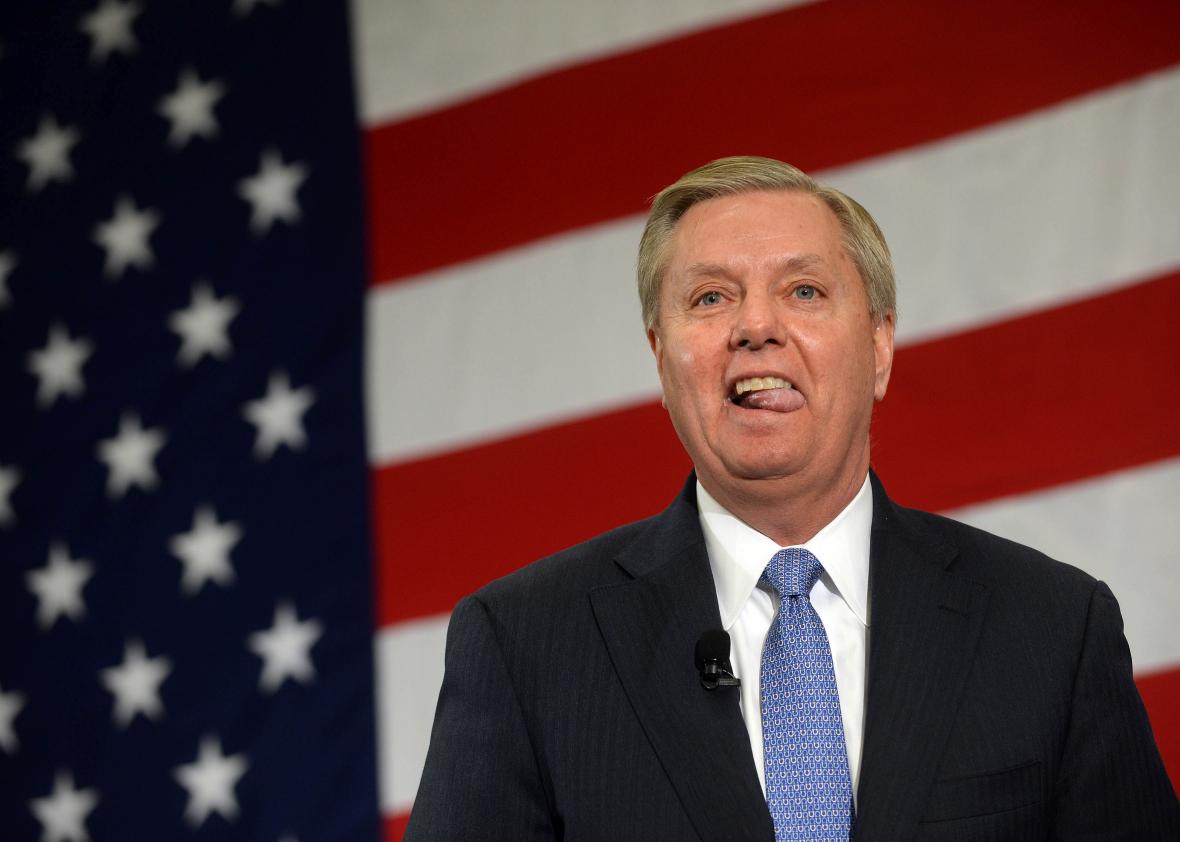
Friday on Fox News, Tucker Carlson questioned Lindsey Graham’s claim that “America is an idea” and “not defined by its people.”
“According to Lindsey Graham, you could take our entire population and swap it out for 320 million, I don’t know, Chinese or Indians or Africans or Canadian or people from New Zealand, and the place would be no different, so long as the idea was still there,” Carlson said. “Does anyone actually believe that?”
Washington, D.C. is a divided city, but today saw a moment of rare political unity. Lawmakers in both parties came together in grave agreement that it was unfortunate, unacceptable, indeed threatening, that President Trump would refer to poor and dangerous countries as in effect poor and dangerous.
Now, some of the outrage was tactical, obviously. A way to score political advantage, but a great deal of it was entirely real. It was authentic rage.
So, why are the people in charge hysterical about this? Is it because Trump said something racially insensitive?
Let’s see. Just yesterday, Nancy Pelosi dismissed the DACA negotiation because there were too many white people involved and most people here didn’t even notice. So, left-wing attacks on the basis of race are now common. Very common.
So, could it be they found it shocking the president would criticize an entire nation? Maybe. But then, the left has no problem bashing huge parts of this country.
(BEGIN VIDEO CLIP)
HILLARY CLINTON, FORMER DEMOCRATIC PRESIDENTIAL CANDIDATE: You can put half of Trump’s supporters into what I call the basket of deplorables. Right? The racist, sexist, homophobic, xenophobic, Islamophobic.
BARACK OBAMA, FORMER PRESIDENT OF THE UNITED STATES: They cling to guns or religion or antipathy towards people who aren’t like them.
NANCY PELOSI, HOUSE MINORITY LEADER: The five white guys, I call them. I said, “You’re going to open a hamburger stand next or what?”
(END VIDEO CLIP)
CARLSON: So, they don’t have a problem dismissing entire populations. So, what is the real reason for the panic you are watching right now on cable television?
Maybe it’s because Trump’s remarks are forcing precisely the kind of conversation our leaders don’t want to have. He didn’t do it on purpose. It was accidental, but he still raised questions they’d rather not answer, like who exactly are we importing into our country and how are they doing once they get here?
The answer, of course, well, they are all valedictorians and war heroes and, in fact, way more impressive and way more American than you will ever be, so shut up. That’s what we’re told. That’s what we are required to believe. What if it’s not true?
Last year, the U.S. accepted 23,000 people from Haiti and 172,000 from Mexico. Immigration from El Salvador have been so brisk in recent years that one in three Salvadorians now lives in the United States. Has America become a better country as a result? Maybe, maybe not. Maybe we ought to talk it through and decide before we continue with our current immigration policy.
Leaders who actually cared about their people would do exactly that. And yet, our leaders just yell at us until we stop asking questions.
Sen. Lindsey Graham of South Carolina released a statement today that neatly summarizes how most of official Washington thinks about this subject. In a statement, Graham dismisses the idea that America should even think about what kind of people it lets in.
“I have always believed that America is an idea,” Graham wrote, “not defined by its people, but by its ideals. Diversity has always been our strength, not our weakness.”
America is defined by its ideals, OK. So, what are those ideals? It might be useful to know considering how important they are. Well, diversity is our strength is the only one our leaders seem to agree on. The less we have in common, somehow the stronger we are. Is that true? We better hope it’s true because we’re betting everything on it.
But there’s a deeper problem with what Sen. Graham said. “America is not defined by its people.” Really? What do its people think about that? Are they pleased to learn their leaders consider them merely a commodity, a set of interchangeable parts?
America’s actual people with their actual families and towns and traditions and history and customs may be surprised to learn that they are irrelevant to the success or failure of what they imagined was their country.
According to Lindsey Graham, you could take our entire population and swap it out for 320 million, I don’t know, Chinese or Indians or Africans or Canadian or people from New Zealand, and the place would be no different, so long as the idea was still there. Does anyone actually believe that?
How about we test that idea starting with the U.S. Senate? Would South Carolina get the same representation from someone randomly selected out of the phone book? As Lindsey Graham would say, the Senate isn’t defined by its people. It’s really just an idea. And as soon as you start defining things by ideas rather than individuals, people become irrelevant.
In the frozen heartland of America, Minneapolis has become a symbol of unchecked liberal chaos—a city where state and local officials have turned their backs on law and order, enabling fraud, violence, and open defiance of federal authority. The Trump administration’s bold crackdown on immigration fraud and illegal aliens through Operation Metro Surge has exposed the rot at the core of Minnesota’s Democratic leadership. But half-measures won’t cut it anymore. To root out the criminal networks embedded in state and local government, President Trump must invoke the Insurrection Act, deploy 25,000 to 30,000 troops, and orchestrate a coordinated takeover. This isn’t just about cleaning up one city; it’s a blueprint for reclaiming other corrupt blue states from the grip of radical progressives who prioritize open borders over American citizens.
The evidence of systemic corruption in Minnesota is overwhelming. For years, state programs have been plagued by massive fraud schemes, siphoning billions from taxpayer-funded initiatives like child nutrition, housing, and autism services. Federal prosecutors estimate up to $9 billion stolen, with most defendants tied to immigrant communities, particularly Somalis. Operation PARRIS, launched by DHS and USCIS, is reexamining thousands of refugee cases for fraud, focusing on Minnesota’s 5,600 recent refugees. Yet, Governor Tim Walz and Mayor Jacob Frey have actively aided these schemes by refusing to cooperate with ICE, releasing nearly 470 criminal aliens back into communities, and labeling federal enforcement as “racist” retaliation. Their sanctuary policies have turned Minneapolis into a haven for fraudsters, drug traffickers, and child predators, all while native Minnesotans suffer rising crime and economic strain.
This obstruction isn’t passive—it’s deliberate sabotage. Walz and Frey have sued to halt the federal surge, claiming it’s politically motivated despite Minnesota’s fraud epidemic dwarfing national averages. They’ve instructed local police not to honor ICE detainers, allowing dangerous criminals to roam free. The DOJ is now investigating them for impeding federal enforcement, a clear violation of the law. And the violence? They’ve allowed riots to fester, with protesters clashing violently against ICE agents, throwing objects, blocking operations, and even pouring water to create icy hazards. Two shootings in a week— including the tragic death of Renee Good and a Venezuelan immigrant wounded—have escalated tensions, yet state leaders blame the feds instead of restoring order.
Worse still, this regime of radicals has blood on its hands. In June 2025, Democratic lawmaker Melissa Hortman and her husband were assassinated in a politically motivated attack by Vance Boelter, a former aide appointed under Walz’s administration. Boelter, with a hit list of 45 Democrats, also wounded State Sen. John Hoffman and his wife. Conspiracies swirl about Walz’s involvement, amplified by Trump’s posts, but the fact remains: under his watch, political violence has spiked, with officials promoting division and shielding suspects. This isn’t governance; it’s a criminal enterprise masquerading as progressive policy, agitating the left while failing to secure communities.
The numbers demand action. ICE has arrested hundreds of “worst of the worst” criminals—murderers, child rapists, and fraudsters—despite local interference. But with over 2,000 agents deployed, protests have turned the city into a war zone, outnumbering local police three to one. Judges have restricted ICE tactics, handcuffing agents from defending against agitators. Trump rightly threatened the Insurrection Act, a tool used by presidents like George H.W. Bush to restore order, but backed off—for now. Anything less invites more chaos, demotivating Trump’s base and emboldening open-borders advocates ahead of 2026 midterms.
Half measures—like limited surges or court battles—only exacerbate the issue, alienating patriots while handing victories to the left. Walz and Frey’s defiance has created a powder keg, energizing protesters who paint enforcement as inhumane. Amnesty whispers and carve-outs for workers undermine the mandate, signaling weakness. This piecemeal rot allows demographic shifts to continue, eroding America’s fabric.
The solution: Invoke the Insurrection Act now. Deploy 25,000-30,000 troops for a full takeover—expose the fraud networks, arrest complicit officials, and reconstruct governance under federal oversight. Start with Minneapolis as ground zero, then replicate in Chicago, Portland, and other blue bastions. No more excuses—with the One Big Beautiful Bill funding deportations, the tools are there. Anything less proves the “golden age” is fool’s gold, shattering the coalition and dooming the GOP. The military is the only way to deliver results and secure America’s future.
In the high-stakes arena of American politics, few issues ignite passion like immigration. For the core supporters of Donald Trump’s America First agenda, mass deportations weren’t just a campaign promise—they were the litmus test for whether this administration would deliver real change or revert to the empty rhetoric of past Republican leadership. Nick Fuentes, the outspoken leader of the America First movement, has emerged as a vocal critic, demanding tangible results: at least 1 million deportations per year, or Republicans can kiss goodbye any hope of retaining power in the 2026 midterms. Without swift, decisive action, Fuentes warns, the Trump administration risks alienating its true base, handing ammunition to pro-open borders advocates, and dooming the GOP to electoral oblivion.
Fuentes, whose “America First” platform has galvanized young conservatives with its unapologetic nationalism, has been relentless in holding the administration accountable. In a series of pointed posts on X, he has lambasted what he sees as sluggish progress on deportations, labeling them a “lie” and highlighting figures that fall far short of expectations. As of late 2025, Fuentes noted deportation rates averaging just 14,500 per month—projecting to under 700,000 over four years, a fraction of the promised scale. He has criticized key figures like Stephen Miller, calling out the lack of mass arrests and enforcement despite the hype. Fuentes’ message is clear: half-hearted efforts, such as prioritizing only criminals or offering amnesty to certain workers, are betrayals that compensate for broader failures, including foreign policy missteps and economic concessions.
The numbers tell a stark story. According to the Department of Homeland Security, as of December 2025, over 605,000 noncitizens had been deported since Trump took office, with an additional 1.9 million reportedly self-deporting via programs like the CBP Home app, which offers free flights and $1,000 incentives. The White House touts these figures as historic, claiming they’ve led to economic wins: two million native-born Americans gaining jobs while foreign-born employment drops, and declining home prices in high-immigration metro areas. Detention has surged too, with daily averages climbing from 39,000 to nearly 70,000 by early January 2026. Yet critics, including independent analyses, argue these totals inflate reality by including border returns and voluntary departures, not the interior removals that target long-term unauthorized immigrants. In fact, some reports peg actual deportations at around 390,000 for Trump’s first year, below the Biden administration’s final tally of 778,000 and well short of the pledged 1 million annually. Fuentes echoes this skepticism, updating his “Golden Age” scorecard to highlight paltry 325,000 deportations for 2025 amid other perceived betrayals like foreign aid and Epstein file redactions.
This shortfall isn’t just a policy quibble—it’s a political time bomb. Trump’s base, particularly the populist right that Fuentes represents, voted for transformation, not tweaks. If the administration fails to ramp up to mass-scale operations, it risks demotivating these voters ahead of the 2026 midterms, where control of Congress hangs in the balance. Fuentes has explicitly tied support to results: no 1 million deportations and a border wall means no votes for Republicans in 2026 or 2028. Polling already shows cracks, with Trump’s immigration approval dipping from 50% to 41% amid backlash over raids and family separations. Without proving its mettle, the GOP could see turnout plummet, allowing Democrats to reclaim ground by portraying Republicans as all bluster and no bite.
Worse, half measures exacerbate the problem. Fuentes cautions against “performative cruelty”—raids that grab headlines but achieve little, alienating communities without solving the issue. Such tactics agitate the left, energizing pro-open borders groups who paint enforcement as inhumane, while failing to deliver the systemic change needed to secure the border long-term. Amnesty carve-outs for farm or construction workers, as floated by Trump, only undermine the mandate, signaling weakness and inviting more illegal entries. This piecemeal approach hands victory to opponents, who can claim moral high ground while the demographic shifts they favor continue unchecked.
The clock is ticking. With new funding from the One Big Beautiful Bill securing $150 billion for deportations and wall construction, excuses are evaporating. Plans to expand ICE agents and detention to over 100,000 beds signal potential escalation, but words must become action. For Fuentes and his followers, anything less than 1 million deportations annually is bust— a failure that could shatter the coalition and pave the way for open-borders dominance. The Trump administration must deliver results, not rhetoric, or risk proving to its base that the “golden age” was just fool’s gold.
On My Disassociation from the Family Justice and Accountability Act (FJAA) and the Launch of Stone Soup for Justice
After an extensive period of prayer, reflection, and careful consideration, I must make a difficult and deeply serious announcement.
With a heavy heart, I am formally and fully ending my association—of any capacity—with the Family Justice and Accountability Act (FJAA) and its founder, Francesca Amato.
I do not make this decision lightly. I have worked too hard, for too long, to elevate the voices of my family, Iowa families, and families across this country; to build constructive relationships with lawmakers; and to earn trust through careful, honest advocacy. I cannot allow my name, reputation, or work to be tied to conduct and representations that I believe are dishonest, exploitative, and fundamentally misaligned with the kind of reform our children deserve.
Ethical and Policy Concerns
My decision is rooted in both policy and ethics.
I have personally witnessed parents paying thousands of dollars for “services” that delivered little meaningful support or tangible outcomes. I have also observed what I consider to be cult-like dynamics within the organization—expectations of unquestioning loyalty to leadership, pressure to accept narratives that conflicted with facts, and hostility toward legitimate professional accountability.
In my view, this environment harms vulnerable families who are seeking help, not control.
Misrepresentation to Lawmakers
I am especially troubled by a pattern of mistruths and overstatements directed at legislators and the public.
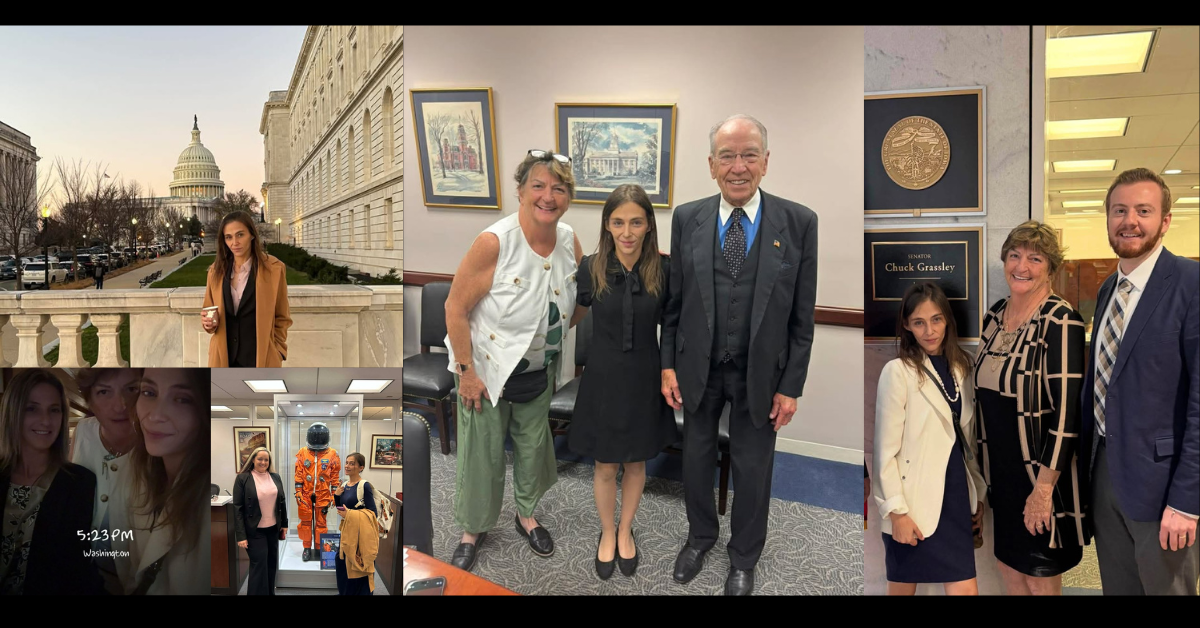
I was informed that Senator Chuck Grassley’s office and other U.S. Senate offices “100% stand behind” the FJAA bill. I know firsthand that this is not accurate. I have worked directly with Senator Grassley’s staff and other congressional offices and have earned their respect by being precise, honest, and careful in what I represent.
While Senator Grassley stands firmly for accountability and transparency—and remains fully supportive of his constituents—his office does not support the FJAA bill. He has expressed concern that it blurs state and federal authority and creates confusion rather than clarity.
I cannot and will not attach my name to claims of congressional support that I know are untrue, nor to a 94-page bill that, in my judgment, overreaches, confuses jurisdictional boundaries, and risks undermining broader reform efforts.
Retaliation and Unprofessional Conduct
I have observed a troubling pattern of unprofessional and retaliatory behavior from Francesca Amato that I find incompatible with serious policy work.
This has included:
Speaking negatively about advocates behind their backs while presenting warmth to their faces
Creating unnecessary conflict between advocacy groups
Encouraging supporters to attack other advocates in her defense
Demanding public gratitude or deference
Responding to substantive policy concerns with personal attacks
When I raised legitimate concerns about state–federal boundaries and Title IV-E compliance, the response was not honest policy discussion but attacks on my character.
Most concerning, my private medical information and lawful medical treatment were weaponized in an attempt to discredit me. Given that Francesca Amato presents herself as an ADA advocate, I view this as a serious violation of medical privacy and disability rights.
I have also observed a broader lack of personal responsibility in routine matters, which further eroded my trust. These are not the hallmarks of accountable leadership.
Implausible Claims and False Hope
I was repeatedly presented with grandiose and implausible claims, including assertions of imminent executive orders, high-level meetings, promises to personally take me to meet President Trump because he was “about to sign” the FJAA, and statements that Robert F. Kennedy Jr. was reviewing the bill.
When such claims are made without evidence—and used to build loyalty, financial commitment, or hope from traumatized families—that crosses a line.
Survivors of system harm deserve transparency, realism, and integrity. Not fantasies.
For all of these reasons, I am formally and completely disassociating myself from:
The Family Justice and Accountability Act (FJAA)
Its current bill
Any claim that I support or endorse Francesca Amato’s strategies, representations, or leadership
Moving Forward: Stone Soup for Justice
I remain deeply committed to child welfare reform, sibling preservation, and enforcement of federal law—particularly Title IV-E—in a way that is honest, targeted, and workable.
Going forward, I will be focusing my efforts on Stone Soup for Justice, a new collaborative team and legislative vehicle grounded in truth, accountability, and cooperation. Stone Soup for Justice reflects our belief that real reform is built collectively—through transparency, shared responsibility, and rigorous policy work—not through control or misinformation.
I am honored to move forward with the advisement and support of Kathleen Arthur, a long-respected and credible voice in Congress on child welfare and federal funding. Together with Stone Soup for Justice, we are developing legislation tightly focused on Title IV-E requirements and enforcement.
Our work will center on:
Misuse of Title IV-E funds
Federal compliance standards states must meet to receive and retain funding
Wrongful removals and wrongful terminations of parental rights
Removals and terminations that resulted in injury or death
Family-court-forced separations
Failures to prioritize kinship placement and sibling preservation
Violations of reasonable-efforts requirements
Systemic practices that bypass federally mandated protections for parents and children
At the end of the day, my goal is to deliver the results and meaningful change families deserve—especially those who placed their trust elsewhere—through honest advocacy, precise lawmaking, and steadfast accountability.
My loyalty is, and always will be, to the children and families of Iowa and to families across this country seeking real, sustainable change.
I will not compromise that mission to remain aligned with conduct I cannot defend.
— Kristin Mitchell
Supporting Statements
Kathleen Arthur (Left)
“Children must come first. I have been working on fixing the Families First Act since it was passed. It simply did not have enough protections or oversight. It did not solve the funding problems. Change is slow; however, we are on the edge of making major change in child welfare. This team has clicked with members of Congress better than any I have ever seen. Congress is ready. The ground is fertile. The time to plant the seeds is now.”
Tasha Ulshafer (Left)
“I’m excited to start this new journey with the amazing new group I’m with. Moving forward with people who stand for truth and real action feels empowering. I was misled before by Francesca Amato, but that chapter is closed.”
Melissa Owens (Left)
“I am withdrawing my support and any association with the Family Justice and Accountability Act 2025 and its organizer after discovering serious constitutional issues with the bill and witnessing harmful, cult-like organizational behavior. My commitment to families navigating the family court and CPS systems remains unchanged. I will now be working with a new group, including Kristin Mitchell, Kathleen Arthur, and others at Stone Soup for Justice, to develop federal legislation that truly protects children and keeps them in loving homes. While this change may come as a surprise to many people I deeply care about, this new path reflects my dedication to finding real, ethical, and effective solutions for those who are suffering and seeking true resolution.”