Connect with us

Business

Australia Freezing Bank Account Of Bitcoin Users?

Published

on

(Via Zerohedge)

Adding to the pressures on bitcoin early this morning, the Sydney Morning Herald reported that bitcoin users across Australia are reporting that their accounts have been abruptly frozen by the country’s “Big Four” banks. And while the banks have remained largely tight-lipped about the closures, many angry account-holders are jumping to conclusions and blaming the banks for punishing them because of their involvement with bitcoin.

Bitcoin investors are claiming Australia’s banks are freezing their accounts and transfers to cryptocurrency exchanges, with a viral tweet slamming the big four and an exchange platform putting a restriction on Australian deposits.

According to the Herald, cryptocurrency trader and Youtuber Alex Saunders called out National Australia Bank, ANZ, the Commonwealth Bank of Australia and Westpac Banking Corporation on Twitter for freezing customer accounts and transfers to four different bitcoin exchanges – CoinJar, CoinSpot, CoinBase and BTC Markets.

In response, some users complained that their activities with the cryptocurrency had still been described as a “security risk” by their financial institutions.

While not every bank had explicit policies governing their relationship with cryptocurrencies, according to the Morning Herald, Commonwealth Bank’s June 2017 terms and conditions for CommBiz accounts specifically excludes this activity, saying it can refuse to process an international money transfer or an international cash management transaction “because the destination account previously has been connected to a fraud or an attempted fraudulent transaction or is an account used to facilitate payments to Bitcoins or similar virtual currency payment services”.

A Commonwealth Bank spokesman said it was receptive to innovation in alternative currencies and payment systems “however, we do not currently use or recommend any existing virtual currencies as we do not believe they have yet met a minimum standard of regulation, reliability, and reputation compared to other currencies that we offer to our customers”.

“Our customers can interact with these currencies as long as they comply with our terms and conditions and all relevant legal obligations,” he said.

One Twitter user, Michaela Juric, who is known on twitter as Bitcoin Babe, said she had business accounts closed by 30 banks and posted a picture of a letter from ANZ, saying it was closing her accounts effective 30 January 2018 in accordance with its terms and conditions.

The bank’s sudden decision to close the accounts of digital currency investors was not totally without warning: CoinSpot said it was putting a “temporary restriction on all forms of AUD deposits” that would remain in place until at least the first week of 2018 as a result of issues with Australian banks.

“We assure you we are just as unhappy with the situation as you, but unfortunately Australian banks have been so far unwilling to work with the digital currency industry which leads to frequent account closures and strict limits on accounts whilst they remain operational, in effect debanking our industry,” it said.

CoinSpot founder Russell Wilson said he was not aware of any new widespread issue, but was “monitoring” the situation.

“We are aware that on occasion banks will freeze payments while they clarify with their customers that the funds were not fraudulently sent from their account, this is standard best practice for the banks and protects everyone,” Mr Wilson said.

Meanwhile, representatives at the major banks offered some version of “no comment” to the Herald.

A Westpac spokeswoman would not comment on specific instances, but said it had controls in place to “actively verify the identity of our customers and monitor the activities of those customers”.

“Where we cannot verify the origin of transfers we may act to ensure we comply with Australia’s anti money laundering obligations,” she said.

A NAB spokeswoman said it was important to note the currencies are currently unregulated.

“While we don’t support unregulated currencies, NAB does not deny the right of individual customers to buy virtual currencies,” she said.

CoinBase, CoinJar and BTC Markets did not respond to request for comment.

While much of the carnage in bitcoin this morning could be attributed to the ongoing rotation into Ripple, it’s important not to ignore the impact of this news. If more banks around the world start closing the bank accounts of bitcoin users and bitcoin-related businesses, it could negatively impact the price as marginal buyers, worried about being shut out of the banking system, go running for the hills.

Continue Reading
Click to comment

Leave a Reply

Your email address will not be published. Required fields are marked *

Business

President Trump Secures Iowa Largest Steel Plant in U.S. History

Published

on

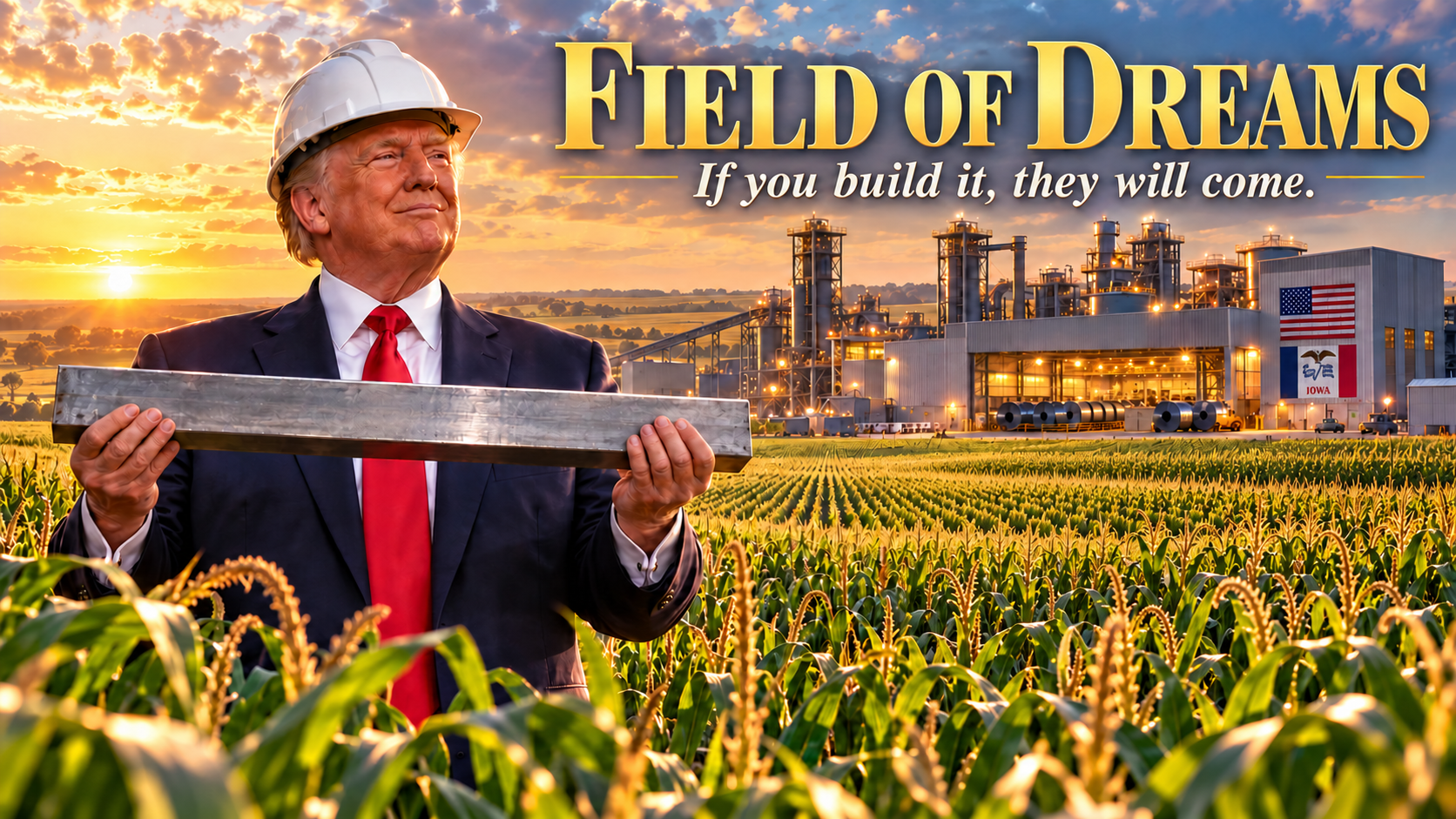
WASHINGTON — President Donald Trump announced Monday that Mesabi Metallics will build a roughly $15 billion steel mill in southeast Iowa — a project the White House calls the largest steel plant ever constructed in the United States.

Speaking in the Oval Office alongside company executives and administration officials, Trump framed the deal as proof that American manufacturing is coming back.

“Today, we’re thrilled to announce that Mesabi Metallics will be building the largest steel plant in American history in the great state of Iowa,” Trump said. “It’s the largest plant, one of the largest plants in the world, but it’s the largest plant in America by far.”

“In other words, this steel will be mined, melted and made right here in the USA,” he added. The project is expected to create up to 6,000 construction jobs, nearly 2,000 manufacturing and mining jobs, and $95 billion in economic activity, according to the White House.

The mill is planned for Lee County in southeast Iowa, near the Mississippi River, which the company intends to use to move iron ore from Minnesota. Rep. Mariannette Miller-Meeks, whose district includes the county, confirmed the location and said she joined the Oval Office announcement. Iowa lawmakers have discussed a possible special session to consider tax incentives before the November midterms.

Mine to mill, all in America

Mesabi Metallics, based in Nashwauk, Minnesota, and owned by India’s Essar Group, will feed the Iowa plant with iron ore from its new mine on Minnesota’s Mesabi Iron Range — the first new U.S. iron ore mine in about 50 years. The mine represents more than $2.5 billion in investment and is expected to produce about 7.5 million tons of direct-reduction-grade pellets a year and support roughly 350 jobs. Combined with the Iowa mill, the two projects total nearly $18 billion.

The company describes the supply chain as “100% American steel: mined, melted and poured in Minnesota and Iowa.” The U.S. Export-Import Bank has provided major financing for the Minnesota expansion.

The Iowa plant’s first phase is designed for 7.5 million tons of steel a year, with capacity later rising to 10 million tons — more than any other U.S. mill, according to the White House. First steel is targeted for 2030. Officials say it will use modern direct-reduced iron (DRI) and electric-arc furnace technology and can supply high-grade steel for defense, vehicles, shipbuilding, energy, and infrastructure.

Mesabi CEO Joe Broking called it “a major moment for U.S. made steel, combining the highest quality direct-reduction grade iron ore pellet from Minnesota’s Iron Range with the most advanced DRI to EAF steelmaking technology in Iowa.”

Permanent employment at the Iowa mill is projected at least 1,750 jobs. Some local reports put pay above $49 an hour. Construction is expected to begin soon.

Political and industrial context

The announcement comes weeks before the Nov. 3 midterm elections and after the administration raised steel tariffs to 50%. The White House is presenting the project as the first “mega” steel plant built in the United States since the 1960s and as evidence that tariffs and an America-first industrial policy are drawing capital back home.

White House spokeswoman Taylor Rogers said: “President Trump is delivering on his promise to rebuild American industry, reshore manufacturing, and create new jobs. Today’s announcement underscores the President’s historic efforts to revitalize the U.S. steel industry — supporting local communities, strengthening supply chains, and protecting our national security.”

Iowa Gov. Kim Reynolds welcomed the news: “American steel is BACK! … We’re proud to be the future home of the largest steel investment in US history—creating thousands of quality jobs, strengthening our economic trajectory, and ensuring strategic goods are Made in America.”

Commerce Secretary Howard Lutnick, EXIM Bank Chairman John Jovanovic, Mesabi Chairman Rewant Ruia, and Iowa officials including Sen. Joni Ernst attended the event.

U.S. raw steel output was about 82 million tons in 2025. A 10-million-ton Iowa mill would represent a significant share of national capacity and shift more production toward the Midwest.

The project still faces the usual hurdles of a multi-year industrial build: permitting, infrastructure, power supply, and state incentives. Production is four years away. But the administration and the company presented Monday’s announcement as a completed deal and the start of construction, not a concept.

For Iowa’s southeast corner and for a steel industry that has spent decades watching mills close, the numbers are large: billions in private capital, thousands of jobs, and a fully domestic mine-to-mill chain the White House says will not rely on foreign ore or foreign mills.

Continue Reading

Business

Enjoy Your Tasty Wheat: How AI Corporate Greed is Killing Humanity

Published

on

Why the elite have decided it’s better to feed machines than humans.

We have a lower class of CEOs. And AI is making it worse.

In the past, these titans of industry would invest in their communities: libraries, public works projects, parks, or actual philanthropy.

Today’s C-suite “geniuses” engage in fake activism, bribery disguised as donations, and a complete nihilism from the communities they proclaim to serve at the safety of their gated communities.

It used to be a source of great pride for an owner to discuss how many employees they have. They would boast about how they put food on the table for families. They would talks about benefits, and how well they take care of their workers. Hell, they used to even describe them as “family.”

Now, they can’t wait to tell shareholders how they automate everything themselves, outsource to foreign countries for pennies on the dollar, and utilize AI to cut their entire labor force (we will get to this soon.)

The common thread is that those at the top are completely divorced from their workforce, the very people that happen to also be their consumers.

This was the situation largely even before AI. It’s gotten worse. They are absolutely foaming at the mouth to displace workers.

The only way to describe it is a race to the bottom. Investing millions into replacing humans with AI. This is already happening, and the reward has been big short-term gains from cutting jobs that look like more profitability to investors.

What’s more is that these AI data centers need billions of gallons of water, insane amounts of electricity, and tons of facilities to expand growth. It’s so astronomical they’re talking about moving it into space.

Think about it for a minute: companies would rather provide “drinking” water, “feed” electricity, and pay to “house” MACHINES instead of paying a living wage to people.

In fact, it might even be cheaper to pay a living wage. That isn’t stopping industry leaders from chasing their human-less dreams, despite it taking less energy and resources for humans. Yet they’re still choosing machines.

They are even willing to operate at a loss simply for the idea that they can save the cost of paying a wage.

There are a few outcomes that are possible:

Best case: AI hype is exposed as overblown and companies understand that it’s simply a tool and they need actual operators behind the steering wheel. AI starts creating more jobs. It seems unlikely, but given that AI in actuality produces more slop than creative, it’s possible.

Worst Case: The arms race of displacing workers continues. Their greed hasn’t ever really showed signs of waning. To supplement the slop it creates, they will use freelance labor from countries like India to extinguish the fires it creates and justify not needing a full time employee. They will stop at nothing to chase their goal of a technocracy to increase profits. (Note: They think they don’t need you to even buy their products with the top 1% buying 50% of the goods.)

They trained AI on your work, fired you to save money, flooded the world with soulless garbage, empty warehouses, and call it innovation.

To them I say: enjoy your tasty wheat.

Continue Reading

Business

MAGA: From Shopping Mall to Manufacturing Hub 2.0

Published

on

Title: America’s Transition: From Shopping Mall to Manufacturing Hub 2.0

In the past few decades, America has often been described metaphorically as a giant shopping mall or auction house, where consumption and commercialism have dominated the landscape. However, with the rise of the Trump administration and the ambition to “Make America Great Again,” a new vision is emerging—one that aims to transform the nation into the world’s greatest manufacturing hub ever seen, leveraging AI, blue-collar labor, and a combination of innovative technologies.

The shift from a consumer-driven economy to a production powerhouse signifies a strategic move towards self-sufficiency, economic resilience, and global competitiveness. This transformation is not merely about revitalizing industries of the past but embracing cutting-edge technologies and sustainable practices to redefine the future of manufacturing.

At the heart of this evolution lies the integration of artificial intelligence (AI) into manufacturing processes. AI-driven automation streamlines production, enhances efficiency, and reduces costs, enabling American manufacturers to compete on a global scale. By harnessing the power of machine learning and predictive analytics, businesses can optimize supply chains, minimize waste, and customize products to meet diverse consumer demands.

However, the vision for America’s manufacturing renaissance extends beyond technological innovation. It embraces a diverse workforce, blending the traditional blue-collar skillset with the expertise of engineers, data scientists, and software developers. This fusion of talent creates a dynamic ecosystem where creativity, problem-solving, and collaboration drive continuous improvement and sustainable growth.

Moreover, the resurgence of American manufacturing is not confined to a single sector but encompasses a broad spectrum of industries, from automotive and aerospace to electronics and renewable energy. By leveraging cross-disciplinary expertise and fostering strategic partnerships, the United States can position itself as a global leader in advanced manufacturing, setting new standards for quality, innovation, and sustainability.

One of the key strengths of this manufacturing transformation is its adaptability and resilience. In contrast to the volatility of global markets and supply chains, a robust domestic manufacturing base provides stability and security, mitigating risks associated with geopolitical tensions, trade disputes, and natural disasters. By decentralizing production and embracing local sourcing, America can reduce its dependence on foreign imports and safeguard its economic sovereignty.

Furthermore, the transition towards a manufacturing-centric economy aligns with broader societal goals, such as job creation, workforce development, and regional revitalization. By investing in vocational training programs, apprenticeships, and re-skilling initiatives, the United States can empower individuals from diverse backgrounds to thrive in the digital age and secure meaningful employment opportunities in the manufacturing sector.

As America embarks on this journey towards manufacturing excellence, it must also prioritize sustainability and environmental stewardship. By embracing eco-friendly practices, renewable energy sources, and circular economy principles, manufacturers can minimize their carbon footprint, reduce waste generation, and preserve natural resources for future generations.

In essence, the vision of America as the world’s greatest manufacturing hub represents a paradigm shift—one that transcends partisan politics and embraces a collective aspiration for progress, prosperity, and shared prosperity. By harnessing the transformative power of AI, blue-collar ingenuity, and interdisciplinary collaboration, the United States can reclaim its status as an industrial powerhouse and pioneer a new era of manufacturing innovation on the global stage.

As the nation embarks on this ambitious journey, it must remain steadfast in its commitment to inclusivity, sustainability, and technological leadership, ensuring that the benefits of the manufacturing renaissance are felt by all Americans and resonate across borders, shaping a brighter and more prosperous future for generations to come.

Continue Reading

Trending

Donate to Populist Wire

*Note: Every donation is greatly appreciated, regardless of the amount.