Connect with us

Tech

Social Media is the Biggest Threat to America… It’s Time to Break Them Up

Published

on

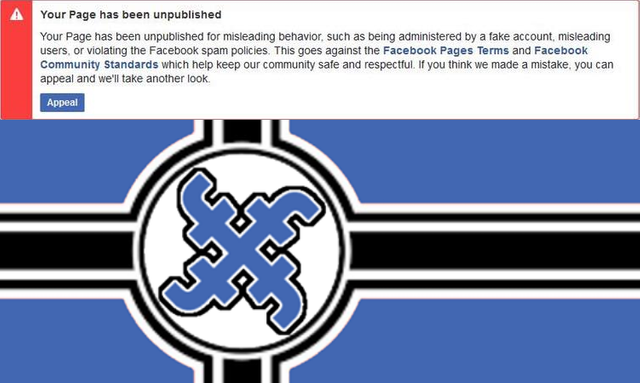
After the another mass ban by Facebook and Instagram of Alex Jones, Milo, Laura Loomer, and Paul Joseph Watson, it is evermore clear and a massive warning to all conservatives that they are not welcome on social media platforms. Something that should also be considered illegal considering their ‘public square’ standing and non-publisher status, which saves them from sued for libel but [should] curtail their ability to promote, dissuade, or ban content based on their choice.

Facebook went as far to even say they’ll ban anyone or organization that shares content from Alex Jones, Infowars, or any of the banned people mentioned, maybe even more.

Facebook is also conducting election-meddling.  Gang Emperor Yang, a meme page for Democratic candidate Andrew Yang, was removed less than a month ago.

President Trump has yet to act on this, ironically without social media Donald Trump would never be President. Considering the Media, Entertainment, and Political monopolies are aligned against him it seems maddening that President Trump hasn’t done one thing besides offer the suggestion to “be good” online.

Despite the fact that it’s hard to find to find any popular conservative right besides Ben Shapiro on the internet. When 2020 roles around it’s going to for Donald Trump’s old coalition to remain strong when his followers, his greatest allies in media, and people who helped get elected directly are being de-platformed, silenced, and banned off of social media.

Continue Reading
Click to comment

Leave a Reply

Your email address will not be published. Required fields are marked *

Tech

Data Center Resistance Reckoning Against Tech-State

Published

on

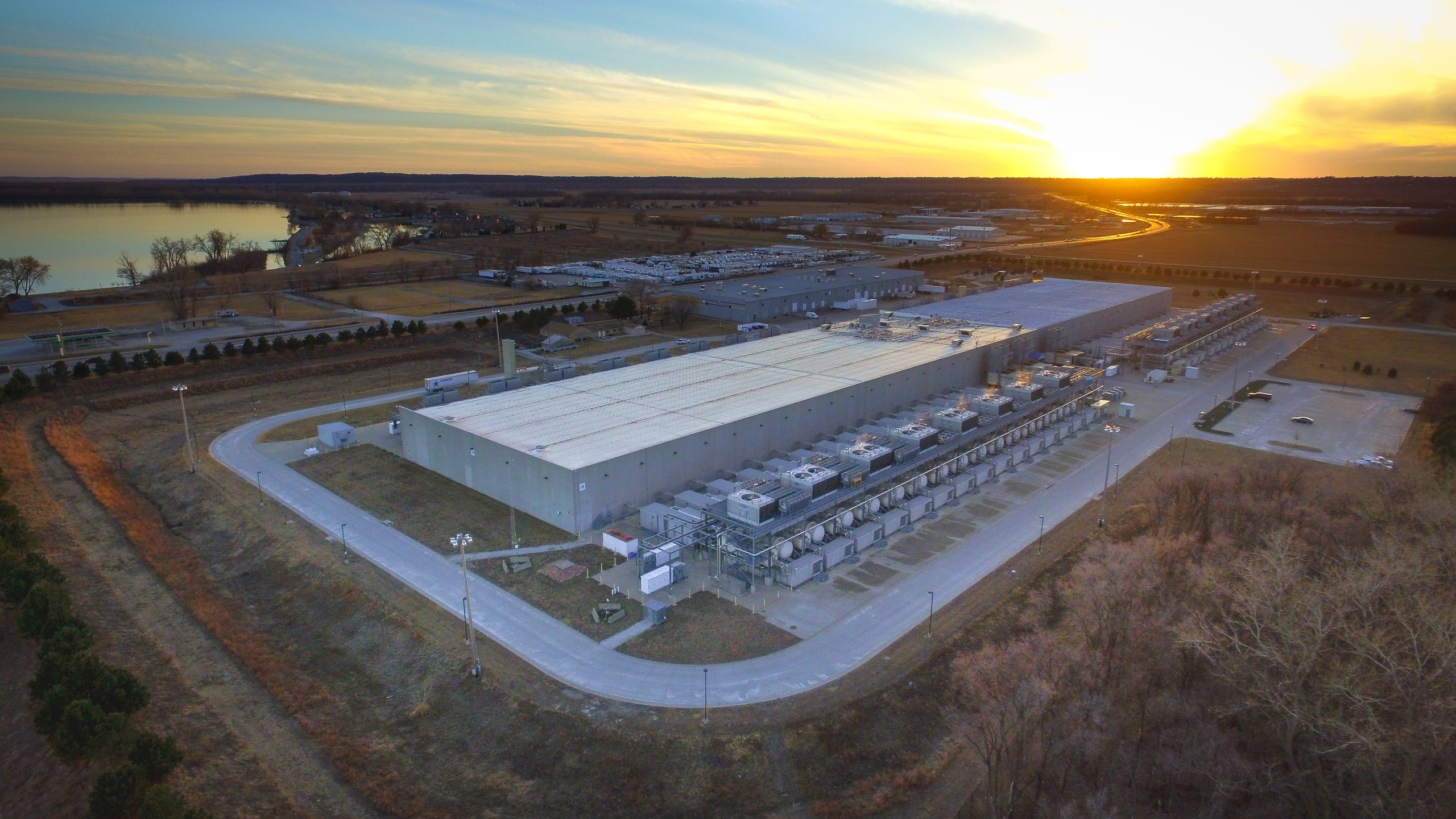
Across America right now, ordinary citizens are shutting down the AI industrial complex one zoning meeting at a time. In the first quarter of 2026 alone, local opposition blocked or delayed at least 75 data center projects worth roughly $130 billion. Cumulative figures since 2024 put the damage north of $170 billion in announced capacity that never got built. Opposition groups have exploded from a few dozen to more than 800 across 49 states, representing hundreds of thousands of people. Polling shows 71 percent of Americans oppose a new AI data center in their community—higher than opposition to nuclear plants. New York imposed the first statewide moratorium on hyperscale facilities. Texas paused approvals. Local bans and restrictions now number in the hundreds. This is not fringe environmentalism. This is working families, farmers, and small-town Republicans and Democrats telling Silicon Valley and its Wall Street backers that American land, water, and power grids are not their private sandbox.

The pattern is clear and it is elite extraction. Hyperscale data centers for the AI boom suck up staggering amounts of electricity and water while employing relatively few people. Ratepayers get stuck with the grid upgrades and higher monthly bills. Farmland gets paved over. Quiet rural and suburban communities turn into industrial zones with constant noise and diesel backup generators. Tech giants and private equity players extract tax breaks and sweetheart deals from local officials while the costs get socialized onto the middle class. Northern Virginia already lives with this reality. Now the same model is being forced onto Ohio, Michigan, Georgia, Texas, Indiana, and dozens of other states. The Tech State—Big Tech oligarchs, their political enablers, and the globalist AI race narrative—treats American communities as disposable infrastructure for their next trillion-dollar valuation. They talk about national competitiveness and the future while ordinary Americans watch their energy bills climb and their wells strain. This is corporate cronyism dressed up as progress.

The consequences are already hitting home. Electricity prices are rising in data-center heavy regions because utilities must build out capacity that primarily serves these facilities. Water stress is real in arid and agricultural areas. Local character and property values take the hit. Officials who rubber-stamp these projects are getting primaried or voted out. The resistance is bipartisan in the best sense: it is citizens prioritizing their own communities over the abstract promises of distant elites. That is populism. Real America First policy would force these companies to pay the full cost of their power and water, end the tax giveaways, restore genuine local control over land use, and reject the idea that national AI supremacy requires turning the American heartland into a server farm for trillion-dollar firms. The public is already delivering that message at town halls and ballot boxes. The Tech State can either listen or keep losing projects. Working families are done subsidizing the next round of elite excess.

Continue Reading

Politics

The Clash of Titans: X’s Shutdown in Brazil

Published

on

In an unprecedented move, Brazil’s Supreme Court has ordered the nationwide suspension of X, the social media platform formerly known as Twitter, marking a significant escalation in the ongoing feud between the platform’s owner, Elon Musk, and Brazilian authorities. This decision stems from Musk’s refusal to comply with court orders to appoint a legal representative in Brazil and to suspend certain accounts accused of spreading misinformation and hate speech.

The tension reached a boiling point when Justice Alexandre de Moraes gave X a 24-hour ultimatum to name a representative or face a complete operational shutdown in Brazil. Musk’s response was to close X’s office in Brazil, citing threats of arrest against his staff for non-compliance with what he described as “secret censoring orders.” This move has left millions of Brazilian users in the dark, with the platform going offline across the nation.

The implications of this standoff are manifold. Firstly, it pits the concept of free speech, as championed by Musk, against Brazil’s judicial efforts to curb what it sees as the spread of dangerous misinformation. Critics argue that this is a test case for how far nations can go in regulating global digital platforms. Secondly, the economic impact on X cannot be understated, with Brazil being one of its significant markets.

The situation has also sparked a debate on digital sovereignty versus global internet freedom. While some see Justice de Moraes’s actions as necessary to protect Brazilian democracy, others view it as an overreach, potentially stifling free expression. As X users in Brazil scramble to find alternatives or use VPNs to bypass the ban, the world watches closely to see if this could set a precedent for other nations grappling with similar issues.

Continue Reading

Tech

Force Free Speech By Regulating Big Tech

Published

on

In an era where the digital landscape is dominated by a handful of tech giants, the right to free speech is increasingly under threat. These companies, with their immense power and influence, have taken it upon themselves to police speech, often suppressing conservative and nationalist voices under the guise of combating “hate speech” or “misinformation.” It’s time to reclaim our freedom and ensure that the marketplace of ideas remains open and accessible to all.

The current situation is untenable. Big Tech companies have become the arbiters of truth, deciding what information is permissible and what must be censored. This has led to a chilling effect on free speech, with many individuals and groups afraid to express their opinions for fear of being deplatformed or silenced. This is a direct assault on our fundamental right to free speech, a cornerstone of our democracy.

It is clear that these companies cannot be trusted to regulate themselves. They have repeatedly shown a bias against conservative and nationalist viewpoints, while allowing leftist and progressive voices to flourish. This is not only unfair, it’s a violation of the principle of equal treatment under the law.

To ensure that all voices are heard, we must regulate these tech giants. This does not mean government control over speech, but rather the enforcement of a level playing field where all viewpoints are treated equally. Companies should be held accountable for their actions, and any bias in their moderation policies should be addressed.

One way to achieve this is through the creation of an independent body to oversee the moderation practices of these companies. This body would be tasked with ensuring that all viewpoints are treated fairly, and that any bias is rooted out. It would also have the power to impose fines or other penalties on companies that fail to uphold these standards.

Another approach is to encourage competition in the tech sector. Currently, a handful of companies dominate the market, making it difficult for new entrants to compete. By breaking up these monopolies, we can create a more diverse and competitive marketplace, where no single company has the power to control the flow of information.

In conclusion, the time has come to regulate Big Tech and protect our right to free speech. We cannot allow these companies to continue their biased moderation practices, suppressing conservative and nationalist voices while promoting leftist and progressive viewpoints. It’s time to level the playing field and ensure that all voices are heard. The future of our democracy depends on it.

Continue Reading

Trending

Donate to Populist Wire

*Note: Every donation is greatly appreciated, regardless of the amount.