Politics
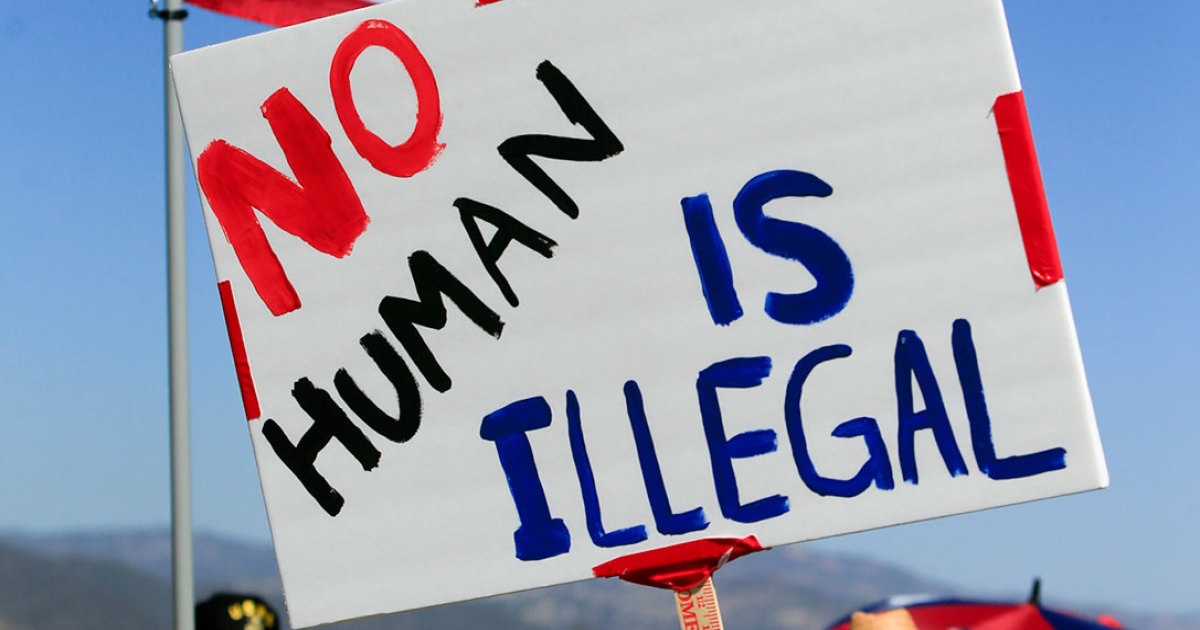
Illegal Immigrants Seek Governor’s Pardon Over Deportation
Published
8 years agoon
(Via LA Times)
The two Cambodian refugees living in Northern California had been convicted of crimes years ago and, under the Trump administration’s more aggressive immigration enforcement policies, those offenses had placed them on a path toward deportation.
But on Saturday, Gov. Jerry Brown announced the pardons of both men — Mony Neth of Modesto and Rottanak Kong of Davis — saying they had paid their debts to society and now lived honest and upright lives.
Immigration is a federal, not state, responsibility, but attorneys for the men hope the pardons will eliminate the rationale for deporting them. Across the country, immigration attorneys are doing the same: seeking gubernatorial pardons in last-ditch attempts to forestall deportations or allow the deported to return to the U.S.
Targeting convicted criminals for deportation isn’t a new idea; it was a priority under President Obama, who deported more people than any of his predecessors. But during the Obama administration, only those with serious crimes on their records were targeted for removal. President Trump has cast a much wider net.
Shortly after his inauguration, Trump signed an executive order directing the Department of Homeland Security to prioritize the removal of people in the U.S. illegally who have criminal convictions. In addition to speeding up the deportation of convicts, Trump’s orders also called for quick removal of people in the country illegally who are charged with crimes and waiting for adjudication.
And federal officials began to act swiftly.
In June, immigration authorities in Michigan rounded up more than 100 Iraqi nationals with criminal backgrounds. A month later, about 40 of them asked Republican Gov. Rick Snyder for pardons.
Among those seeking a reprieve was Usama Hamama, 54, who co-owns a market in the Detroit area. Hamama, who came to the United States as a refugee when he was 11, was convicted of felony assault and carrying a gun in a vehicle in 1988. He was sentenced to two years in prison. Since 1992, he has faced the threat of deportation, but that hadn’t been a real possibility until the Trump administration.
Hamama’s attorney, Bill Swor, who works closely with the local chapter of the American Civil Liberties Union, described his client’s crime as a low-level road rage incident. Since then, he said, Hamama has raised a family and opened his small business.
“A pardon would wipe clean this offense and his record,” Swor said of Hamama, who is being held in a federal immigration detention facility in Michigan. “He was in the country legally when the offense occurred, so a pardon takes us back to that status.”
Last month, Hamama’s 12-year-old daughter, Lindsey, wrote a letter to a federal judge overseeing her father’s case. She also sent a copy to the governor.
“All I want for Christmas,” she wrote, “is my dad home and nothing else.”
The governor’s office has not made a decision on a pardon.
Illinois Gov. Bruce Rauner, a Republican, received a similar plea — this one from an Army veteran with a felony drug conviction. Miguel Perez Jr., 39, joined the military in 2001 as a legal permanent resident and served two tours in Afghanistan.
In 2008, he was convicted of distributing less than 100 grams of cocaine. Perez, a native of Mexico, served half of his 15-year prison sentence but had his residency revoked as a result of the conviction and is being held in a detention center in Wisconsin.
Rauner hasn’t decided whether he’ll grant the pardon.
Gubernatorial pardons don’t guarantee an immigrant facing deportation could remain in the U.S., but they might have an effect, said Jason Cade, an associate professor of law at the University of Georgia, who characterized it as a case-by-case issue.
For example, Cade said, if an immigrant has a drug conviction that makes them subject to deportation and that conviction is pardoned, then deportation should no longer be an option.
“The bottom line is that full and unconditional pardons should absolutely be effective as a defense against deportation in cases where the conviction triggers certain removal categories — specifically those targeting aggravated felonies … or multiple criminal convictions,” said Cade, who has written extensively on immigration law.
Though the federal government may still have grounds to deport someone, Cade said, a pardon might lead authorities “to exercise favorable discretion.”
But that hasn’t always happened.
This year, Virginia Gov. Terry McAuliffe, a Democrat, pardoned Liliana Cruz Mendez, a mother of two who lived in the suburbs outside Washington. Cruz Mendez, who was in the country illegally from El Salvador, was stopped for a minor traffic infraction in 2014; her car had a blown-out headlight.
George Escobar, senior director at CASA — an immigrant rights group in the Washington area — called McAuliffe’s pardon “a show of solidarity for her cause and the belief she should not have to leave this country.”
“We had hoped that it would sway” Immigration and Customs Enforcement, said Escobar, who had worked to secure her pardon. “Unfortunately that was not the case.”
Federal immigration officials deported Cruz Mendez this summer.
But for others, especially people with green cards or other legal status, pardons have helped. Another common thread: living in a state with a Democratic governor who perhaps is looking to push back against the Trump administration.
In May, Colorado Gov. John Hickenlooper, a Democrat, pardoned Rene Lima-Marin, who in 2008 was mistakenly released early from prison, where he was serving time for a robbery conviction. Lima-Marin, who had fled Cuba in the 1980s, got married, had a son and started working. Six years later, in 2014, Colorado officials realized the mistake and took him back into custody.
This year, days after a judge released Lima-Marin, Hickenlooper pardoned him. Even so, Lima-Marin sits in an immigration detention center, though his attorneys are hopeful he will be released.
“In terms of rehabilitation, he demonstrated an ability to contribute to the fabric of his community and Colorado,” Hickenlooper said during a news conference around the time of the pardon. “He rebuilt his life. He’s become a law-abiding, productive member of his community.”
But in a different case this fall, Hickenlooper denied a pardon request from Ingrid Encalada Latorre, who has found sanctuary in churches throughout Colorado for much of the last year. Latorre, a native of Peru, has been living in the United States illegally for 15 years.
“We carefully look at each case and take a holistic approach when considering an application,” Hickenlooper said in an email. “Clemency is not the solution to our country’s broken immigration system.”
In California, Brown, a Democrat, has issued pardons that touched the lives of those facing deportation as well as those already removed from the country.
In 2015, Brown pardoned Eddy Zheng, an immigrant fighting deportation after spending more than two decades in prison for a robbery conviction. Zheng and his family immigrated to the U.S. in the 1980s from China. He remains in the U.S. and became a naturalized citizen in this year.
The pardons announced Saturday were granted to Neth, who was convicted on a felony weapons charge in 1995, and Kong, who was convicted on felony joyriding in 2003. In his pardon message, among several dozen issued, Brown said that since Neth and Kong left prison, both had gone on to become “law-abiding citizens.”
Of Kong, he added, “Indeed, several individuals wrote in support of Mr. Kong, describing him as kind and generous, and as a role model to those who face insurmountable challenges in their lives.”
Last spring, Brown pardoned two former Marines, Erasmo Apodaca Mendizabal and Marco Antonio Chavez, as well as former soldier Hector Barajas Varela. All three had received honorable discharges from the military but later were convicted of crimes and eventually deported.
An immigration judge reinstated Chavez’s green card in November after Brown’s pardon. On Thursday, after 15 years in Mexico, Chavez returned to the U.S.
Moments after walking across the border near San Diego, he told reporters that he could hardly believe that this year his Christmas morning would begin with a hug from his relatives.
Iowa
Randy Feenstra Built on Kim Reynolds’ Betrayal of Steve King: The Artificial Replacement Who Ousted a Conservative Warrior
Published
1 week agoon
May 30, 2026
In the summer of 2020, Iowa’s 4th Congressional District witnessed one of the most brazen establishment takeovers in recent Republican politics. Nine-term Congressman Steve King—the fiery, unapologetic voice of rural conservatism, border security, and Western civilization—was unceremoniously dumped by his own party. In his place? State Senator Randy Feenstra, a polished, establishment-backed challenger who cruised to victory in the June 2 primary with 45.5% of the vote to King’s 35.8%.
This wasn’t a grassroots revolt. It was a calculated betrayal orchestrated by the very insiders King had helped elevate—including Governor Kim Reynolds, whom he had proudly endorsed and supported just years earlier.
The Endorsement: King Lifts Reynolds When She Needed Him Most
Flash back to 2017-2018. Kim Reynolds was running for a full term as governor after ascending from lieutenant governor. Steve King didn’t just back her—he went all-in. Reynolds named King a statewide campaign co-chair and proudly touted his endorsement. In a November 2017 press release, she gushed: “Congressman Steve King is a strong defender of freedom and our conservative values. He’s independent, principled, and is fighting the good fight in Washington, D.C. You never have to question where he stands.”
King delivered for Reynolds in the heavily conservative 4th District. She rode that support to victory in 2018. Their alliance was public, mutual, and mutually beneficial—classic Republican teamwork, or so it seemed.
The Betrayal: Reynolds Stabs King in the Back
Fast forward to January 2019. After years of King being smeared by the media for his blunt defense of immigration enforcement and cultural issues, House Republican leadership stripped him of his committee assignments over remarks questioning why “white nationalist” had become a slur. King’s enemies pounced. Enter Randy Feenstra, who announced his primary challenge against the incumbent.
Governor Kim Reynolds? She didn’t lift a finger to defend the man who had co-chaired her campaign. Instead, she publicly washed her hands of him. In an interview with WHO-TV, Reynolds declared she would “stay out of the primary” but pointedly noted King’s surprisingly close 2018 re-election as a “wakeup call.” Translation: She wasn’t backing King over Feenstra.
Prominent Iowa Republicans like Sens. Chuck Grassley and Joni Ernst followed suit and stayed neutral—abandoning the pattern of past support for King. Meanwhile, Feenstra raked in cash from the U.S. Chamber of Commerce, National Right to Life, the Republican Jewish Coalition, and other establishment heavyweights. He painted King as “caustic” and ineffective, precisely the line the D.C. and Des Moines insiders wanted to hear.
Steve King, the guy who had carried water for the party through thick and thin, was left twisting in the wind. The same Reynolds who once called him a “strong defender of conservative values” now stood aside while the machine dismantled him.
Feenstra: The Artificial Candidate
Randy Feenstra didn’t storm onto the scene as a populist firebrand with grassroots rage behind him. He was the safe, scripted alternative. A state senator from Hull whose district overlapped King’s, Feenstra resigned a powerful Ways & Means committee chairmanship to run full-time—signaling deep establishment buy-in. He outraised King dramatically and dominated his home turf, but the broader narrative was clear: this was the party clearing out the “problematic” incumbent for someone who wouldn’t rock the boat or make national headlines for the wrong reasons.
Feenstra’s campaign pitch boiled down to “effectiveness” over principle. He criticized King’s rhetoric while promising results—code for “we’ll keep the seat Republican without the drama.” National GOP groups poured in to protect the safe red district from any general-election risk. King, stripped of power in Washington, was portrayed as the reason the district lacked a “seat at the table.”
The voters in the primary bought it. Feenstra won. King was out. The establishment had its man.
Why This Still Matters: The Pattern of Artificial Republicans
This wasn’t about ideology—Feenstra and King both cast conservative votes. It was about control. Steve King represented the raw, unfiltered voice of the heartland that made the Republican Party a fighting force. The insiders—Reynolds, the Chamber, the national PACs—wanted someone more manageable. Someone who wouldn’t embarrass them on cable news. Someone “artificial”: manufactured by money, party machinery, and calculated neutrality from the very people King had once helped.
Fast-forward to today, and the irony is thick. Feenstra is now running for governor in 2026, positioning himself as the heir to the Reynolds legacy. Meanwhile, Steve King—still influential in conservative circles—has thrown his support behind a challenger attacking Feenstra as the ultimate establishment candidate.
The 2020 primary wasn’t a rejection of conservatism. It was the establishment’s successful coup against one of its own most outspoken warriors. Randy Feenstra didn’t earn that seat through pure populist fire—he was handed it after the party betrayed the man who had helped build their machine.
Iowa conservatives should never forget: when the insiders decide you’re too loud, too principled, or too effective at exposing the real threats facing America, they’ll find a “cleaner” replacement. Steve King learned that the hard way. The rest of us should learn from it before the same machine installs more artificial candidates across the country.
Crime
Texas AG Ken Paxton Sues ActBlue (Democrat Funding Machine)
Published
2 months agoon
April 20, 2026
Texas Attorney General Ken Paxton just dropped a landmark lawsuit against ActBlue, the Democratic Party’s favorite fundraising machine, for systematically deceiving Americans about its donation processes that enable rampant fraud, including illegal foreign contributions and untraceable gift card schemes. On Monday, April 20, 2026, Paxton filed suit in Texas state court, accusing the platform of violating consumer protection laws by lying to donors and the public about the strength of its verification safeguards. This isn’t some minor paperwork dispute — it’s a direct assault on the integrity of our elections, where ActBlue has funneled over $16 billion into Democratic campaigns and causes while turning a blind eye to straw donations, identity fraud, and cash from overseas that has no business influencing American politics.
For years, everyday patriots have watched as Big Tech-enabled platforms like ActBlue operated with impunity, raking in small-dollar donations that often smelled fishy — thousands of identical contributions from the same IP addresses, elderly donors suddenly maxing out limits they never touched before, and untraceable gift cards flowing through after the platform claimed to Congress it had shut that door in 2024. Paxton’s investigators proved otherwise, successfully pushing small gift card donations through to the DNC and Democratic candidates as recently as February 2026 without a hitch. The radical left has relied on this dark money pipeline to subvert election laws, compromise sovereignty, and flood campaigns with cash that real Americans never authorized. Paxton nailed it: “The radical left has relied on ActBlue as a way to funnel foreign donations and dark money into their political campaigns to subvert our laws and compromise the integrity of our nation’s elections.”
This lawsuit exposes the deeper betrayal of the ruling class against working families and honest voters who play by the rules. While border communities in Texas and across America suffer under waves of illegal immigration and crime, Democrat elites in Washington and blue strongholds use tools like ActBlue to bankroll their open-borders agenda, woke indoctrination in schools, and endless attacks on traditional values — all funded by processes riddled with fraud that they publicly deny. Paxton’s action builds on his multi-year investigation that uncovered suspicious donation patterns and prompted calls for FEC reforms to ban straw donations. The consequences are clear: eroded trust in elections, stolen voice for American citizens, and a tilted playing field that favors globalist interests over national sovereignty.
What needs to happen now is full accountability and sweeping reforms to protect election integrity. Paxton’s suit should force ActBlue to clean house or face real penalties, while Congress and the FEC must step up with ironclad rules banning foreign nationals, unverified gift cards, and obscured identities from touching U.S. campaigns. States should follow Texas’s lead and launch their own probes. True election security starts with secure borders, verified voters, and transparent fundraising that puts American citizens first — not shadowy platforms serving the America Last crowd. Patriots everywhere should celebrate fighters like Ken Paxton for refusing to let the radical left rig the game. The fight for fair elections and a sovereign nation isn’t over; it’s just getting started. Demand your representatives back real reforms, or watch the fraud machine keep humming along at the expense of every hardworking family in this country.
Europe
Populist Warning: Hungary’s Nationalist Fortress Falls
Published
2 months agoon
April 12, 2026
In a stunning upset on April 12, 2026, Hungarian voters delivered a crushing blow to Prime Minister Viktor Orbán and his Fidesz party after 16 years of defiant nationalist leadership. The opposition Tisza Party, led by Péter Magyar—a slick former insider turned “change” candidate—stormed to victory with around 53% of the vote and a projected supermajority of 138 seats in the 199-member parliament. Orbán conceded defeat, calling it “painful,” as record turnout hit nearly 80%. What was sold as a grassroots revolt against “corruption” and “illiberalism” looks far more like a coordinated elite operation to drag Hungary back into the EU’s suffocating embrace. This isn’t just a Hungarian story; it’s a flashing red alert for every nation fighting to preserve its sovereignty against globalist machine politics.
The real story behind this result is a classic elite betrayal of working families who once rallied behind Orbán’s unapologetic defense of borders, traditional values, and resistance to endless migrant invasions and Brussels diktats. Magyar’s Tisza outfit, dressed up as “centre-right” and “pro-reform,” promises to “bolster the rule of law” and unlock frozen EU billions—code for surrendering Hungary’s hard-won independence on migration, family policy, and foreign affairs. Orbán built a bulwark against demographic replacement, gender ideology, and Ukraine war escalation that threatened to bleed Europe dry. Now, with high turnout fueled by anti-Orbán mobilization and possible foreign-backed campaigns, that wall is cracking. They—the Davos crowd, EU bureaucrats, and their media allies—painted Orbán as an authoritarian boogeyman while ignoring how his policies protected Hungarian workers from the cheap labor floods and cultural erosion devastating Western Europe. This shift reeks of the same globalist playbook we’ve seen time and again: undermine leaders who put citizens first, install pliable figures who prioritize “European values” over national survival.
The consequences for everyday Hungarians—and the broader populist movement—could be dire if this new regime follows through. Expect a rapid pivot toward open-border policies lite, accelerated EU integration that funnels sovereignty to unelected officials in Brussels, and a rollback of pro-family incentives that kept Hungary’s birth rates from total collapse. Hungarian families already squeezed by inflation and energy costs from green fantasies will face more “reforms” that benefit multinational corporations while eroding national identity. On the world stage, this weakens the America First alliance; Orbán stood as a rare European voice skeptical of forever wars and mass migration pacts that hurt American workers too. A pro-EU supermajority in Budapest hands globalists a propaganda win, signaling that even resilient populists can be toppled through relentless pressure, funding, and narrative control. For the U.S., it’s a reminder that our own battles against Big Tech censorship, bureaucratic overreach, and demographic swamping demand eternal vigilance—Trump’s return notwithstanding.
Patriots must treat Hungary’s fall as a cautionary tale, not a death knell. What needs to happen now is a fierce counter-mobilization: expose the foreign influences and elite capture behind Magyar’s rise, double down on securing borders and sovereignty wherever populists hold ground, and reject any “moderate” surrender that trades short-term EU cash for long-term national suicide. America First means learning from this—strengthen election integrity, rally working-class voters against cultural Marxism, and back leaders who refuse to bend the knee to globalist overlords. Hungary showed that high turnout can be weaponized against defenders of the nation; we must ensure ours delivers victories for citizens, not Davos. The fight for Western civilization isn’t over, but complacency invites exactly this kind of betrayal. Time to wake up, organize, and push back harder than ever before.
Randy Feenstra Built on Kim Reynolds’ Betrayal of Steve King: The Artificial Replacement Who Ousted a Conservative Warrior
Did City of Cedar Rapids Leaders Put Casino ‘Cash Grab’ Ahead of Clean Water?
Texas AG Ken Paxton Sues ActBlue (Democrat Funding Machine)
Populist Warning: Hungary’s Nationalist Fortress Falls