Politics
Comey Defends FBI Top Lawyer | ‘Anyone Can Be Attacked For Political Gain’
Published
8 years agoon
(Via Daily Mail)
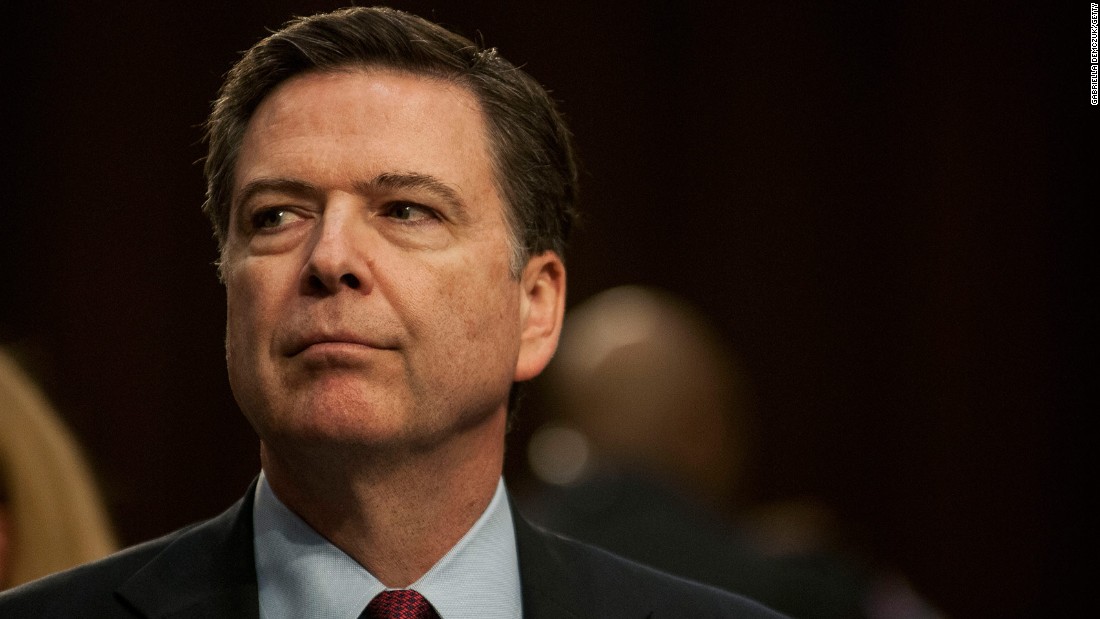
Former FBI Director James Comey issued a statement in defense of the FBI’s top lawyer James Baker who Republicans on Capitol Hill are trying to cast as a leaker.
‘Sadly, we are now at a point in our political life when anyone can be attacked for partisan gain,’ Comey remarked on his Twitter account Friday night. ‘James Baker, who is stepping down as FBI General Counsel, served our country incredibly well for 25 years & deserves better.’
Hill Republicans, who are attempting to sniff out political bias within the agency, have suggested that Baker – who is in the process of changing roles at the FBI – may have leaked information about the infamous dirty dossier to Mother Jones reporter David Corn.
Corn, who broke the story on the existence of the dossier, has stated that Baker was not his source.
President Trump, however, suggested something shady might be afoot in a Saturday afternoon tweet. ‘Wow, “FBI lawyer James Baker reassigned,” according to @FoxNews,’ the president wrote.
Politico put out a story Friday that quoted two unnamed Congressional GOP sources who told the publication that House Republicans are investigating contact between Baker and Corn in the weeks leading up to the 2016 presidential election.
Corn broke the story on the dossier on October 31, 2016, eight days before the election.
On October 28, 2016, Comey had told lawmakers that the FBI had found additional emails pertinent to the Hillary Clinton email investigation – a statement that the Democrat would later say helped her lose.
Corn’s piece pointed out that then Senate Minority Leader Harry Reid, a Nevada Democrat, sent a ‘fiery’ letter to Comey and revealed the existence of the dossier.
‘In my communications with you and other top officials in the national security community, it has become clear that you possess explosive information about close ties and coordination between Donald Trump, his top advisors, and the Russian government,’ Reid wrote. ‘The public has the right to know this information,’ the Senate’s Democratic leader told Comey.
Corn then laid out what he knew.
The liberal journalist said his primary source was a ‘former senior intelligence officer for a Western country who specialized in Russian counterintelligence,’ who told Mother Jones ‘in recent months he provided the bureau with memos, based on his recent interactions with Russian sources, contending the Russian government has for years tried to co-opt and assist Trump – and that the FBI requested more information from him.’
It’s since been reported that the dossier’s author was Christopher Steele, a former British intelligence agent.
Corn also cited a ‘senior U.S. government official not involved in the case’ who called the dossier’s source ‘credible’ and ‘with a proven record of providing reliable, sensitive and important information to the U.S. government.’
In a statement to Politico Corn said, ‘I’m not going to discuss my sources. But in order to prevent the dissemination of inaccurate information, I will say that James Baker was not my source for this story.’
Baker, however, was receiving attention because of a Washington Post story that came out Thursday that said he’s being reassigned from his position atop the Office of General Counsel at the FBI.
Two of the Post’s sources said the move didn’t come because of the political controversies plaguing the FBI, but rather as part of the leadership transition at the hands of new FBI Director Christopher Wray, who was confirmed for the job in August.
The Post’s story also pointed to Baker’s involvement in a leak probe that involved news reports detailing surveillance techniques for a specific email provider.
A source told the paper that on that issue, Baker ‘was distressed about it but was confident he hadn’t leaked anything.’
That probe, the newspaper reported, had recently petered out.
Politico’s story, which came out a day later, had Republican sources revealing that Baker had been in contact with Corn in the weeks leading up to the 2016 election, citing documents that had been provided to lawmakers recently by the Department of Justice.
However, the story also noted that the congressional sources told the publication that there was no conclusive evidence that Baker assisted Corn with his reporting.
‘But Republicans are pointing to the connection to cast suspicions about whether FBI officials had a hand in directing the details of the dossier to reporters, and the two sources said they expect it to be a focus on GOP investigators’ upcoming lines of inquiry,’ Politico wrote.
The contents of the dossier were also reportedly shopped around to reporters by Fusion GPS, the firm hired by Hillary Clinton’s campaign to dig up dirt on Trump.
The dossier had originated as opposition research on Trump, first funded by an unknown Republican primary opponent and then taken over by the Democrats and Clinton’s campaign.
Republican allies have questioned the FBI’s use of the dossier, which has never been verified in full, as a way to cast doubt on the handful of investigations into Russian meddling of the 2016 election and any Trump ties.
The president has also made great hay over government officials leaking information to the media.
Questions about Baker’s media ties began several days ago, Politico pointed out, when he appeared with FBI Deputy Director Andrew McCabe on Tuesday as McCabe took part in a closed-door session with the House Intelligence Committee, one of the panels investigating the Russia links.
GOP lawmakers in the meeting grilled McCabe on who at the FBI was allowed to talk to the media.
One Republican member then asked McCabe about a ‘hypothetical,’ outlining a meeting between the FBI’s general counsel and a Mother Jones reporter, Politico said.
In front of the panel, McCabe – who has also taken recent heat from the president over alleged political bias – said a meeting between such an FBI official and a reporter would be unauthorized, as Baker was seated in the room.
The committee’s top Democrat, Rep. Adam Schiff of California, suggested it was Republicans who should be ashamed for leaking information about Baker to the media, as Politico’s sources had done.
‘While we do not comment on the substance of nonpublic investigatory interviews, congressional Republicans again appear to be leaking information in an effort to discredit the FBI and Justice Department in the hopes of undermining the Mueller investigation,’ Schiff said.
Special Counsel Robert Mueller has taken over the FBI’s investigation into Russia and Trump.
‘Disdainful of the damage they are doing to our system of checks and balances, they would drag down another public servant in order to protect the president at any cost,’ said Schiff.
Besides his Capitol Hill testimony in June, Comey – who was fired by President Trump in May – has largely stayed away from FBI-related matters, using his social media presence to share timely quotes and inspirational phrases.
But on Friday night, he used his Twitter account to back a former colleague.
‘He is what we should all want our public servants to be,’ Comey said of Baker.
Crime
Texas AG Ken Paxton Sues ActBlue (Democrat Funding Machine)
Published
1 week agoon
April 20, 2026
Texas Attorney General Ken Paxton just dropped a landmark lawsuit against ActBlue, the Democratic Party’s favorite fundraising machine, for systematically deceiving Americans about its donation processes that enable rampant fraud, including illegal foreign contributions and untraceable gift card schemes. On Monday, April 20, 2026, Paxton filed suit in Texas state court, accusing the platform of violating consumer protection laws by lying to donors and the public about the strength of its verification safeguards. This isn’t some minor paperwork dispute — it’s a direct assault on the integrity of our elections, where ActBlue has funneled over $16 billion into Democratic campaigns and causes while turning a blind eye to straw donations, identity fraud, and cash from overseas that has no business influencing American politics.
For years, everyday patriots have watched as Big Tech-enabled platforms like ActBlue operated with impunity, raking in small-dollar donations that often smelled fishy — thousands of identical contributions from the same IP addresses, elderly donors suddenly maxing out limits they never touched before, and untraceable gift cards flowing through after the platform claimed to Congress it had shut that door in 2024. Paxton’s investigators proved otherwise, successfully pushing small gift card donations through to the DNC and Democratic candidates as recently as February 2026 without a hitch. The radical left has relied on this dark money pipeline to subvert election laws, compromise sovereignty, and flood campaigns with cash that real Americans never authorized. Paxton nailed it: “The radical left has relied on ActBlue as a way to funnel foreign donations and dark money into their political campaigns to subvert our laws and compromise the integrity of our nation’s elections.”
This lawsuit exposes the deeper betrayal of the ruling class against working families and honest voters who play by the rules. While border communities in Texas and across America suffer under waves of illegal immigration and crime, Democrat elites in Washington and blue strongholds use tools like ActBlue to bankroll their open-borders agenda, woke indoctrination in schools, and endless attacks on traditional values — all funded by processes riddled with fraud that they publicly deny. Paxton’s action builds on his multi-year investigation that uncovered suspicious donation patterns and prompted calls for FEC reforms to ban straw donations. The consequences are clear: eroded trust in elections, stolen voice for American citizens, and a tilted playing field that favors globalist interests over national sovereignty.
What needs to happen now is full accountability and sweeping reforms to protect election integrity. Paxton’s suit should force ActBlue to clean house or face real penalties, while Congress and the FEC must step up with ironclad rules banning foreign nationals, unverified gift cards, and obscured identities from touching U.S. campaigns. States should follow Texas’s lead and launch their own probes. True election security starts with secure borders, verified voters, and transparent fundraising that puts American citizens first — not shadowy platforms serving the America Last crowd. Patriots everywhere should celebrate fighters like Ken Paxton for refusing to let the radical left rig the game. The fight for fair elections and a sovereign nation isn’t over; it’s just getting started. Demand your representatives back real reforms, or watch the fraud machine keep humming along at the expense of every hardworking family in this country.
Europe
Populist Warning: Hungary’s Nationalist Fortress Falls
Published
2 weeks agoon
April 12, 2026
In a stunning upset on April 12, 2026, Hungarian voters delivered a crushing blow to Prime Minister Viktor Orbán and his Fidesz party after 16 years of defiant nationalist leadership. The opposition Tisza Party, led by Péter Magyar—a slick former insider turned “change” candidate—stormed to victory with around 53% of the vote and a projected supermajority of 138 seats in the 199-member parliament. Orbán conceded defeat, calling it “painful,” as record turnout hit nearly 80%. What was sold as a grassroots revolt against “corruption” and “illiberalism” looks far more like a coordinated elite operation to drag Hungary back into the EU’s suffocating embrace. This isn’t just a Hungarian story; it’s a flashing red alert for every nation fighting to preserve its sovereignty against globalist machine politics.
The real story behind this result is a classic elite betrayal of working families who once rallied behind Orbán’s unapologetic defense of borders, traditional values, and resistance to endless migrant invasions and Brussels diktats. Magyar’s Tisza outfit, dressed up as “centre-right” and “pro-reform,” promises to “bolster the rule of law” and unlock frozen EU billions—code for surrendering Hungary’s hard-won independence on migration, family policy, and foreign affairs. Orbán built a bulwark against demographic replacement, gender ideology, and Ukraine war escalation that threatened to bleed Europe dry. Now, with high turnout fueled by anti-Orbán mobilization and possible foreign-backed campaigns, that wall is cracking. They—the Davos crowd, EU bureaucrats, and their media allies—painted Orbán as an authoritarian boogeyman while ignoring how his policies protected Hungarian workers from the cheap labor floods and cultural erosion devastating Western Europe. This shift reeks of the same globalist playbook we’ve seen time and again: undermine leaders who put citizens first, install pliable figures who prioritize “European values” over national survival.
The consequences for everyday Hungarians—and the broader populist movement—could be dire if this new regime follows through. Expect a rapid pivot toward open-border policies lite, accelerated EU integration that funnels sovereignty to unelected officials in Brussels, and a rollback of pro-family incentives that kept Hungary’s birth rates from total collapse. Hungarian families already squeezed by inflation and energy costs from green fantasies will face more “reforms” that benefit multinational corporations while eroding national identity. On the world stage, this weakens the America First alliance; Orbán stood as a rare European voice skeptical of forever wars and mass migration pacts that hurt American workers too. A pro-EU supermajority in Budapest hands globalists a propaganda win, signaling that even resilient populists can be toppled through relentless pressure, funding, and narrative control. For the U.S., it’s a reminder that our own battles against Big Tech censorship, bureaucratic overreach, and demographic swamping demand eternal vigilance—Trump’s return notwithstanding.
Patriots must treat Hungary’s fall as a cautionary tale, not a death knell. What needs to happen now is a fierce counter-mobilization: expose the foreign influences and elite capture behind Magyar’s rise, double down on securing borders and sovereignty wherever populists hold ground, and reject any “moderate” surrender that trades short-term EU cash for long-term national suicide. America First means learning from this—strengthen election integrity, rally working-class voters against cultural Marxism, and back leaders who refuse to bend the knee to globalist overlords. Hungary showed that high turnout can be weaponized against defenders of the nation; we must ensure ours delivers victories for citizens, not Davos. The fight for Western civilization isn’t over, but complacency invites exactly this kind of betrayal. Time to wake up, organize, and push back harder than ever before.
In a fiery Truth Social post this week, President Donald Trump unloaded on four prominent conservative voices—Tucker Carlson, Candace Owens, Alex Jones, and Megyn Kelly—calling them “low IQ,” “stupid people,” “nut jobs,” “troublemakers,” and “losers” who aren’t real MAGA. The trigger? Their vocal opposition to U.S. military escalation against Iran, which critics frame as part of a broader joint U.S.-Israeli campaign in the region. Trump spent hundreds of words attacking them while insisting his actions align with keeping nuclear weapons out of Iran’s hands, the number one state sponsor of terror.
The attacks were personal. Trump mocked Jones over his Sandy Hook-related bankruptcy, jabbed at Owens’ past comments on Brigitte Macron, questioned Carlson’s education, and dismissed them all as irrelevant podcast hosts chasing publicity. In response, Owens quipped it might be time to “put Grandpa up in a home.” Jones suggested Trump had changed and prayed for him to be freed from “demonic influences,” while Carlson has repeatedly called Trump a “slave” to Israel, arguing the war serves Israeli interests over America First.
On the surface, this looks like a messy MAGA civil war: Trump, once boosted by these influencers, now turning on them over foreign policy. But zoom out, and a sharper pattern emerges. Trump’s willingness to take the punch—alienating loud voices in his own coalition—functions like reverse psychology. By drawing a hard line and inviting the inevitable backlash, he spotlights the very issues his critics obsess over: Israel’s influence on U.S. policy, AIPAC-style lobbying, donor pressures (think Miriam Adelson’s past contributions), and accusations of “Zionist control” over decisions from embassy moves to strikes on Iranian targets.
The Feud in Context
These critics didn’t start the fight in a vacuum. Carlson has questioned whether Israel is “blackmailing” Trump or holding leaders “enslaved,” framing U.S. involvement in the Iran conflict as contrary to America First promises. Owens has accused Trump of betraying troops for Israel, warned of false flags, and tied various events to Zionist lobbying. Jones has echoed themes of external “influences” pulling strings. Their pushback intensified as Trump defended actions against Iran, with some alleging the timing and scope served Netanyahu’s agenda more than strict U.S. interests.
Trump’s response? Instead of ignoring or quietly sidelining them, he amplified the rift with over-the-top rhetoric. The result: millions of eyes now glued to the debate. Every reply from Jones, Owens, or Carlson recirculates claims about undue foreign influence, Epstein files speculation (often laced with conspiracy), Adelson donations, and the broader “Israel lobby.” What was once fringe muttering in echo chambers becomes mainstream conservative infighting—broadcast on X, podcasts, and news cycles.
This isn’t subtle. Trump has a long history of transactional deal-making, including strong pro-Israel moves in his first term (Jerusalem embassy, Abraham Accords, Golan recognition) that pleased evangelical bases and certain donors while advancing what he saw as U.S. leverage. He’s also repeatedly warned against endless wars and nation-building. By punching right on this fault line, he forces the “anti-Zionist” wing of MAGA to overplay their hand, turning abstract gripes into concrete examples of division.
Mastercraft or Self-Sabotage?
Call it masterful political jiu-jitsu or chaotic disruption—Trump absorbs the hits to expose fractures. Critics on one side see him “caving” to neocons, donors, or Israeli security needs against a nuclear Iran. On the other, his base loyalists view the influencers as grifters who abandoned him the moment policy got tough, prioritizing isolationism over confronting terror sponsors. Either way, the spectacle drags Zionist influence, lobbying power, dual-loyalty whispers, and Middle East entanglements into the open for public dissection.
- Pro-Trump read: He’s prioritizing American security (no Iranian nukes) and calling out disloyal voices who bash him while riding his coattails. The feud proves he’s not controlled—he’s fighting on multiple fronts.
- Critics’ read: The attacks confirm external pressures overriding campaign rhetoric, with Trump “mad that he got set up by Israel.”
- Neutral observer: Regardless of who’s “right” on Iran policy, the infighting spotlights real questions about foreign aid, lobbying transparency, and whether U.S. decisions should ever prioritize another nation’s survival over domestic priorities like borders and debt.
Trump’s brand has always been willingness to brawl in public, even with allies. He takes the punch knowing it generates attention, frames the narrative, and lets opponents reveal their priorities. Here, by escalating against popular podcasters, he ensures debates over “Zionism” vs. strategic alliances, influence ops, and America First consistency dominate the discourse. The louder the backlash, the more those topics—usually confined to niche corners—flood timelines and force ordinary voters to confront them.
Whether this is deliberate 4D chess or raw instinct, the effect is the same: exposure. The feud isn’t hiding Israeli or Zionist sway; it’s thrusting it under the spotlight for millions to judge. Trump’s history suggests he bets on his base seeing strength in the fight, not weakness in the fray. In a polarized media age, taking the punch while the critics swing wildly may be the ultimate way to make the underlying tensions impossible to ignore.
The right is splintering in real time. How it resolves will say as much about U.S. foreign policy priorities as it does about Trump’s unique style of disruption. One thing is clear: no one’s looking away.
Texas AG Ken Paxton Sues ActBlue (Democrat Funding Machine)
Populist Warning: Hungary’s Nationalist Fortress Falls
Trump’s Reverse Psychology to Expose Zionism
Strait of America