Connect with us

Military

The Dancing Soldier

Published

on

Sometimes you just need to take a break, relax, and dance.

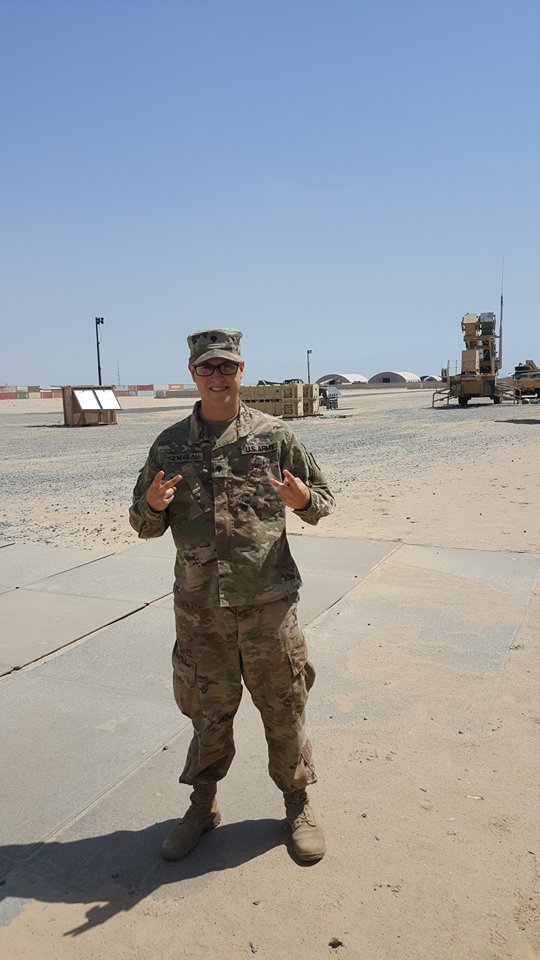
Meet Spc. Cedric Gendreau, the dancing soldier.

Around 1400 hours (2 PM), Spc. Cedric Gendreau was working hard in the desert heat, packing a connex full of military gear.

“We were reorganizing a connex, it was hot, so we decided to take a short break,” said Spc. Cedric Gendreau.  “During the break, one of my buddies began to play music and I told him to play ‘Take On me’ by A-ha.”

When the song began to play, Spc. Cedric Gendreau began to bring out his dance moves:


Spc. Cedric Gendreau uploaded the video he made to Facebook, all the reactions he received were priceless.

“Everybody started sharing it.  All the people in the comment section thought it was great and funny,” said Spc. Cedric Gendreau. “I made the video to give people back at home and the other soldiers in my unit a good laugh.”

About a month later, a huge sandstorm hit the area.

“There was this huge sandstorm and we were in our shack because the sandstorm got worse,” said Spc. Cedric Gendreau.  “We were in the middle of training and we had to stop in order to seek shelter.”

After the soldiers found shelter, Spc. Cedric Gendreau wanted to dance, so he did.


“While we were in the shack, my friends and I had the bright idea of making another dance video,” said Spc. Cedric Gendreau.

They made the video, the storm passed, and the soldiers still continued to press on.

If dancing is required to accomplish the mission, then dance.

Continue Reading
Click to comment

Leave a Reply

Your email address will not be published. Required fields are marked *

Military

Strait of America

Published

on

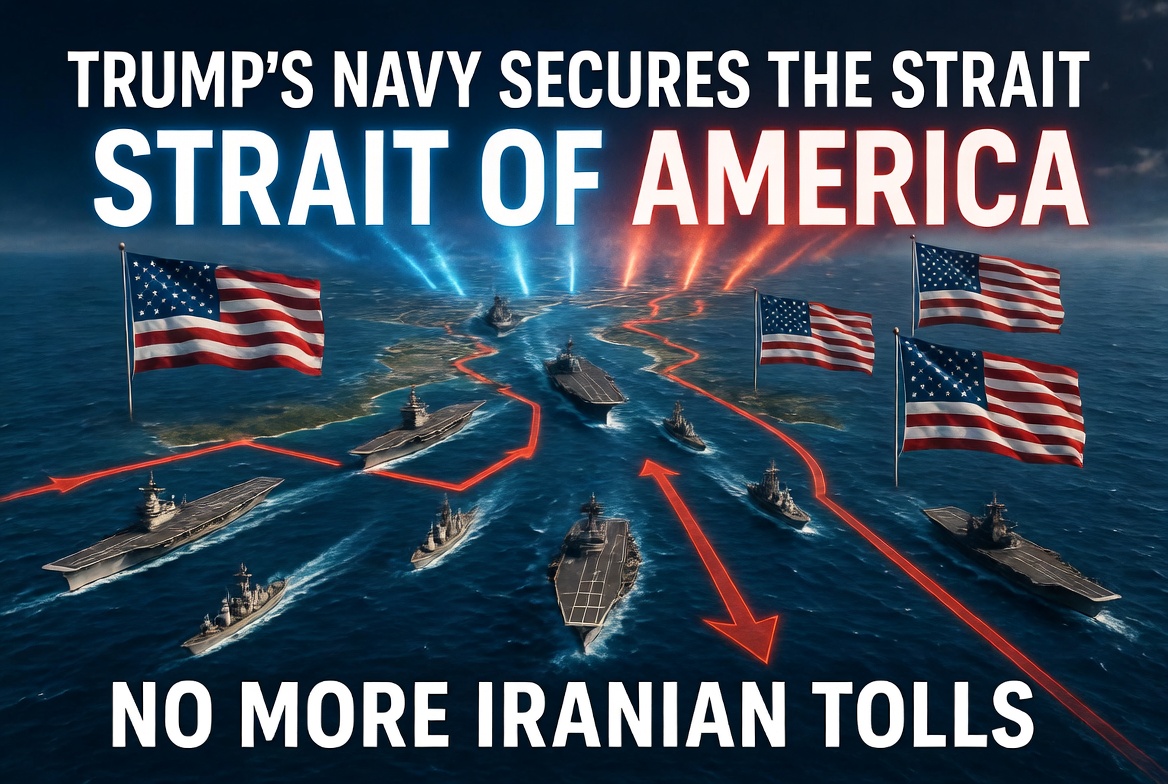
In a bold and decisive move that has sent shockwaves through global energy markets and geopolitical circles, President Donald Trump has effectively declared the Strait of Hormuz under American control. What was once Iran’s chokepoint for extorting the world’s oil supply is now being transformed into the Strait of America—a vital maritime artery secured by U.S. naval power, free from Iranian tolls, mines, and threats.

The announcement came swiftly on April 12, 2026, following the collapse of high-stakes peace talks between the United States and Iran in Islamabad, Pakistan. With no agreement reached on Iran’s nuclear ambitions or its destabilizing activities, President Trump took to Truth Social to issue a clear directive: “Effective immediately, the United States Navy, the Finest in the World, will begin the process of BLOCKADING any and all Ships trying to enter, or leave, the Strait of Hormuz.”

This is no mere threat. U.S. Central Command has confirmed the naval blockade will commence operations on Monday morning, targeting vessels that have paid illegal tolls to the Iranian regime. Mines laid by Iran’s Islamic Revolutionary Guard Corps are being cleared, with American warships already demonstrating freedom of navigation through the passage. Trump has made it explicit: no ship paying tribute to Tehran will enjoy safe passage on the high seas.

From Iranian Stranglehold to American Resolve

For decades, the Strait of Hormuz has been a flashpoint. Roughly 20% of the world’s oil and significant volumes of liquefied natural gas have passed through its narrow waters, giving Iran outsized leverage. During the ongoing conflict that escalated earlier in 2026, Iran mined the strait, attacked vessels, and began charging exorbitant “tolls” for passage—effectively holding global energy supplies hostage. Shipping traffic plummeted, oil prices spiked, and the world watched as a rogue regime attempted to dictate terms to the international community.

President Trump’s response has been characteristically direct and unapologetic. He has repeatedly set deadlines for Iran to reopen the strait, threatened strikes on Iranian power plants and infrastructure if demands were ignored, and now followed through with overwhelming naval force. “We’re putting on a complete blockade,” Trump stated. “We’re not going to let Iran make money on selling oil to people that they like and not people that they don’t like.”

This move echoes historic assertions of American maritime dominance. Just as the U.S. Navy has protected sea lanes in the past—from the Barbary Wars to modern freedom-of-navigation operations—Trump is reclaiming this critical chokepoint for free and fair passage. Allies and neutral nations reliant on Gulf oil are being quietly encouraged to support the effort, though the United States has signaled it is prepared to act decisively on its own.

Epic Show of Strength

Critics may wring their hands over rising oil prices or the risk of escalation, but the reality on the water tells a different story. U.S. forces have already sunk Iranian mine-laying vessels, cleared paths through the strait, and demonstrated that American naval power can enforce order where diplomacy failed. Iran has issued warnings of a “strong and forceful response,” yet the U.S. Navy remains the most formidable fleet on the planet—equipped with advanced destroyers, aircraft carriers, and overwhelming technological superiority.

This is the Trump Doctrine in action: maximum pressure, zero tolerance for extortion, and a clear message that America will not be bullied by adversaries who weaponize global trade. By securing the Strait of Hormuz, the United States is not only protecting its interests and those of its partners but also reasserting leadership in a region too long plagued by instability.

Oil markets reacted immediately, with prices surging on the news, underscoring the strait’s enduring importance. Yet long-term, a secured passage under American oversight promises stability—free from Iranian mines, arbitrary tolls, and attacks on commercial shipping. The “Strait of America” is more than a provocative nickname; it represents a strategic reality where the world’s most important energy corridor operates under the protection of the world’s preeminent naval power.

As operations unfold in the coming days, the world will witness whether Iran chooses confrontation or finally accepts that the era of unchecked aggression in the Gulf has ended. President Trump has drawn a line in the water—and the U.S. Navy stands ready to enforce it.

In the end, this is classic Trump: turning a crisis into an opportunity for American strength. The Strait of Hormuz, long a symbol of vulnerability, is becoming a monument to resolve. Welcome to the Strait of America.

Continue Reading

Military

Minneapolis: Military is the Only Way

Published

on

In the frozen heartland of America, Minneapolis has become a symbol of unchecked liberal chaos—a city where state and local officials have turned their backs on law and order, enabling fraud, violence, and open defiance of federal authority. The Trump administration’s bold crackdown on immigration fraud and illegal aliens through Operation Metro Surge has exposed the rot at the core of Minnesota’s Democratic leadership. But half-measures won’t cut it anymore. To root out the criminal networks embedded in state and local government, President Trump must invoke the Insurrection Act, deploy 25,000 to 30,000 troops, and orchestrate a coordinated takeover. This isn’t just about cleaning up one city; it’s a blueprint for reclaiming other corrupt blue states from the grip of radical progressives who prioritize open borders over American citizens.

The evidence of systemic corruption in Minnesota is overwhelming. For years, state programs have been plagued by massive fraud schemes, siphoning billions from taxpayer-funded initiatives like child nutrition, housing, and autism services. Federal prosecutors estimate up to $9 billion stolen, with most defendants tied to immigrant communities, particularly Somalis. Operation PARRIS, launched by DHS and USCIS, is reexamining thousands of refugee cases for fraud, focusing on Minnesota’s 5,600 recent refugees. Yet, Governor Tim Walz and Mayor Jacob Frey have actively aided these schemes by refusing to cooperate with ICE, releasing nearly 470 criminal aliens back into communities, and labeling federal enforcement as “racist” retaliation. Their sanctuary policies have turned Minneapolis into a haven for fraudsters, drug traffickers, and child predators, all while native Minnesotans suffer rising crime and economic strain.

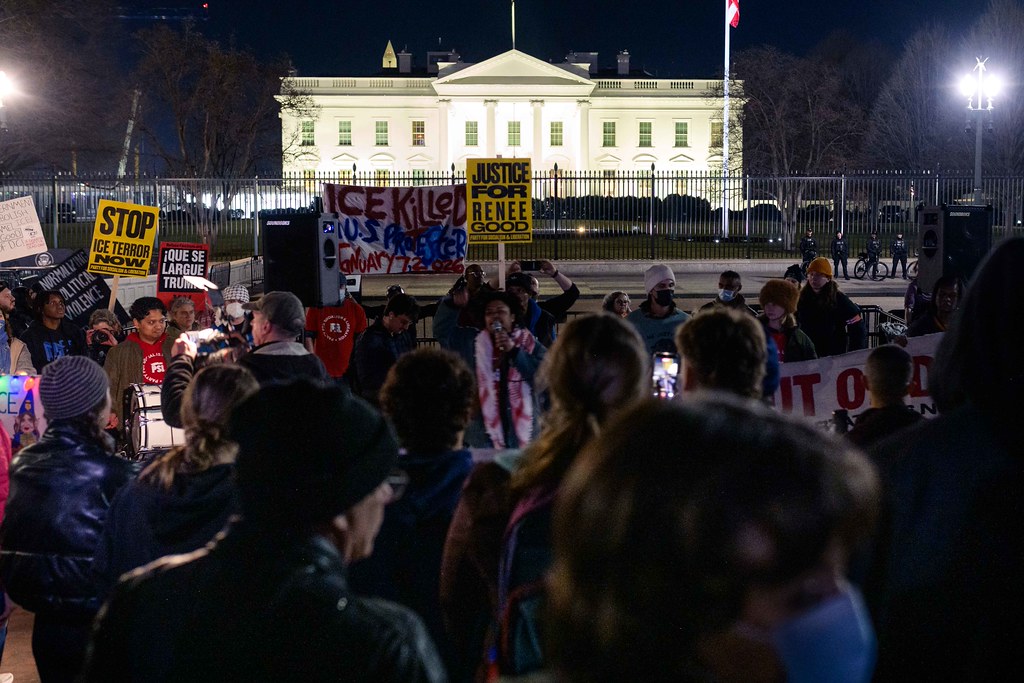
This obstruction isn’t passive—it’s deliberate sabotage. Walz and Frey have sued to halt the federal surge, claiming it’s politically motivated despite Minnesota’s fraud epidemic dwarfing national averages. They’ve instructed local police not to honor ICE detainers, allowing dangerous criminals to roam free. The DOJ is now investigating them for impeding federal enforcement, a clear violation of the law. And the violence? They’ve allowed riots to fester, with protesters clashing violently against ICE agents, throwing objects, blocking operations, and even pouring water to create icy hazards. Two shootings in a week— including the tragic death of Renee Good and a Venezuelan immigrant wounded—have escalated tensions, yet state leaders blame the feds instead of restoring order.

Worse still, this regime of radicals has blood on its hands. In June 2025, Democratic lawmaker Melissa Hortman and her husband were assassinated in a politically motivated attack by Vance Boelter, a former aide appointed under Walz’s administration. Boelter, with a hit list of 45 Democrats, also wounded State Sen. John Hoffman and his wife. Conspiracies swirl about Walz’s involvement, amplified by Trump’s posts, but the fact remains: under his watch, political violence has spiked, with officials promoting division and shielding suspects. This isn’t governance; it’s a criminal enterprise masquerading as progressive policy, agitating the left while failing to secure communities.

The numbers demand action. ICE has arrested hundreds of “worst of the worst” criminals—murderers, child rapists, and fraudsters—despite local interference. But with over 2,000 agents deployed, protests have turned the city into a war zone, outnumbering local police three to one. Judges have restricted ICE tactics, handcuffing agents from defending against agitators. Trump rightly threatened the Insurrection Act, a tool used by presidents like George H.W. Bush to restore order, but backed off—for now. Anything less invites more chaos, demotivating Trump’s base and emboldening open-borders advocates ahead of 2026 midterms.

Half measures—like limited surges or court battles—only exacerbate the issue, alienating patriots while handing victories to the left. Walz and Frey’s defiance has created a powder keg, energizing protesters who paint enforcement as inhumane. Amnesty whispers and carve-outs for workers undermine the mandate, signaling weakness. This piecemeal rot allows demographic shifts to continue, eroding America’s fabric.

The solution: Invoke the Insurrection Act now. Deploy 25,000-30,000 troops for a full takeover—expose the fraud networks, arrest complicit officials, and reconstruct governance under federal oversight. Start with Minneapolis as ground zero, then replicate in Chicago, Portland, and other blue bastions. No more excuses—with the One Big Beautiful Bill funding deportations, the tools are there. Anything less proves the “golden age” is fool’s gold, shattering the coalition and dooming the GOP. The military is the only way to deliver results and secure America’s future.

Continue Reading

Military

Memorial Day Inspires an ‘America First’ Spirit

Published

on

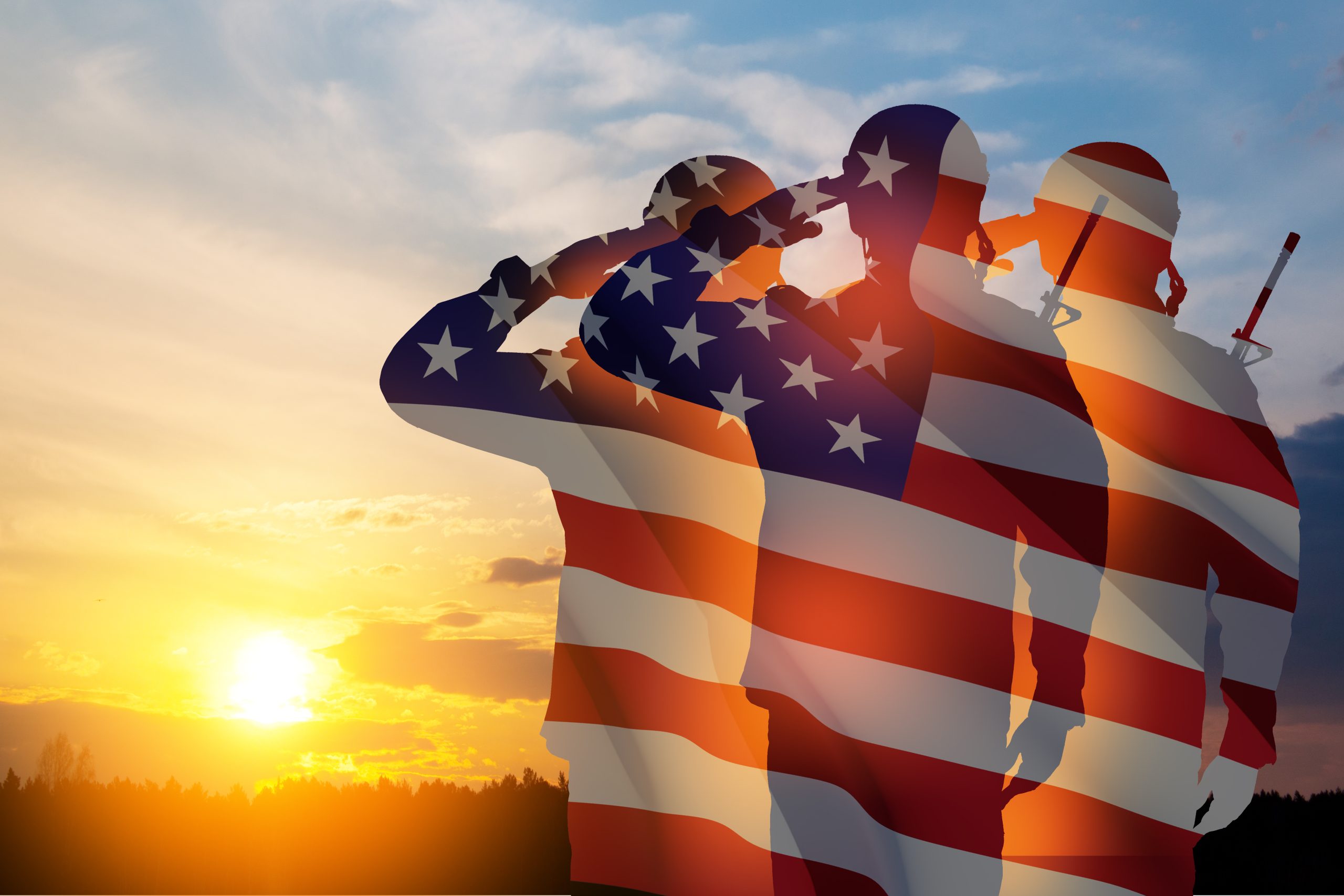
Memorial Day is a time to remember the brave men and women who have made the ultimate sacrifice to protect our freedom and way of life. It is a day to honor the “America First” spirit of our veterans, who have put their country and its citizens above all else. As we celebrate this Memorial Day, let us also reflect on our right and responsibility to uphold the values that our veterans have fought so hard to defend.

The origins of Memorial Day can be traced back to the Civil War, a time when Americans would decorate the graves of fallen soldiers with flowers and flags to honor their sacrifice. This tradition evolved into a national holiday, observed on the last Monday in May, to remember all those who have died in service to our country.

The “America First” spirit is about prioritizing the needs and interests of our country and its citizens. This does not mean isolationism or disregard for the rest of the world, but rather a commitment to ensuring the safety, security, and prosperity of our nation. Our veterans embody this spirit, as they have willingly put their lives on the line to defend our freedom and way of life.

As Americans, we have the right and responsibility to uphold the “America First” spirit that our veterans have fought to protect. This means advocating for policies and practices that prioritize the needs of our citizens, strengthen our national security, and promote economic growth. It also means respecting the sacrifices of our veterans by ensuring that their service is never in vain.

This Memorial Day, let us honor our veterans by fighting for the “America First” values they have defended. We can do this by supporting policies that strengthen our national security, promote economic growth, and protect the rights and freedoms of our citizens. We can also honor our veterans by ensuring that they have access to the resources and support they need to thrive after their service.

In conclusion, Memorial Day is a time to remember the sacrifices of our veterans and to honor their “America First” spirit. As we celebrate this holiday, let us also recommit ourselves to upholding the values that our veterans have fought so hard to defend. By doing so, we honor their memory and ensure that their sacrifice was not in vain.

Continue Reading

Trending

Donate to Populist Wire

*Note: Every donation is greatly appreciated, regardless of the amount.