Connect with us

Business

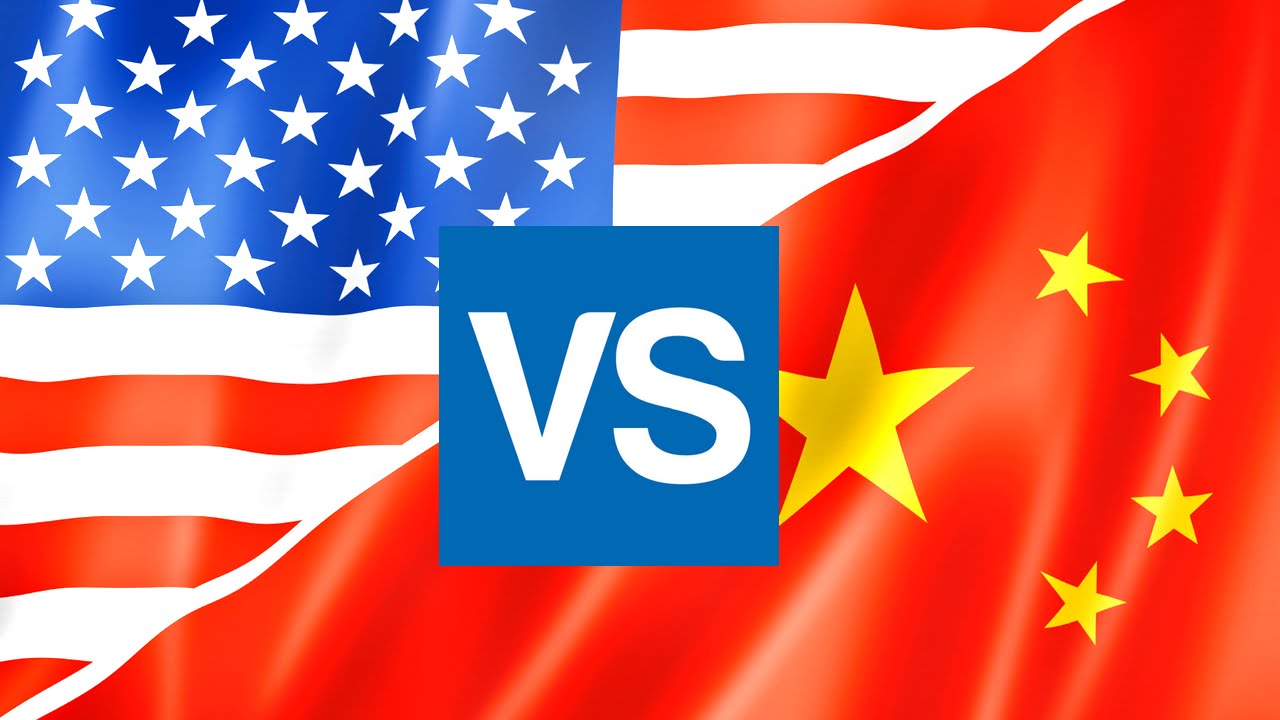
US & China Bracing For Trade War?

Published

on

(Via Zerohedge)


As we reported last week, the US non-petroleum trade deficit with China and Mexico – two of its largest trading partners – climbed to its highest level for a 12-month period in December, an embarrassing development for the Trump administration, which has repeatedly promised to protect US industry by raising trade barriers.

However, the rising deficit, bolstered by a weakening US dollar, could ratchet up the political urgency of the Trump administration’s trade agenda. And as the Wall Street Journal points out, the White House is preparing a mix of tariffs and quotas to confront the growing economic threat from China. Though this confrontation could be potentially disruptive for the global system of free trade, even potentially leading to the collapse of the World Trade Organization, a group the Trump administration believes China should never have been allowed to join.

In his column, the WSJ’s Andrew Browne points out that the last time the US became embroiled in a trade war, Ronald Reagan was president. And its adversary was a close US ally: Japan.

At the time, Japan’s economy was much smaller than the US economy. Today, the Chinese economy has by some measures eclipsed the US. Such an unprecedented trade showdown between the US and China could have far reaching ramifications.

A trade war isn’t a certainty, but if it comes, it will look nothing like the battles that raged in the 1980s over Japanese semiconductors, cars and TV sets.

The forces are more evenly matched this time: America has never faced off in a trade skirmish with an opponent like China in terms of economic size, industrial capabilities and global ambitions.

Japan was a U.S. ally, China increasingly a rival. That raises the risk of tit-for-tat escalation, especially since support for Beijing is crumbling across the U.S. political spectrum as well as in the U.S. business community, traditionally a strong advocate for China trade.

Anti-trade rhetoric has been embraced by both sides, with President Donald Trump’s “America First” proclamations and President Xi Jinping’s “Chinese Dream” scenario.

In this brewing battle fueled by protectionists in both camps (Mr. Trump’s “America First“ finds its nationalist counterpoint in President Xi Jinping’s “China Dream”), each side has an exaggerated sense of its own advantages.

“A trade war is coming because of ideological zealotry and absolutely contradictory estimates of who has more leverage,” says Scott Kennedy, an expert on Chinese industrial policy at the Center for Strategic and International Studies, a Washington-based think tank.

Global markets are wildly unprepared for a full-blown China-US trade war, WSJ reports. Earlier this month, the Eurasia Group highlighted “protectionism” as one of the biggest geopolitical risks of 2018. One of the reasons, Eurasia Group argues, is because industrialized economies are embracing a wider tool chest of pro-trade measures, including indirect subsidies and bailouts.

Governments aren’t just trying to protect comparative advantages in traditional sectors such as agriculture, metals, chemicals, and machinery out of concern for lost jobs or domestic economic interests. They’re also intervening in the digital economy and innovation-intensive industries as protecting intellectual property becomes an increasingly important priority.

But instead of traditional measures such as import tariffs and quotas, today’s tools of choice include “behind-the-border” measures such as bailouts, subsidies, and “buy local” requirements designed to bolster domestic companies and industries. These measures don’t necessarily circumvent WTO commitments; they rely on a collective inability to update and strengthen existing global trade rules.

WSJ agrees: Once under way, the repercussions of a trade war would be felt well beyond the combatants themselves. US friends and allies along Asian supply chains would be early collateral damage. China is still to a large extent the final assembly point for imported high-tech components from Japan, South Korea and Taiwan. Navigating increasingly complex global supply chains in a constant state of disruption would be hugely problematic for businesses across industries.

Furthermore, if it escalated far enough, a trade war could take down the entire global trading architecture. That could be Trump’s goal. Many in his administration, including trade representative Robert Lightizer, believe the biggest mistake the US ever made was to usher China into the World Trade Organization in 2001. Aides say Trump regularly threatens to pull out of the rules-setting body.

Trump has in the past suggested that Chinese help on North Korea could head off US trade action. In a phone call with the US president on Tuesday, Xi suggested that trade issues should be resolved by “making the cake of cooperation bigger.”

Meanwhile, Trump expressed disappointment that the US trade deficit with China has continued to grow” and made clear that “the situation is not sustainable.”

In private, however, senior Chinese officials believe Beijing has many tactical advantages: Some are cultural – the Chinese people, one says, are more prepared to endure economic hardship.

Perceptions of US bullying would rally the population around the Communist Party, whereas US opinion would fracture among constituencies for and against trade hostilities.

US manufacturing giants like Boeing in General Motors would probably throw a fit and withdraw their support for Trump and his agenda. Both companies see China’s economy, which is fairly open relative to Japan’s in the 1980s, as a crucial growth market. If US initiates a trade war – something that Trump has already threatened with his investigation into Chinese IP practices – China has a detailed game plan to respond, and the total flexibility to carry it out. For example, the Chinese government would abandon Boeing in favor of European Airbus. Diversifying soybean supplies – possibly relying more on Brazil – would be another option.

Browne says the US should count on Chinese retaliatory actions being highly targeted – state by state, congressional district by congressional district – to inflict the maximum US job losses, and single out those politicians most gung-ho about trade action.

Many US trade experts don’t mince words: They believe China would prevail in a trade war with the US, and that the US economy would suffer lasting damage.

Nicholas Lardy, a senior fellow at the Peterson Institute for International Economics, thinks China would win. Among his reasons: China’s ability to concentrate pain, and the outcry from affected businesses in America’s more open political system. He argues that “the political costs to the Trump administration of maintaining new protectionist measures will be much higher than the costs of retaliation to the Xi regime.”

Derek Scissors, a trade expert at the American Enterprise Institute argues that the major US advantage is that China is far more dependent on trade for its financial health.

“A shorter, smaller-scale trade conflict favors China due to its comparative agility,” he says. “The more serious it gets, the worse China would fare because it’s badly outmatched monetarily.”

In the 1980s, Japan had to back down, agreeing to voluntary export restraints and moving large parts of its auto manufacturing base to the US to create jobs and defuse tensions. China won’t be pushed around in the same way.

Still, China has other leverage: Rumblings about China ditching Treasurys – reports that have been denied by Chinese authorities but still managed to rattle markets – show the PBOC might be willing to use its balance sheet as leverage against the US.

And as central banks across Europe flock to the yuan, the US could be increasingly vulnerable to rising interest rates as its share of global reserves dwindles.

Continue Reading
Click to comment

Leave a Reply

Your email address will not be published. Required fields are marked *

Business

President Trump Secures Iowa Largest Steel Plant in U.S. History

Published

on

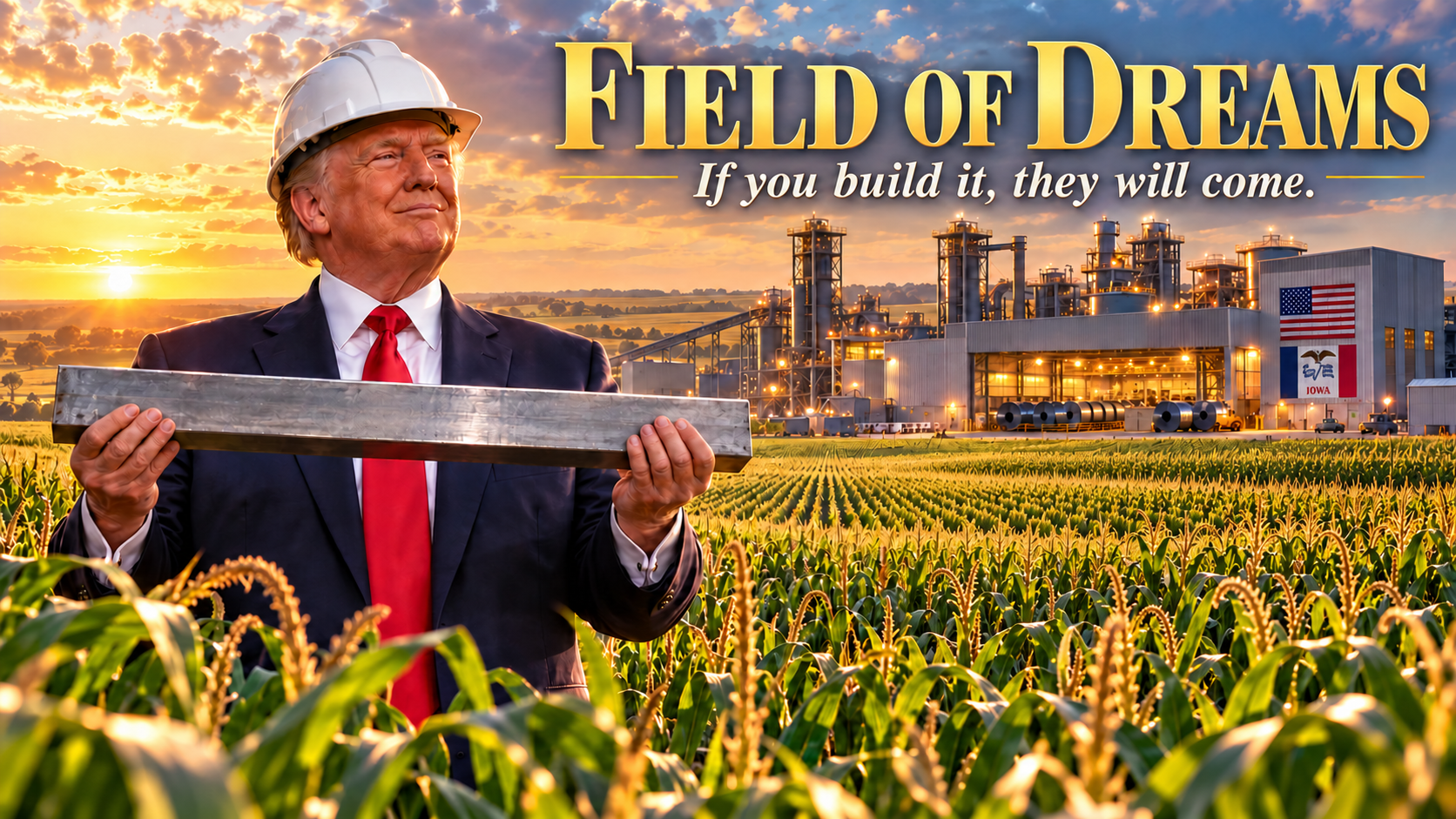
WASHINGTON — President Donald Trump announced Monday that Mesabi Metallics will build a roughly $15 billion steel mill in southeast Iowa — a project the White House calls the largest steel plant ever constructed in the United States.

Speaking in the Oval Office alongside company executives and administration officials, Trump framed the deal as proof that American manufacturing is coming back.

“Today, we’re thrilled to announce that Mesabi Metallics will be building the largest steel plant in American history in the great state of Iowa,” Trump said. “It’s the largest plant, one of the largest plants in the world, but it’s the largest plant in America by far.”

“In other words, this steel will be mined, melted and made right here in the USA,” he added. The project is expected to create up to 6,000 construction jobs, nearly 2,000 manufacturing and mining jobs, and $95 billion in economic activity, according to the White House.

The mill is planned for Lee County in southeast Iowa, near the Mississippi River, which the company intends to use to move iron ore from Minnesota. Rep. Mariannette Miller-Meeks, whose district includes the county, confirmed the location and said she joined the Oval Office announcement. Iowa lawmakers have discussed a possible special session to consider tax incentives before the November midterms.

Mine to mill, all in America

Mesabi Metallics, based in Nashwauk, Minnesota, and owned by India’s Essar Group, will feed the Iowa plant with iron ore from its new mine on Minnesota’s Mesabi Iron Range — the first new U.S. iron ore mine in about 50 years. The mine represents more than $2.5 billion in investment and is expected to produce about 7.5 million tons of direct-reduction-grade pellets a year and support roughly 350 jobs. Combined with the Iowa mill, the two projects total nearly $18 billion.

The company describes the supply chain as “100% American steel: mined, melted and poured in Minnesota and Iowa.” The U.S. Export-Import Bank has provided major financing for the Minnesota expansion.

The Iowa plant’s first phase is designed for 7.5 million tons of steel a year, with capacity later rising to 10 million tons — more than any other U.S. mill, according to the White House. First steel is targeted for 2030. Officials say it will use modern direct-reduced iron (DRI) and electric-arc furnace technology and can supply high-grade steel for defense, vehicles, shipbuilding, energy, and infrastructure.

Mesabi CEO Joe Broking called it “a major moment for U.S. made steel, combining the highest quality direct-reduction grade iron ore pellet from Minnesota’s Iron Range with the most advanced DRI to EAF steelmaking technology in Iowa.”

Permanent employment at the Iowa mill is projected at least 1,750 jobs. Some local reports put pay above $49 an hour. Construction is expected to begin soon.

Political and industrial context

The announcement comes weeks before the Nov. 3 midterm elections and after the administration raised steel tariffs to 50%. The White House is presenting the project as the first “mega” steel plant built in the United States since the 1960s and as evidence that tariffs and an America-first industrial policy are drawing capital back home.

White House spokeswoman Taylor Rogers said: “President Trump is delivering on his promise to rebuild American industry, reshore manufacturing, and create new jobs. Today’s announcement underscores the President’s historic efforts to revitalize the U.S. steel industry — supporting local communities, strengthening supply chains, and protecting our national security.”

Iowa Gov. Kim Reynolds welcomed the news: “American steel is BACK! … We’re proud to be the future home of the largest steel investment in US history—creating thousands of quality jobs, strengthening our economic trajectory, and ensuring strategic goods are Made in America.”

Commerce Secretary Howard Lutnick, EXIM Bank Chairman John Jovanovic, Mesabi Chairman Rewant Ruia, and Iowa officials including Sen. Joni Ernst attended the event.

U.S. raw steel output was about 82 million tons in 2025. A 10-million-ton Iowa mill would represent a significant share of national capacity and shift more production toward the Midwest.

The project still faces the usual hurdles of a multi-year industrial build: permitting, infrastructure, power supply, and state incentives. Production is four years away. But the administration and the company presented Monday’s announcement as a completed deal and the start of construction, not a concept.

For Iowa’s southeast corner and for a steel industry that has spent decades watching mills close, the numbers are large: billions in private capital, thousands of jobs, and a fully domestic mine-to-mill chain the White House says will not rely on foreign ore or foreign mills.

Continue Reading

Business

Enjoy Your Tasty Wheat: How AI Corporate Greed is Killing Humanity

Published

on

Why the elite have decided it’s better to feed machines than humans.

We have a lower class of CEOs. And AI is making it worse.

In the past, these titans of industry would invest in their communities: libraries, public works projects, parks, or actual philanthropy.

Today’s C-suite “geniuses” engage in fake activism, bribery disguised as donations, and a complete nihilism from the communities they proclaim to serve at the safety of their gated communities.

It used to be a source of great pride for an owner to discuss how many employees they have. They would boast about how they put food on the table for families. They would talks about benefits, and how well they take care of their workers. Hell, they used to even describe them as “family.”

Now, they can’t wait to tell shareholders how they automate everything themselves, outsource to foreign countries for pennies on the dollar, and utilize AI to cut their entire labor force (we will get to this soon.)

The common thread is that those at the top are completely divorced from their workforce, the very people that happen to also be their consumers.

This was the situation largely even before AI. It’s gotten worse. They are absolutely foaming at the mouth to displace workers.

The only way to describe it is a race to the bottom. Investing millions into replacing humans with AI. This is already happening, and the reward has been big short-term gains from cutting jobs that look like more profitability to investors.

What’s more is that these AI data centers need billions of gallons of water, insane amounts of electricity, and tons of facilities to expand growth. It’s so astronomical they’re talking about moving it into space.

Think about it for a minute: companies would rather provide “drinking” water, “feed” electricity, and pay to “house” MACHINES instead of paying a living wage to people.

In fact, it might even be cheaper to pay a living wage. That isn’t stopping industry leaders from chasing their human-less dreams, despite it taking less energy and resources for humans. Yet they’re still choosing machines.

They are even willing to operate at a loss simply for the idea that they can save the cost of paying a wage.

There are a few outcomes that are possible:

Best case: AI hype is exposed as overblown and companies understand that it’s simply a tool and they need actual operators behind the steering wheel. AI starts creating more jobs. It seems unlikely, but given that AI in actuality produces more slop than creative, it’s possible.

Worst Case: The arms race of displacing workers continues. Their greed hasn’t ever really showed signs of waning. To supplement the slop it creates, they will use freelance labor from countries like India to extinguish the fires it creates and justify not needing a full time employee. They will stop at nothing to chase their goal of a technocracy to increase profits. (Note: They think they don’t need you to even buy their products with the top 1% buying 50% of the goods.)

They trained AI on your work, fired you to save money, flooded the world with soulless garbage, empty warehouses, and call it innovation.

To them I say: enjoy your tasty wheat.

Continue Reading

Business

MAGA: From Shopping Mall to Manufacturing Hub 2.0

Published

on

Title: America’s Transition: From Shopping Mall to Manufacturing Hub 2.0

In the past few decades, America has often been described metaphorically as a giant shopping mall or auction house, where consumption and commercialism have dominated the landscape. However, with the rise of the Trump administration and the ambition to “Make America Great Again,” a new vision is emerging—one that aims to transform the nation into the world’s greatest manufacturing hub ever seen, leveraging AI, blue-collar labor, and a combination of innovative technologies.

The shift from a consumer-driven economy to a production powerhouse signifies a strategic move towards self-sufficiency, economic resilience, and global competitiveness. This transformation is not merely about revitalizing industries of the past but embracing cutting-edge technologies and sustainable practices to redefine the future of manufacturing.

At the heart of this evolution lies the integration of artificial intelligence (AI) into manufacturing processes. AI-driven automation streamlines production, enhances efficiency, and reduces costs, enabling American manufacturers to compete on a global scale. By harnessing the power of machine learning and predictive analytics, businesses can optimize supply chains, minimize waste, and customize products to meet diverse consumer demands.

However, the vision for America’s manufacturing renaissance extends beyond technological innovation. It embraces a diverse workforce, blending the traditional blue-collar skillset with the expertise of engineers, data scientists, and software developers. This fusion of talent creates a dynamic ecosystem where creativity, problem-solving, and collaboration drive continuous improvement and sustainable growth.

Moreover, the resurgence of American manufacturing is not confined to a single sector but encompasses a broad spectrum of industries, from automotive and aerospace to electronics and renewable energy. By leveraging cross-disciplinary expertise and fostering strategic partnerships, the United States can position itself as a global leader in advanced manufacturing, setting new standards for quality, innovation, and sustainability.

One of the key strengths of this manufacturing transformation is its adaptability and resilience. In contrast to the volatility of global markets and supply chains, a robust domestic manufacturing base provides stability and security, mitigating risks associated with geopolitical tensions, trade disputes, and natural disasters. By decentralizing production and embracing local sourcing, America can reduce its dependence on foreign imports and safeguard its economic sovereignty.

Furthermore, the transition towards a manufacturing-centric economy aligns with broader societal goals, such as job creation, workforce development, and regional revitalization. By investing in vocational training programs, apprenticeships, and re-skilling initiatives, the United States can empower individuals from diverse backgrounds to thrive in the digital age and secure meaningful employment opportunities in the manufacturing sector.

As America embarks on this journey towards manufacturing excellence, it must also prioritize sustainability and environmental stewardship. By embracing eco-friendly practices, renewable energy sources, and circular economy principles, manufacturers can minimize their carbon footprint, reduce waste generation, and preserve natural resources for future generations.

In essence, the vision of America as the world’s greatest manufacturing hub represents a paradigm shift—one that transcends partisan politics and embraces a collective aspiration for progress, prosperity, and shared prosperity. By harnessing the transformative power of AI, blue-collar ingenuity, and interdisciplinary collaboration, the United States can reclaim its status as an industrial powerhouse and pioneer a new era of manufacturing innovation on the global stage.

As the nation embarks on this ambitious journey, it must remain steadfast in its commitment to inclusivity, sustainability, and technological leadership, ensuring that the benefits of the manufacturing renaissance are felt by all Americans and resonate across borders, shaping a brighter and more prosperous future for generations to come.

Continue Reading

Trending

Donate to Populist Wire

*Note: Every donation is greatly appreciated, regardless of the amount.