Connect with us

Business

Couple of Apple’s Largest Shareholders Want “iPhone Addiciton” Addressed By Apple

Published

on

(Via Zerohedge)

In an unusual move, two of Apple’s largest shareholders, Jana Partners, a large activist hedge fund, and the California State Teachers’ Retirement System (CalSTRS) penned a letter to the company over the weekend saying the smartphone maker needs to respond to what some see as a growing public-health crisis of youth phone addiction. Among other things, the pair, which control some $2 billion worth of Apple shares, urged the company to develop new software tools that would help parents control and limit phone use more easily and to study the impact of overuse on mental health.

By doing so, we believe Apple would once again be playing a pioneering role, this time by setting an example about the obligations of technology companies to their youngest customers. As a company that prides itself on values like inclusiveness, quality education, environmental protection, and supplier responsibility, Apple would also once again be showcasing the innovative spirit that made you the most valuable public company in the world. In fact, we believe that addressing this issue now will enhance long-term value for all shareholders, by creating more choices and options for your customers today and helping to protect the next generation of leaders, innovators, and customers tomorrow.

Adding to the extreme irony of the letter, Jana and CalSTRS go on to highlight a series of studies which suggest that Apple products are literally killing the kids who use them and/or resulting in extreme bouts of depression or physical ailments from a lack of exercise. All of which would typically send investors running for the hills but apparently not in this specific case.

A study conducted recently by the Center on Media and Child Health and the University of Alberta found that 67% of the over 2,300 teachers surveyed observed that the number of students who are negatively distracted by digital technologies in the classroom is growing and 75% say students’ ability to focus on educational tasks has decreased. In the past 3 to 5 years since personal technologies have entered the classroom, 90% stated that the number of students with emotional challenges has increased and 86% said the number with social challenges has increased. One junior high teacher noted that, “I see youth who used to go outside at lunch break and engage in physical activity and socialization. Today, many of our students sit all lunch hour and play on their personal devices.”

Professor Twenge’s research shows that U.S. teenagers who spend 3 hours a day or more on electronic devices are 35% more likely, and those who spend 5 hours or more are 71% more likely, to have a risk factor for suicide than those who spend less than 1 hour.

This research also shows that 8th graders who are heavy users of social media have a 27% higher risk of depression, while those who exceed the average time spent playing sports, hanging out with friends in person, or doing homework have a significantly lower risk. Experiencing depression as a teenager significantly increases the risk of becoming depressed again later in life.

Also, teens who spend 5 or more hours a day (versus less than 1) on electronic devices are 51% more likely to get less than 7 hours of sleep (versus the recommended 9). Sleep deprivation is linked to long-term issues like weight gain and high blood pressure.

According to an American Psychological Association (APA) survey of over 3,500 U.S. parents, 58% say they worry about the influence of social media on their child’s physical and mental health, 48% say that regulating their child’s screen time is a “constant battle,” and 58% say they feel like their child is “attached” to their phone or tablet.

Of course, this is all part of a new theme in our growing nanny state which suggests that technology companies bear some responsibility for regulating how their products are used…you know, because grown adults can’t possibly be expected to make responsible decisions for themselves or their children when it comes to social media usage.

As we pointed out just a few weeks ago, former Facebook executive, whose job it was to literally get the world hooked on the “internet crack” that is social media, made a similar plea when he called on people to take a “hard break” from the service which he now believes is “ripping apart the social fabric of how society works.” Speaking to a group of students at the Stanford Graduate School of Business, Chamath Palihapitiya, who joined Facebook in 2007 and became its vice president for user growth, said that he feels “tremendous guilt” for his role in building the social media giant and warned that “if you feed the beast, that beast will destroy you…” (you can view the relevant portion of the interview here).

“I feel tremendous guilt.”

“I think we have created tools that are ripping apart the social fabric of how society works. That is truly where we are.”

“I would encourage all of you, as the future leaders of the world, to really internalize how important this is. If you feed the beast, that beast will destroy you. If you push back on it you have a chance to control it and reign it in.”

“The short-term, dopamine-driven feedback loops we’ve created are destroying how society works. No civil discourse, no cooperation; misinformation, mistruth. And it’s not an American problem — this is not about Russians ads. This is a global problem.”

“So, we’re in a really bad state of affairs right now, in my opinion. It is eroding the core foundations of how people behave by and between each other.”

Of course, as the Wall Street Journal notes, JANA Partners, to our complete shock, just might have other motivations behind their letter than their unwavering commitment to the health and safety of your children. Perhaps it has something to do with that “several-billion-dollar” hedge fund that Jana is seeking to raise this year to help companies be “better corporate citizens” (but certainly nothing to do with the millions in fees that Jana will receive in return).

The Apple push is a preamble to a new several-billion-dollar fund Jana is seeking to raise this year to target companies it believes can be better corporate citizens. It is the first instance of a big Wall Street activist seeking to profit from the kind of social-responsibility campaign typically associated with a small fringe of investors.

Adding splash, rock star Sting and his wife, Trudie Styler, will be on an advisory board along with Sister Patricia A. Daly, a nun who successfully fought Exxon Mobil Corp. over environmental disclosures, and Robert Eccles, an expert on sustainable investing.

What better way to market your new fundraising effort than by invoking the name of one of the most recognizable companies on the planet while simultaneously asking for money to literally save the lives of children the world over…well played, Jana…well played.

Continue Reading
Click to comment

Leave a Reply

Your email address will not be published. Required fields are marked *

Business

President Trump Secures Iowa Largest Steel Plant in U.S. History

Published

on

WASHINGTON — President Donald Trump announced Monday that Mesabi Metallics will build a roughly $15 billion steel mill in southeast Iowa — a project the White House calls the largest steel plant ever constructed in the United States.

Speaking in the Oval Office alongside company executives and administration officials, Trump framed the deal as proof that American manufacturing is coming back.

“Today, we’re thrilled to announce that Mesabi Metallics will be building the largest steel plant in American history in the great state of Iowa,” Trump said. “It’s the largest plant, one of the largest plants in the world, but it’s the largest plant in America by far.”

“In other words, this steel will be mined, melted and made right here in the USA,” he added. The project is expected to create up to 6,000 construction jobs, nearly 2,000 manufacturing and mining jobs, and $95 billion in economic activity, according to the White House.

The mill is planned for Lee County in southeast Iowa, near the Mississippi River, which the company intends to use to move iron ore from Minnesota. Rep. Mariannette Miller-Meeks, whose district includes the county, confirmed the location and said she joined the Oval Office announcement. Iowa lawmakers have discussed a possible special session to consider tax incentives before the November midterms.

Mine to mill, all in America

Mesabi Metallics, based in Nashwauk, Minnesota, and owned by India’s Essar Group, will feed the Iowa plant with iron ore from its new mine on Minnesota’s Mesabi Iron Range — the first new U.S. iron ore mine in about 50 years. The mine represents more than $2.5 billion in investment and is expected to produce about 7.5 million tons of direct-reduction-grade pellets a year and support roughly 350 jobs. Combined with the Iowa mill, the two projects total nearly $18 billion.

The company describes the supply chain as “100% American steel: mined, melted and poured in Minnesota and Iowa.” The U.S. Export-Import Bank has provided major financing for the Minnesota expansion.

The Iowa plant’s first phase is designed for 7.5 million tons of steel a year, with capacity later rising to 10 million tons — more than any other U.S. mill, according to the White House. First steel is targeted for 2030. Officials say it will use modern direct-reduced iron (DRI) and electric-arc furnace technology and can supply high-grade steel for defense, vehicles, shipbuilding, energy, and infrastructure.

Mesabi CEO Joe Broking called it “a major moment for U.S. made steel, combining the highest quality direct-reduction grade iron ore pellet from Minnesota’s Iron Range with the most advanced DRI to EAF steelmaking technology in Iowa.”

Permanent employment at the Iowa mill is projected at least 1,750 jobs. Some local reports put pay above $49 an hour. Construction is expected to begin soon.

Political and industrial context

The announcement comes weeks before the Nov. 3 midterm elections and after the administration raised steel tariffs to 50%. The White House is presenting the project as the first “mega” steel plant built in the United States since the 1960s and as evidence that tariffs and an America-first industrial policy are drawing capital back home.

White House spokeswoman Taylor Rogers said: “President Trump is delivering on his promise to rebuild American industry, reshore manufacturing, and create new jobs. Today’s announcement underscores the President’s historic efforts to revitalize the U.S. steel industry — supporting local communities, strengthening supply chains, and protecting our national security.”

Iowa Gov. Kim Reynolds welcomed the news: “American steel is BACK! … We’re proud to be the future home of the largest steel investment in US history—creating thousands of quality jobs, strengthening our economic trajectory, and ensuring strategic goods are Made in America.”

Commerce Secretary Howard Lutnick, EXIM Bank Chairman John Jovanovic, Mesabi Chairman Rewant Ruia, and Iowa officials including Sen. Joni Ernst attended the event.

U.S. raw steel output was about 82 million tons in 2025. A 10-million-ton Iowa mill would represent a significant share of national capacity and shift more production toward the Midwest.

The project still faces the usual hurdles of a multi-year industrial build: permitting, infrastructure, power supply, and state incentives. Production is four years away. But the administration and the company presented Monday’s announcement as a completed deal and the start of construction, not a concept.

For Iowa’s southeast corner and for a steel industry that has spent decades watching mills close, the numbers are large: billions in private capital, thousands of jobs, and a fully domestic mine-to-mill chain the White House says will not rely on foreign ore or foreign mills.

Continue Reading

Business

Enjoy Your Tasty Wheat: How AI Corporate Greed is Killing Humanity

Published

on

Why the elite have decided it’s better to feed machines than humans.

We have a lower class of CEOs. And AI is making it worse.

In the past, these titans of industry would invest in their communities: libraries, public works projects, parks, or actual philanthropy.

Today’s C-suite “geniuses” engage in fake activism, bribery disguised as donations, and a complete nihilism from the communities they proclaim to serve at the safety of their gated communities.

It used to be a source of great pride for an owner to discuss how many employees they have. They would boast about how they put food on the table for families. They would talks about benefits, and how well they take care of their workers. Hell, they used to even describe them as “family.”

Now, they can’t wait to tell shareholders how they automate everything themselves, outsource to foreign countries for pennies on the dollar, and utilize AI to cut their entire labor force (we will get to this soon.)

The common thread is that those at the top are completely divorced from their workforce, the very people that happen to also be their consumers.

This was the situation largely even before AI. It’s gotten worse. They are absolutely foaming at the mouth to displace workers.

The only way to describe it is a race to the bottom. Investing millions into replacing humans with AI. This is already happening, and the reward has been big short-term gains from cutting jobs that look like more profitability to investors.

What’s more is that these AI data centers need billions of gallons of water, insane amounts of electricity, and tons of facilities to expand growth. It’s so astronomical they’re talking about moving it into space.

Think about it for a minute: companies would rather provide “drinking” water, “feed” electricity, and pay to “house” MACHINES instead of paying a living wage to people.

In fact, it might even be cheaper to pay a living wage. That isn’t stopping industry leaders from chasing their human-less dreams, despite it taking less energy and resources for humans. Yet they’re still choosing machines.

They are even willing to operate at a loss simply for the idea that they can save the cost of paying a wage.

There are a few outcomes that are possible:

Best case: AI hype is exposed as overblown and companies understand that it’s simply a tool and they need actual operators behind the steering wheel. AI starts creating more jobs. It seems unlikely, but given that AI in actuality produces more slop than creative, it’s possible.

Worst Case: The arms race of displacing workers continues. Their greed hasn’t ever really showed signs of waning. To supplement the slop it creates, they will use freelance labor from countries like India to extinguish the fires it creates and justify not needing a full time employee. They will stop at nothing to chase their goal of a technocracy to increase profits. (Note: They think they don’t need you to even buy their products with the top 1% buying 50% of the goods.)

They trained AI on your work, fired you to save money, flooded the world with soulless garbage, empty warehouses, and call it innovation.

To them I say: enjoy your tasty wheat.

Continue Reading

Business

MAGA: From Shopping Mall to Manufacturing Hub 2.0

Published

on

Title: America’s Transition: From Shopping Mall to Manufacturing Hub 2.0

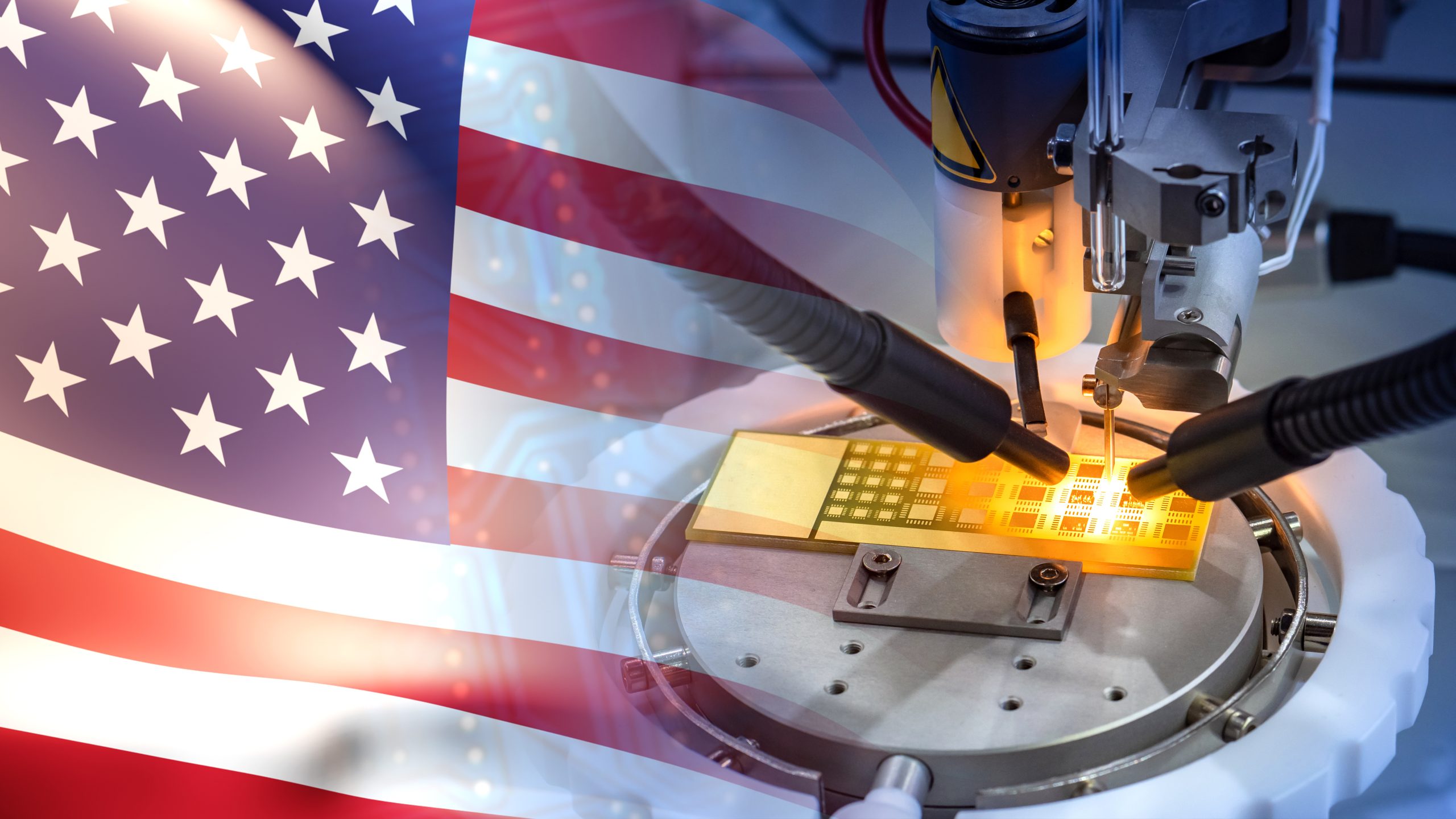
In the past few decades, America has often been described metaphorically as a giant shopping mall or auction house, where consumption and commercialism have dominated the landscape. However, with the rise of the Trump administration and the ambition to “Make America Great Again,” a new vision is emerging—one that aims to transform the nation into the world’s greatest manufacturing hub ever seen, leveraging AI, blue-collar labor, and a combination of innovative technologies.

The shift from a consumer-driven economy to a production powerhouse signifies a strategic move towards self-sufficiency, economic resilience, and global competitiveness. This transformation is not merely about revitalizing industries of the past but embracing cutting-edge technologies and sustainable practices to redefine the future of manufacturing.

At the heart of this evolution lies the integration of artificial intelligence (AI) into manufacturing processes. AI-driven automation streamlines production, enhances efficiency, and reduces costs, enabling American manufacturers to compete on a global scale. By harnessing the power of machine learning and predictive analytics, businesses can optimize supply chains, minimize waste, and customize products to meet diverse consumer demands.

However, the vision for America’s manufacturing renaissance extends beyond technological innovation. It embraces a diverse workforce, blending the traditional blue-collar skillset with the expertise of engineers, data scientists, and software developers. This fusion of talent creates a dynamic ecosystem where creativity, problem-solving, and collaboration drive continuous improvement and sustainable growth.

Moreover, the resurgence of American manufacturing is not confined to a single sector but encompasses a broad spectrum of industries, from automotive and aerospace to electronics and renewable energy. By leveraging cross-disciplinary expertise and fostering strategic partnerships, the United States can position itself as a global leader in advanced manufacturing, setting new standards for quality, innovation, and sustainability.

One of the key strengths of this manufacturing transformation is its adaptability and resilience. In contrast to the volatility of global markets and supply chains, a robust domestic manufacturing base provides stability and security, mitigating risks associated with geopolitical tensions, trade disputes, and natural disasters. By decentralizing production and embracing local sourcing, America can reduce its dependence on foreign imports and safeguard its economic sovereignty.

Furthermore, the transition towards a manufacturing-centric economy aligns with broader societal goals, such as job creation, workforce development, and regional revitalization. By investing in vocational training programs, apprenticeships, and re-skilling initiatives, the United States can empower individuals from diverse backgrounds to thrive in the digital age and secure meaningful employment opportunities in the manufacturing sector.

As America embarks on this journey towards manufacturing excellence, it must also prioritize sustainability and environmental stewardship. By embracing eco-friendly practices, renewable energy sources, and circular economy principles, manufacturers can minimize their carbon footprint, reduce waste generation, and preserve natural resources for future generations.

In essence, the vision of America as the world’s greatest manufacturing hub represents a paradigm shift—one that transcends partisan politics and embraces a collective aspiration for progress, prosperity, and shared prosperity. By harnessing the transformative power of AI, blue-collar ingenuity, and interdisciplinary collaboration, the United States can reclaim its status as an industrial powerhouse and pioneer a new era of manufacturing innovation on the global stage.

As the nation embarks on this ambitious journey, it must remain steadfast in its commitment to inclusivity, sustainability, and technological leadership, ensuring that the benefits of the manufacturing renaissance are felt by all Americans and resonate across borders, shaping a brighter and more prosperous future for generations to come.

Continue Reading

Trending

Donate to Populist Wire

*Note: Every donation is greatly appreciated, regardless of the amount.