Military
WATCH: Israel Blows Up Hamas TV Station
Published
8 years agoon
The escalation in violence began when earlier in the day Monday thousands of mourners in the Gaza Strip buried seven militants killed during the Israeli commando raid and accompanying aircraft cover fire that resulted in strikes on the strip, which further led to sporadic rocket fire from Hamas.
One Israeli soldier was reported killed during the high risk operation which reportedly involved the commandos entering Gaza by civilian car in order to take out a gathering of Hamas military leaders.
During the Gaza funeral the crowd chanted “revenge” amidst masked gunmen in camouflage.
Apparently that “revenge” came in the form of a mortar shell fired from Gaza which scored a direct hit on a bus in southern Israel, severely wounding a 19-year-old Israeli. According to multiple regional reports this was followed by a barrage of over 100 rockets fired from Gaza toward Israel within only an hour’s time. Israeli sources have reported multiple injuries and extensive damage from the rockets, many of which may have been intercepted by the Iron Dome missile defense system.
طيران الاحتلال الحربي يقصف ويدمر مقر فضائية الاقصى بغزة. pic.twitter.com/VSnUpYUb2s
— شجاعية (@shejae3a) November 12, 2018
Governor-elect Rob Sand (@RobSandIA) waited four days to say anything about the Army’s plan to set off a lead bomb in southeast Iowa. When he finally did, he had nothing to offer but a press-release shrug. Since then? Crickets.
Here’s what happened. On Nov. 13, the EPA quietly issued an emergency permit letting the Army detonate degraded lead azide in place at the Iowa Army Ammunition Plant in Middletown, a town of about 300 people near Burlington. On Nov. 15, the Army posted its public advisory: two controlled detonations at about noon on Friday, Nov. 20. The plan covered 68 barrels, roughly 9,700 pounds of an explosive that has recrystallized and become so sensitive to friction and shock that the Army says it can’t safely be moved.
The Army’s own advisory included a plume map warning of toxic lead dust settling to the north, with children under six “especially vulnerable.” Residents near Middletown City Park were told to clear out from 8 a.m. to 2 p.m. ISU Extension told cattle producers to pull livestock off pasture and ponds and to watch for signs of lead poisoning, starting with “sudden death.” Gov. Kim Reynolds’ office says it learned of the plan Monday, Nov. 16.
Iowa had the whole weekend and most of the week to hear from the man about to take over the Statehouse. It got nothing.
Thursday morning, 11:35 a.m.
Sand finally posted at 11:35 a.m. Central on Thursday, Nov. 19. That was about four days after the Army’s advisory, six days after the EPA permit, and barely 24 hours before the scheduled blast. Here it is in full:
The safety of Iowans now and in the future should be government’s top concern.
An unacceptable lack of communication and clarity has made Iowans understandably concerned and angry about this situation. The public deserves to know, if this is the safest option, why other options…
— Rob Sand (@RobSandIA) November 19, 2026
Read it twice. Safety should be the “top concern.” Iowans are “understandably concerned.” The public “deserves to know.” Swap “lead azide” for a bridge closure or a boil order and every word still works. No mention of Middletown. No mention of the farmers, the cattle, the water, or the kids in the plume path. No demand of the Army, the EPA, or anyone in Washington. And not one idea of his own.
The last line is the tell: if it isn’t as safe as possible, it shouldn’t happen. That’s a hedge, not a position. It lets him say he called for a pause if the blast goes badly and say he never opposed the Army if it goes fine.
Where was Rob? Deer Valley, Utah.
Here’s the part that should make every Iowan in the plume path furious. While southeast Iowa was pulling kids out of school and moving cattle off pasture, Sand was at a ski resort in Utah. On Nov. 19, the same day as his three-paragraph statement and the day before the blast was supposed to go off, he sat for an onstage interview at the POLITICO Pub at the National Governors Association’s New Governors Leadership Forum in Deer Valley, Utah. What made news? Not Middletown. POLITICO’s headline: “Rob Sand shuts down any talk of 2028.” A second POLITICO video promises Sand talking about his “model past.”
MAHA activist Kelly Ryerson (@GlyphosateGirl) noticed. At 11:20 p.m. Friday, she asked the question a lot of Iowans were already asking:
Why is @RobSandIA mute on the lead bomb issue, but @ZachLahn is all over it? Guess who should have won the election?
— Kelly Ryerson (@GlyphosateGirl) November 21, 2026
Forty minutes later she followed up, saying Sand had “been busy hanging at a Politico event in Deer Valley instead. As people in the state are very alarmed and evacuating.” POLITICO’s own coverage backs her up on where he was.
And since that Thursday statement? Sand’s X feed has a tribute to the late Sen. Wally Horn, a salute emoji, and on Saturday morning a string of jokey replies, one asking “Red hair, Niles?” and another calling something “the nicest thing anyone has ever said about me.” On the barrels in Middletown, not one new word.
Lahn was there first, with a plan
Zach Lahn doesn’t hold office. He lost this race. He was still out ahead of the governor-elect anyway.
At 8:47 p.m. Central on Wednesday, Nov. 18, roughly 15 hours before Sand said a word, Lahn went after the official line that lead dust can just be hosed off and stays “below levels of concern”:
Hosing off a chemical element sends it into the soil & water.
Lead is a neurotoxin that never biodegrades with zero safe exposure level.
But it’s "below levels of concern”. Exactly what we hear from the EPA on chemicals they regulate.
Our trust has been lost. pic.twitter.com/9r4ir9Qvf0
— Zach Lahn (@ZachLahn) November 19, 2026
At 9:38 a.m. Thursday, still two hours before Sand, he cut straight to it:
“When farmers have to keep cattle inside, off the water and grass, it’s clearly gone too far. We can catch a 250-ton rocket with chopsticks, but can’t dispose of an explosive without 100-mile neurotoxin plume? Pause, bring in the brightest minds, find another way.”
Then at 5:07 p.m. Thursday he did what Sand never did and laid out an actual plan. Lahn said he’d talked with people who know the situation, including officials in Washington, and he didn’t pretend there was a magic answer: “an unplanned detonation would clearly be the worst option.” He pointed out that the stockpile has reportedly been known about since 2004 with nothing done. Then he got specific:
Plan as if we’re going to detonate anyway. Keep every precaution in place.
Send in a robot instead of a person. Lahn proposed using an Optimus robot from @elonmusk to open each barrel and apply a chemical neutralizer like ceric ammonium nitrate, a documented way to break lead azide down into nitrogen gas, with nobody in harm’s way.
Accept that every outcome beats the status quo. Best case, it’s all neutralized and there’s no blast. Middle case, the blast is smaller. Worst case, a barrel goes off with every precaution already in place.
Make the Army pause. “The Army should pause tomorrow’s detonation long enough to think up crazy ideas that just may work.”
His bottom line: “Just going ahead as planned without trying to find a way to protect people, land, water, and soil is not an acceptable way to think about this.”
Before we blow up 68 barrels in Middletown and release a 100-mile lead plume, let's try something out of the box.
I've spoken with people who know this situation very well, including government officials in Washington, D.C.
Their take is that we have two options:
A) A planned…
— Zach Lahn (@ZachLahn) November 19, 2026
Call the robot idea a moonshot. Lahn did himself. It’s still a real idea. Sand’s contribution was a vibe. And for the record, the Army’s own environmental assessment rejected chemical neutralization because it would mean workers handling the drums for days or weeks. Taking the humans out of that equation is exactly the problem Lahn’s idea is aimed at.
Still working the phones
Lahn didn’t post once and move on. Nine minutes before midnight on Friday, he answered Ryerson directly:
One of the main reasons I ran is because I truly care about the health of our state. An election outcome doesn’t change that.
Have been on the phone w/officials in the WH tonight trying to help find other options.
Another environmental health issue is the last thing Iowa needs
— Zach Lahn (@ZachLahn) November 21, 2026
“One of the main reasons I ran is because I truly care about the health of our state. An election outcome doesn’t change that,” he wrote, adding that he’d “been on the phone w/officials in the WH tonight trying to help find other options.”
At 9:34 a.m. Saturday he posted an update. By Lahn’s account, HHS Secretary Robert F. Kennedy Jr. (@seckennedy) called him Friday night about his “deep concern” over the detonation, then connected him with Vice President JD Vance’s team and the White House, both of whom called late that night. Lahn says he can “say with certainty that they are looking at every available alternative.” He also says a former senior Defense Department official with decades in weapons threat reduction sent him an analysis, now shared with those offices, recommending an independent review by one of the National Laboratories to determine how urgent the threat really is. “If time allows,” Lahn wrote, “there are indeed other options available to mitigate the risk.”
Update: I received a call last night from @seckennedy regarding his deep concern about the Army's planned lead azide detonation in Middletown, Iowa.
He connected me with Vice President Vance’s team and the White House, both called late last night.
I can say with certainty that…
— Zach Lahn (@ZachLahn) November 21, 2026
That’s the difference. One guy lost the election and is calling the White House at midnight to find another way. The other guy won it, put out one statement, and went back to talking about 2028 and his hair.
Where it stands
Thursday evening, Acting Army Secretary Adam Telle pushed the blast to Monday, Nov. 23, calling it the “latest possible moment” before colder weather destabilizes the material further. Late Thursday night, the 8th Circuit Court of Appeals issued a temporary administrative stay of the EPA permit at the request of the Iowa Environmental Council and Sierra Club Iowa. As of Saturday, that stay is still in place.
But don’t relax yet. On Friday, Justice Department lawyers representing the EPA told the court they’ll fight the stay, with a full response due by Sunday. They also pointed to an EPA rule that lets the Army treat waste without a permit in a qualifying emergency. Earthjustice, which represents the environmental groups, called that “an extraordinary and extreme backstop” and urged the Army not to use it. The Army hasn’t said whether it will. Friday evening, Gov. Reynolds activated the State Emergency Operations Center. And on Saturday, the City of Fort Madison said it had been told the Army will “most likely” detonate on Monday, Nov. 23, or Tuesday, Nov. 24. So the Monday date may still be live, court stay or not.
For now, those barrels are still sitting in Middletown.
Southeast Iowa deserved a governor-elect who showed up early with answers. On this one, the guy who lost the race showed up first, and he’s still working the problem. Rob Sand showed up with talking points, then spent the day at a Utah ski resort talking about himself.
Military
President Trump Must Audit the 2026 Midterms & Force Redo
Published
3 weeks agoon
November 4, 2026
The results landed with unusual force. Democrats took the House and Senate, flipping seats in Texas, Kansas, Ohio, Iowa, and South Carolina. In several states Trump carried by wide margins in 2024, the same electorate is said to have swung sharply the other way. Midterms normally punish the party in power, yet the depth and location of these flips raise basic questions about whether the tallies fully reflect legal votes. When outcomes move this far, this fast, and this consistently in historically one-sided places, the burden of proof should not rest solely on the public’s willingness to accept the certified numbers.
Mail-in ballots, same-day registration, and uneven chain-of-custody rules have left large portions of the process opaque for years. Technical problems appeared in multiple states on Election Day. Voter rolls in high-volume jurisdictions have long contained outdated and duplicate entries. None of these facts alone prove fraud, but together they make blanket claims of a clean result harder to accept at face value. The scale of the shift, the speed of the calls, and the absence of a full forensic review leave the outcome open to legitimate doubt. America First requires that only citizens cast the deciding ballots; anything less undermines the republic.
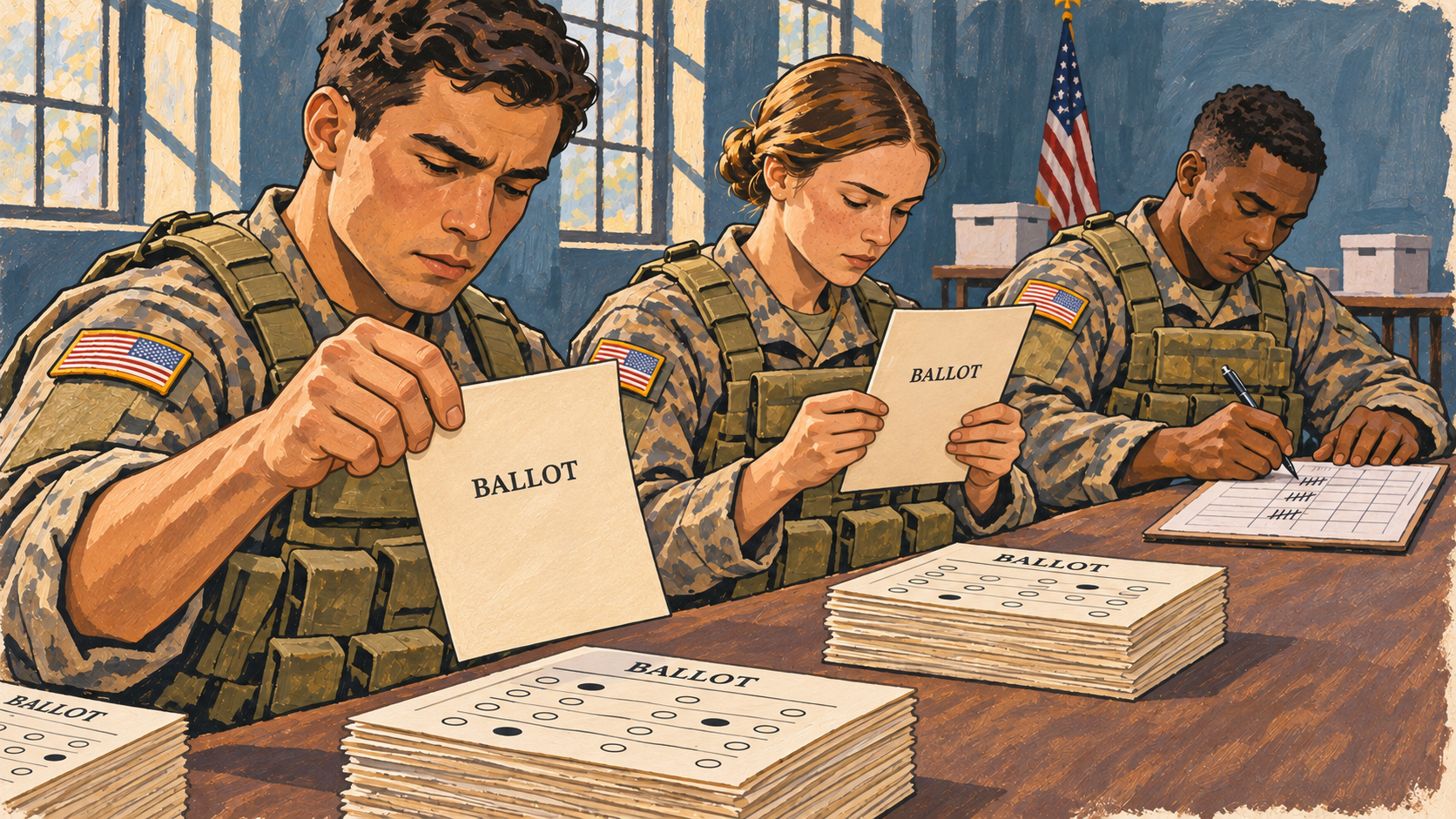
President Trump should order an immediate audit of the closest and most anomalous races. If that review finds material irregularities capable of changing results, the affected contests should be re-run under military supervision of polling places, ballot transport, and counting. Civilian administrators have lost the confidence of millions of voters. A transparent, secured re-election is the only practical way to settle the question and restore trust. Until then, the validity of these midterms remains open to serious challenge.
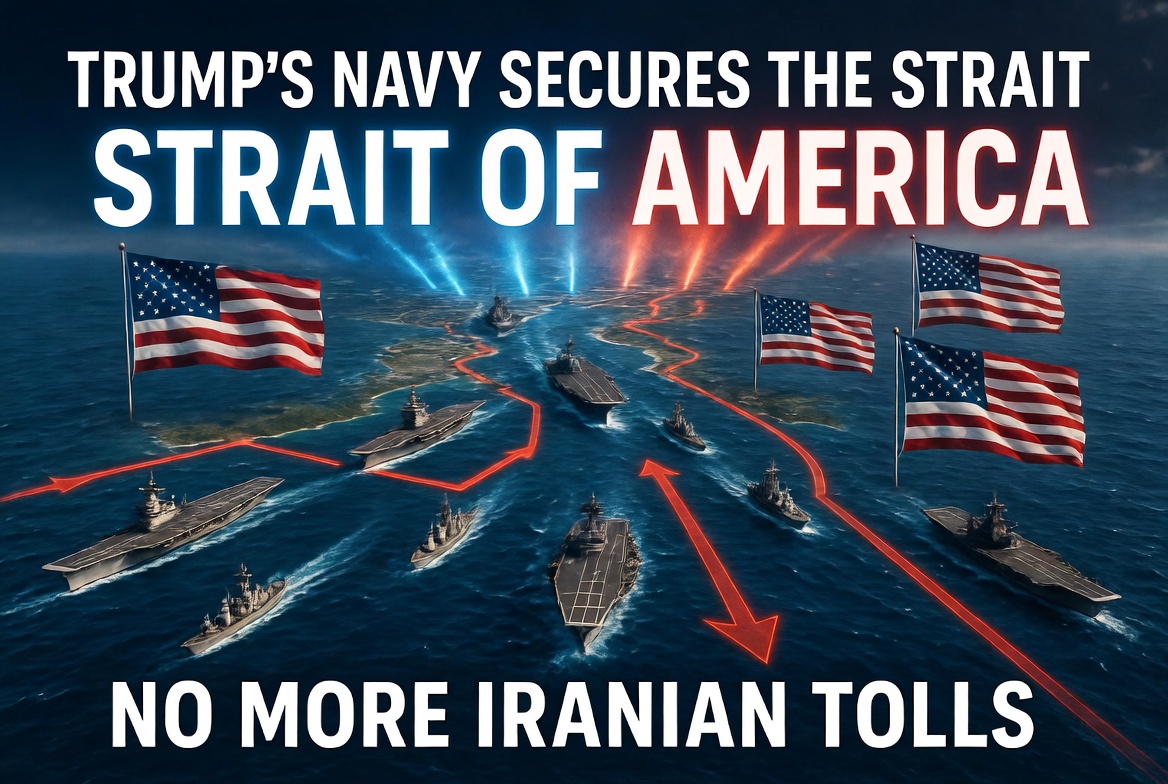
In a bold and decisive move that has sent shockwaves through global energy markets and geopolitical circles, President Donald Trump has effectively declared the Strait of Hormuz under American control. What was once Iran’s chokepoint for extorting the world’s oil supply is now being transformed into the Strait of America—a vital maritime artery secured by U.S. naval power, free from Iranian tolls, mines, and threats.
The announcement came swiftly on April 12, 2026, following the collapse of high-stakes peace talks between the United States and Iran in Islamabad, Pakistan. With no agreement reached on Iran’s nuclear ambitions or its destabilizing activities, President Trump took to Truth Social to issue a clear directive: “Effective immediately, the United States Navy, the Finest in the World, will begin the process of BLOCKADING any and all Ships trying to enter, or leave, the Strait of Hormuz.”
This is no mere threat. U.S. Central Command has confirmed the naval blockade will commence operations on Monday morning, targeting vessels that have paid illegal tolls to the Iranian regime. Mines laid by Iran’s Islamic Revolutionary Guard Corps are being cleared, with American warships already demonstrating freedom of navigation through the passage. Trump has made it explicit: no ship paying tribute to Tehran will enjoy safe passage on the high seas.
From Iranian Stranglehold to American Resolve
For decades, the Strait of Hormuz has been a flashpoint. Roughly 20% of the world’s oil and significant volumes of liquefied natural gas have passed through its narrow waters, giving Iran outsized leverage. During the ongoing conflict that escalated earlier in 2026, Iran mined the strait, attacked vessels, and began charging exorbitant “tolls” for passage—effectively holding global energy supplies hostage. Shipping traffic plummeted, oil prices spiked, and the world watched as a rogue regime attempted to dictate terms to the international community.
President Trump’s response has been characteristically direct and unapologetic. He has repeatedly set deadlines for Iran to reopen the strait, threatened strikes on Iranian power plants and infrastructure if demands were ignored, and now followed through with overwhelming naval force. “We’re putting on a complete blockade,” Trump stated. “We’re not going to let Iran make money on selling oil to people that they like and not people that they don’t like.”
This move echoes historic assertions of American maritime dominance. Just as the U.S. Navy has protected sea lanes in the past—from the Barbary Wars to modern freedom-of-navigation operations—Trump is reclaiming this critical chokepoint for free and fair passage. Allies and neutral nations reliant on Gulf oil are being quietly encouraged to support the effort, though the United States has signaled it is prepared to act decisively on its own.
Epic Show of Strength
Critics may wring their hands over rising oil prices or the risk of escalation, but the reality on the water tells a different story. U.S. forces have already sunk Iranian mine-laying vessels, cleared paths through the strait, and demonstrated that American naval power can enforce order where diplomacy failed. Iran has issued warnings of a “strong and forceful response,” yet the U.S. Navy remains the most formidable fleet on the planet—equipped with advanced destroyers, aircraft carriers, and overwhelming technological superiority.
This is the Trump Doctrine in action: maximum pressure, zero tolerance for extortion, and a clear message that America will not be bullied by adversaries who weaponize global trade. By securing the Strait of Hormuz, the United States is not only protecting its interests and those of its partners but also reasserting leadership in a region too long plagued by instability.
Oil markets reacted immediately, with prices surging on the news, underscoring the strait’s enduring importance. Yet long-term, a secured passage under American oversight promises stability—free from Iranian mines, arbitrary tolls, and attacks on commercial shipping. The “Strait of America” is more than a provocative nickname; it represents a strategic reality where the world’s most important energy corridor operates under the protection of the world’s preeminent naval power.
As operations unfold in the coming days, the world will witness whether Iran chooses confrontation or finally accepts that the era of unchecked aggression in the Gulf has ended. President Trump has drawn a line in the water—and the U.S. Navy stands ready to enforce it.
In the end, this is classic Trump: turning a crisis into an opportunity for American strength. The Strait of Hormuz, long a symbol of vulnerability, is becoming a monument to resolve. Welcome to the Strait of America.
Rob Sand Seeks Publicity While Zach Lahn Helps Iowa
Will Notable Frazier: Watch The Water | Watch The Timeline
Rob Sand Must Be Audited Along with LGI
2028: America First Dark Horse Must Rise
Democrats Gave Ground on Their Wackiest Issues to “Win”
President Trump Must Audit the 2026 Midterms & Force Redo
President Trump’s Rally Blitz Will Maintain Control in D.C.
Rob Sand Seeks Publicity While Zach Lahn Helps Iowa
2028: America First Dark Horse Must Rise