Connect with us

Politics

Bailing Out The Rich Only Makes It Worse

Published

on

(Via Zerohedge)

In 1948, the architect of the post-war American suburb, William Levitt, explained the point of the housing finance system. “No man who owns his own house and lot can be a Communist,” he said. “He has too much to do.”

It’s worth reflecting on this quote on the ten-year anniversary of the financial crisis, because it speaks to how the architects of the bailouts shaped our culture. Tim Geithner, Ben Bernanke, and Hank Paulson, the three key men in charge, basically argue that the bailouts they executed between 2007 and 2009 were unfair, but necessary to preserve stability. It’s time to ask, though: just what stability did they preserve?

These three men paint the financial crisis largely as a technical one. But let’s not get lost in the fancy terms they use, like “normalization of credit flows,” in discussing what happened and why. The excessively wonky tone is intentional – it’s intended to hide the politics of what happened. So let’s look at what the bailouts actually were, in normal human language.

The official response to the financial crisis ended a 75-year-old American policy of pursuing broad homeownership as a social goal. Since at least Franklin Delano Roosevelt, American leaders had deliberately organized the financial system to put more people in their own homes. In 2011, the Obama administration changed this policy, pushing renting over owning. The CEO of Bank of America, Brian Moynihan, echoed this view shortly thereafter. There are many reasons for the change, and not all of them were bad. But what’s important to understand is that the financial crisis was a full-scale assault on the longstanding social contract linking Americans with the financial system through their house.

The way Geithner orchestrated this was through a two-tiered series of policy choices. During the crisis, everyone needed money from the government, but Geithner offered money to the big guy, and not the little guy.

First, he found mechanisms, all of them very technical—and well-reported in Adam Tooze’s new book Crashed—to throw unlimited amounts of credit at institutions controlled by financial executives in the United States and Europe. (Eric Holder, meanwhile, also de facto granted legal amnesty to executives for possible securities fraud associated with the crisis.)

Second, Geithner chose to deny money and credit to the middle class in the midst of a foreclosure crisis. The Obama administration supported this by neutering laws against illegal foreclosures.

The response to the financial crisis was about reorganizing property rights. If you were close to power, you enjoyed unlimited rights and no responsibilities, and if you were far from power, you got screwed. This shaped the world into what it is today. As Levitt pointed out, when people have no stake in the system, they get radical.

Did this prevent a full-scale collapse? Yes. Was it necessary to do it the way we did? Not at all.

(Full Article Here)

Continue Reading
Click to comment

Leave a Reply

Your email address will not be published. Required fields are marked *

Politics

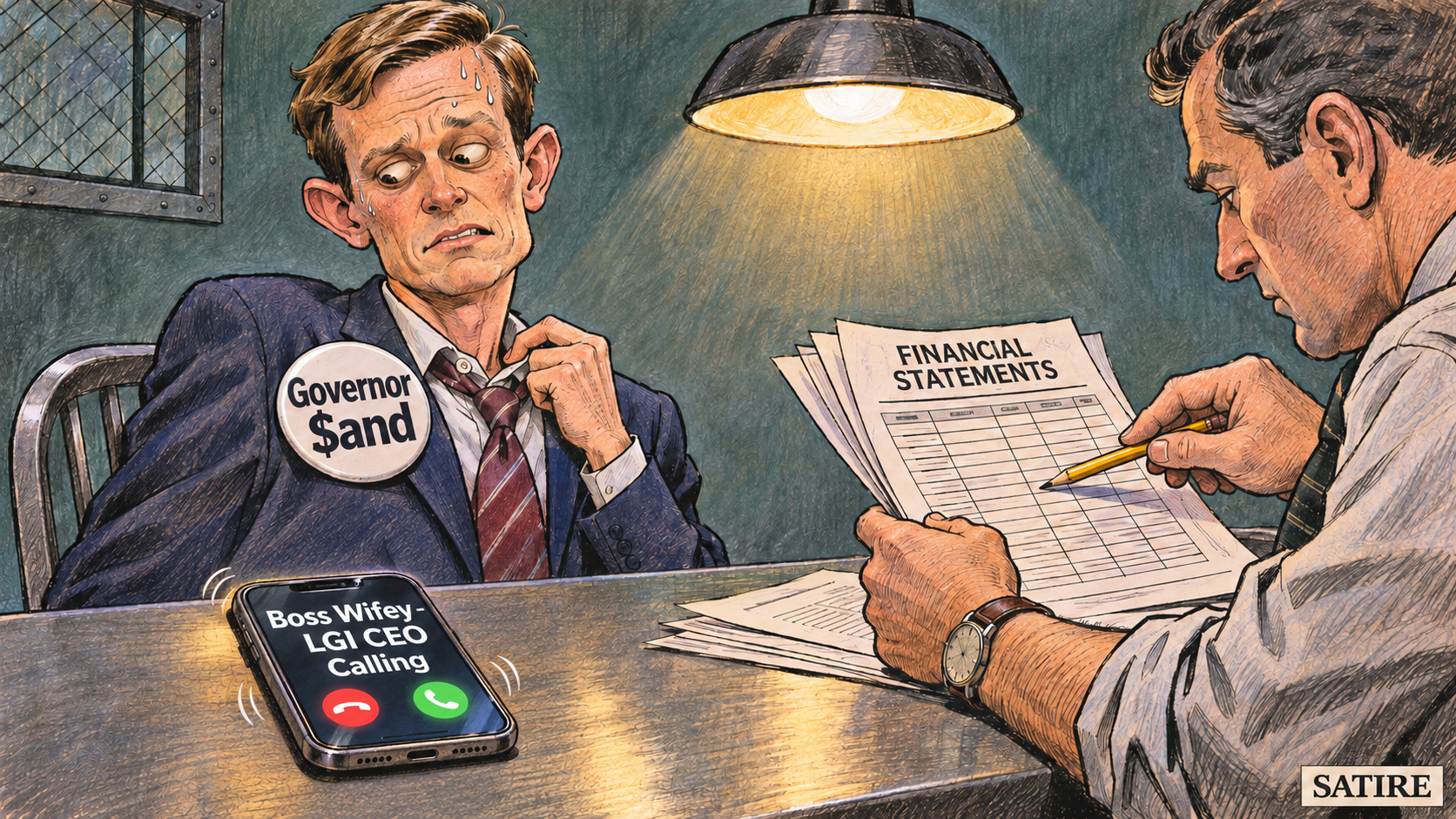
Rob Sand Must Be Audited Along with LGI

Published

on

Rob Sand won the Iowa governor’s race as the state’s auditor. That dual role demands immediate scrutiny of his own office and of LGI, the family business run by his wife, Christine Lauridsen Sand. Taxpayers have a right to know whether any public contracts, grants, or favorable treatment flowed between the auditor’s office and the company while he held statewide power. Iowa does not get a free pass on conflicts simply because the winner is a Democrat.

America First means accountability for officials who oversee public money. Sand built his career on auditing others. The same standard now applies to him and to LGI. Any overlap in finances, vendor relationships, or use of state resources must be examined by independent review before he takes the governor’s office. Working families in Iowa already face water-quality issues, budget pressures, and education concerns. They should not also wonder whether family business interests influenced decisions made in the auditor’s office.

An audit of Sand’s tenure and of LGI is the minimum required for confidence in the transition. If irregularities appear, they must be referred for further investigation. Sovereignty and basic fairness require that the next governor faces the same transparency he once claimed to enforce. Iowa voters deserve nothing less before he is sworn in.

Continue Reading

Politics

2028: America First Dark Horse Must Rise

Published

on

The 2026 midterms cleared the field. Democrats took Congress after voters punished high gas prices and the Iran war. Establishment heirs now carry that baggage. JD Vance’s odds slipped overnight. Marco Rubio remains tied to the same foreign-policy circle that produced the conflict. Neither can lead a clean America First recovery. The candidate must be anyone but Vance or Rubio.

That dark horse must run on sealed borders, an end to forever wars, energy independence, and trade that puts American workers first. Traditional values and biological reality in policy cannot be treated as optional. The midterms showed the cost of foreign entanglements and elite priorities. Working families want their government focused on home, not distant conflicts or cultural experiments. Only a figure free of prior establishment ties—and free of Vance or Rubio—can make that case without apology.

The next two years will decide whether the movement stays pure or dilutes into another round of managed decline. A dark horse who rejects globalist deals, defends sovereignty, and speaks plainly to the base can consolidate the realignment before 2028. The country does not need another caretaker from the current circle. It needs someone new who will finish what America First started.

Continue Reading

Politics

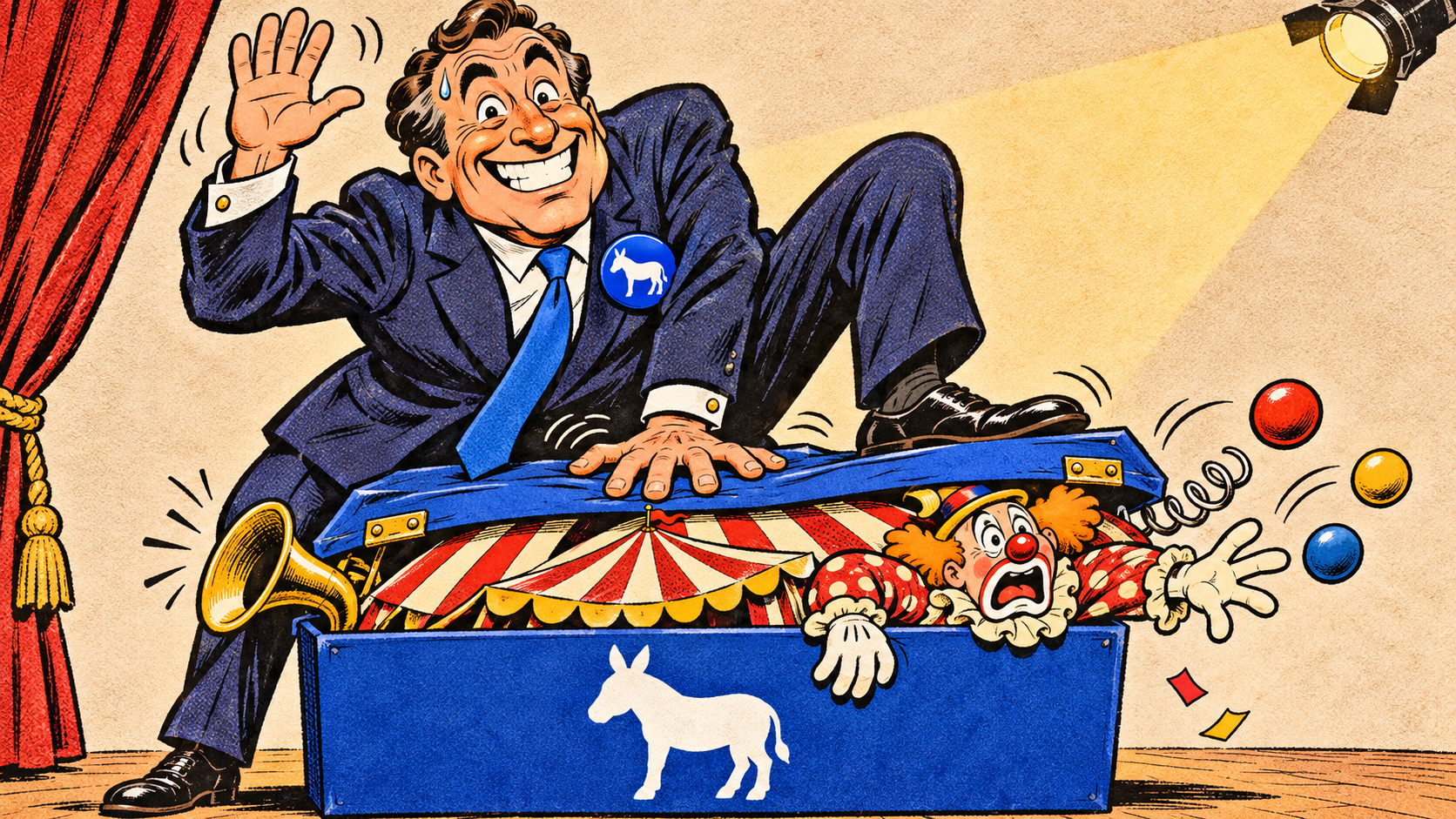
Democrats Gave Ground on Their Wackiest Issues to “Win”

Published

on

The midterm results show Democrats winning by dialing back the cultural extremes that defined their last several cycles. In Texas, James Talarico walked back earlier progressive positions on transgender issues to make himself viable in a state that rejected those policies for decades. Elsewhere, candidates who once embraced open borders, defund-the-police rhetoric, and identity-first messaging softened or ignored those planks and focused on costs, the Iran war, and gasoline prices. The public had already rejected the full agenda; the party simply stopped advertising the parts voters hated most.

America First voters never accepted boys in girls’ sports, men in women’s shelters, or sanctuary policies that prioritize non-citizens over citizens. Polling and prior elections already showed those positions as losers outside the coastal core. By muting them in red and purple districts while hammering inflation and foreign wars, Democrats could appeal to working-class Hispanics, independents, and some traditional Democrats who had shifted right. The strategy worked for one night because the economic pain was acute and the alternative was a party tied to high gas prices. It does not mean the underlying cultural preferences of the country changed.

Once in power, the same figures and progressive caucuses will push the old agenda again—Medicare for All, ending enforcement, and cultural mandates. The temporary ground they gave was tactical, not principled. Working Americans still want secure borders, biological reality in policy, and government that puts citizens first. The midterms proved the left cannot win by leading with its most extreme ideas. They also proved those ideas remain the party’s destination once the ballots are counted.

Continue Reading

Trending

Donate to Populist Wire

*Note: Every donation is greatly appreciated, regardless of the amount.