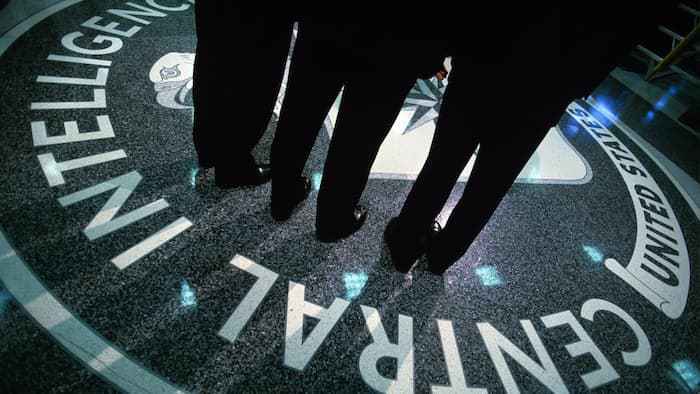
A former CIA officer suspected of helping China identify the US spy agency’s informants was arrested at JFK International Airport on Monday on charges of unlawful retention of national defense information, according to the Department of Justice.
Many of the agency’s informants were killed in a “systematic dismantling of the C.I.A.’s spy network in China starting in 2010,” according to the New York Times, which notes it was one of the American government’s “worst intelligence failures in recent years.”
The arrest of the former agent, Jerry Chun Shing Lee, 53, capped an intense F.B.I. investigation that began around 2012 after the C.I.A. began losing its informants in China. Mr. Lee was at the center of a mole hunt in which some intelligence officials believed that he had betrayed the United States but others thought that the Chinese government had hacked the C.I.A.’s covert communications used to talk to foreign sources of information. -NYT
“Jerry Chun Shing Lee, aka “Zhen Cheng Li”, 53 – a U.S. Citizen currently living in Hong Kong, began working for the CIA as a case officer in 1994, where he would spend the next 13 years with a Top Secret clearance and signing “numerous non-disclosure agreements,” according to a DOJ press release.
According to court documents, in August 2012, Lee and his family left Hong Kong to return to the United States to live in northern Virginia. While traveling back to the United States, Lee and his family had hotel stays in Hawaii and Virginia. During each of the hotel stays, FBI agents conducted court-authorized searches of Lee’s room and luggage, and found that Lee was in unauthorized possession of materials relating to the national defense.
Specifically, agents found two small books containing handwritten notes that contained classified information, including but not limited to, true names and phone numbers of assets and covert CIA employees, operational notes from asset meetings, operational meeting locations and locations of covert facilities.
Lee appeared in an New York courtroom Tuesday afternoon where he was ordered held without bail. He faces a maximum penalty of 10 years in prison if convicted. The case is being prosecuted by the U.S. Attorney’s Office for the Eastern District of Virginia.
Lee, 53, served in the U.S. Army from 1982 through 1986 and worked for the CIA between 1994 and 2007 according to an affidavit filed by an FBI agent.
The FBI agent wrote that Lee and his family left Hong Kong in August 2012 to travel to northern Virginia. Along the way, they stayed in hotels where the FBI found the books.
The small books were discovered inside Lee’s luggage, sealed in a small clear plastic travel pack.
The handwritten information inside ranged in terms of classification, but the agent said at least one page contained top secret information, “the disclosure of which could cause exceptionally grave damage to the national security of the United States.” -Reuters
The FBI agent’s affidavit also noted that classified cables written by Lee while he was a case officer describing his interactions with CIA informants corroborated what was found in the two books.
Lee was interviewed five times by the FBI according to Reuters, never disclosing that he had the books. He also met with former CIA colleagues around that time without returning the classified materials, said the Justice Department.
Over a dozen CIA informants were imprisoned or killed by the Chinese government, a serious setback for the agency, as discussed here first last May:
The Chinese government systematically dismantled C.I.A. spying operations in the country starting in 2010, killing or imprisoning more than a dozen sources over two years and crippling intelligence gathering there for years afterward.
Current and former American officials described the intelligence breach as one of the worst in decades. It set off a scramble in Washington’s intelligence and law enforcement agencies to contain the fallout, but investigators were bitterly divided over the cause. Some were convinced that a mole within the C.I.A. had betrayed the United States. Others believed that the Chinese had hacked the covert system the C.I.A. used to communicate with its foreign sources. Years later, that debate remains unresolved.
But there was no disagreement about the damage. From the final weeks of 2010 through the end of 2012, according to former American officials, the Chinese killed at least a dozen of the C.I.A.’s sources. According to three of the officials, one was shot in front of his colleagues in the courtyard of a government building — a message to others who might have been working for the C.I.A. -NYT
By the end of 2011, senior CIA officials realized they had a problem; their assets in China were disappearing. The FBI and CIA opened a joint investigation in response, run by top counterintelligence officials out of an office in Northern Virginia – code named “Honey Badger.”
As more and more sources vanished, the operation took on increased urgency. Nearly every employee at the American Embassy was scrutinized, no matter how high ranking. Some investigators believed the Chinese had cracked the encrypted method that the C.I.A. used to communicate with its assets. Others suspected a traitor in the C.I.A., a theory that agency officials were at first reluctant to embrace — and that some in both agencies still do not believe. -NYT
Water infrastructure rarely becomes headline news until something goes wrong. But across Iowa, a series of developments over the past year has raised growing questions about aging infrastructure, regulatory compliance, and public transparency.
Populist Wire began examining these issues through several reports focused on Cedar Rapids and Linn County. Those articles explored a series of events involving water quality awards, lead pipe inventories, and disputes tied to public records and housing enforcement.
This article provides a 2026 investigation update, connecting previous reporting with new statewide coverage of water issues affecting Iowa communities.
1. The Award and the Lead Risk
The first article in the series examined a striking contradiction.
Cedar Rapids received national recognition for water quality after its municipal water system won the “Best Tasting Water” competition from the American Water Works Association (AWWA).
At the same time, federal regulatory changes required cities to identify potential lead service lines. In Cedar Rapids’ case, municipal inventory data indicated that thousands of water service lines were classified as either lead or “unknown.”
Under updated federal guidance tied to the EPA Lead and Copper Rule Improvements, many “unknown” service lines must be treated as potential lead until verified.
The result created a paradox that triggered the initial investigation:
A national water quality award
Simultaneous identification of potential lead risk affecting thousands of service lines
The situation raised questions about how cities communicate water quality and infrastructure risk to residents.
2. The Lead Service Line Map
The second Populist Wire article examined Cedar Rapids’ publicly released service line inventory map.
Municipal water systems across the United States have been required to catalog every service line connection under federal drinking water regulations.
In Cedar Rapids, the map categorized pipes into several classifications:
confirmed non-lead
confirmed lead
galvanized lines
unknown material
Federal guidance states that unknown materials must be treated as potential lead until confirmed otherwise, because historical installation records are often incomplete.
The investigation focused on whether the classification and public presentation of these lines matched federal regulatory expectations.
The issue matters because infrastructure inventories directly influence:
public health risk assessments
pipe replacement priorities
federal infrastructure funding eligibility
Cities nationwide are now racing to complete these inventories before federal replacement deadlines take effect.
The third Populist Wire report expanded the story beyond water infrastructure.
That article documented a housing dispute connected to residents who had raised questions about local governance and infrastructure transparency.
The situation involved:
housing enforcement actions
eviction proceedings
allegations that administrative pressure followed public scrutiny
While the housing issue is legally separate from water infrastructure, it raised broader questions about how institutions respond when infrastructure concerns are raised publicly.
Since the original articles were published, water infrastructure has continued to receive attention across Iowa.
Local reporting throughout 2026 has focused on several statewide challenges.
Cities across Iowa are now working to comply with federal regulations requiring the identification and replacement of lead service lines.
Communities including Cedar Rapids and others must develop replacement plans that may take years and hundreds of millions of dollars statewide.
Federal infrastructure funding through recent legislation is expected to help cover some of these costs, but municipalities still face significant financial and logistical hurdles.
Local reporting examining these challenges includes:
The report highlighted that many cities are still working to determine how many service lines contain lead or unknown materials and how replacement costs will be distributed between municipalities and homeowners.
Infrastructure replacement could take years or even decades depending on funding availability.
5. Agricultural Runoff and Nitrate Concerns
Another major water issue affecting Iowa involves nitrate contamination caused by agricultural runoff.
Cities such as Des Moines have reported elevated nitrate levels in river water used for municipal supply, which can increase water treatment costs and trigger federal monitoring thresholds.
Environmental groups have long argued that fertilizer runoff contributes significantly to these contamination issues, while agricultural organizations emphasize the importance of voluntary conservation practices.
Coverage of this issue has appeared in statewide reporting such as:
Democratic lawmakers have generally emphasized stronger environmental protections and federal infrastructure investments.
Republican leaders have often raised concerns about regulatory burdens on farmers and municipalities while supporting targeted infrastructure funding.
These policy debates reflect the growing importance of water issues across Iowa.
7. Why Infrastructure Transparency Matters
Water systems are among the most critical pieces of infrastructure in any community.
Yet they are also among the least visible.
Most residents never see the pipes beneath their streets, the treatment processes at municipal plants, or the regulatory frameworks that govern drinking water safety.
When issues do emerge—whether related to lead pipes, nitrate pollution, or infrastructure inventories—they often reveal how complex these systems are.
Coverage across Iowa media has increasingly emphasized transparency and public access to infrastructure data, including reporting such as:
The purpose of the Watch the Water series is not to make conclusions prematurely, but to document developments as they occur and examine how public infrastructure is managed.
Why the elite have decided it’s better to feed machines than humans.
We have a lower class of CEOs. And AI is making it worse.
In the past, these titans of industry would invest in their communities: libraries, public works projects, parks, or actual philanthropy.
Today’s C-suite “geniuses” engage in fake activism, bribery disguised as donations, and a complete nihilism from the communities they proclaim to serve at the safety of their gated communities.
It used to be a source of great pride for an owner to discuss how many employees they have. They would boast about how they put food on the table for families. They would talks about benefits, and how well they take care of their workers. Hell, they used to even describe them as “family.”
Now, they can’t wait to tell shareholders how they automate everything themselves, outsource to foreign countries for pennies on the dollar, and utilize AI to cut their entire labor force (we will get to this soon.)
The common thread is that those at the top are completely divorced from their workforce, the very people that happen to also be their consumers.
This was the situation largely even before AI. It’s gotten worse. They are absolutely foaming at the mouth to displace workers.
The only way to describe it is a race to the bottom. Investing millions into replacing humans with AI. This is already happening, and the reward has been big short-term gains from cutting jobs that look like more profitability to investors.
What’s more is that these AI data centers need billions of gallons of water, insane amounts of electricity, and tons of facilities to expand growth. It’s so astronomical they’re talking about moving it into space.
Think about it for a minute: companies would rather provide “drinking” water, “feed” electricity, and pay to “house” MACHINES instead of paying a living wage to people.
In fact, it might even be cheaper to pay a living wage. That isn’t stopping industry leaders from chasing their human-less dreams, despite it taking less energy and resources for humans. Yet they’re still choosing machines.
They are even willing to operate at a loss simply for the idea that they can save the cost of paying a wage.
There are a few outcomes that are possible:
Best case: AI hype is exposed as overblown and companies understand that it’s simply a tool and they need actual operators behind the steering wheel. AI starts creating more jobs. It seems unlikely, but given that AI in actuality produces more slop than creative, it’s possible.
Worst Case: The arms race of displacing workers continues. Their greed hasn’t ever really showed signs of waning. To supplement the slop it creates, they will use freelance labor from countries like India to extinguish the fires it creates and justify not needing a full time employee. They will stop at nothing to chase their goal of a technocracy to increase profits. (Note: They think they don’t need you to even buy their products with the top 1% buying 50% of the goods.)
They trained AI on your work, fired you to save money, flooded the world with soulless garbage, empty warehouses, and call it innovation.
A Timeline of Eviction, Federal Escalation, and Municipal Activity
Pre-Eviction Litigation Context (December 2025)
By late 2025, plaintiff Billy Dwayne Frazier IV was already engaged in active litigation against landlords and the City of Cedar Rapids, alleging housing retaliation, discrimination, and habitability violations. Court filings from December 2025 reflect an adversarial posture, including a rebuttal challenging the City’s characterization of its actions as routine and disputing federal regulatory classifications related to water infrastructure.
“Once litigation is pending, best practices — and basic fairness — require written communication, coordination through counsel, and avoidance of unannounced physical presence at a litigant’s home.” — Court filing, December 2025
The December filing establishes that the City was already on notice that the plaintiffs were active litigants asserting retaliation and discrimination claims, and that the City itself was a named defendant. This context predates all events that followed.
Eviction and Immediate Federal Escalation (January 2, 2026)
Less than three weeks later, on January 2, 2026, the plaintiffs were evicted from the Oakland Road NE properties at issue. The eviction occurred at approximately 11:00 a.m. That same day, a Notice of Subsequent Material Events was filed with the court, documenting the displacement and advising that federal agencies had already become involved.
“I was evicted at 11:00 a.m. I was gone before they came. Forty-five minutes later, HUD called me.” — Will Frazier
According to the filing, within roughly 45 minutes of the eviction, the U.S. Department of Housing and Urban Development (HUD) contacted the plaintiff, acknowledged prior non-response to complaints, and confirmed that the matter had been escalated through the HUD Office of Inspector General before being referred for fair-housing review. The notice was submitted for record-preservation purposes and did not seek immediate relief.
“They apologized for not returning my calls — months of calls — and told me my file had already gone through HUD OIG in Washington.” — Will Frazier
Post-Eviction Municipal Excavation
In the weeks that followed, municipal excavation and construction activity occurred at and around the same Oakland Road properties. Photographic exhibits filed with the court depict trenching, ground disturbance, and utility-related work directly adjacent to the residences.
“They started excavating the street in front of the properties named in the lawsuit.” — Will Frazier
A supporting affidavit explains that the documentation was submitted after observing the activity without prior notice, out of concern that physical evidence relevant to the litigation — such as service lines or soil conditions — could be altered or rendered unavailable.
“I had not received prior notice that excavation or replacement work would be conducted, nor that potentially relevant physical evidence would be altered.” — Sworn affidavit, January 2026
City of Cedar Rapids Public Advisory and Response
Shortly thereafter, the City of Cedar Rapids issued a public Precautionary Boil Advisory affecting the same block of Oakland Road NE, citing a ruptured water main and loss of pressure that created potential for contamination. Screenshots of the City’s official statements and public responses were preserved and filed in the court record.
“A rupture in a water main caused a loss of pressure, creating potential for bacterial contamination.” — City of Cedar Rapids public advisory
A sworn affidavit authenticated the advisory as a true and accurate copy of the City’s public notice, expressly stating that it was submitted for documentation purposes only and without asserting causation or liability.
“This exhibit is submitted for the limited purpose of documenting the City’s public advisory, including timing and scope, without asserting fault or intent.” — Sworn affidavit, January 2026
Historical Water Incidents and Habitability Context
Court filings also include earlier documentation of water-related incidents in the area.
Supplemental materials filed prior to the eviction document pre-existing water infrastructure concerns and recurring conditions affecting the neighborhood.
Video exhibits filed in November 2025 show street-level water intrusion near residential properties, providing visual confirmation of those conditions.
“This didn’t start in January. The water issues were already there.” — Will Frazier
These materials predate the eviction and are included as contextual evidence rather than causal proof.
Why the Timeline Matters
Taken together, the filings establish a clear chronology: active litigation and regulatory disputes preceded the eviction; the eviction was followed almost immediately by federal agency escalation; and municipal infrastructure activity and public advisories occurred soon after, prompting multiple evidence-preservation submissions.
“I’m not using the courts as a microphone. I’m using them to preserve the record.” — Will Frazier
Each filing was entered with limited-purpose language, emphasizing documentation, notice, and preservation rather than conclusions. This record now forms the factual basis for ongoing housing, water, and civil-rights proceedings under review in both state and federal forums.